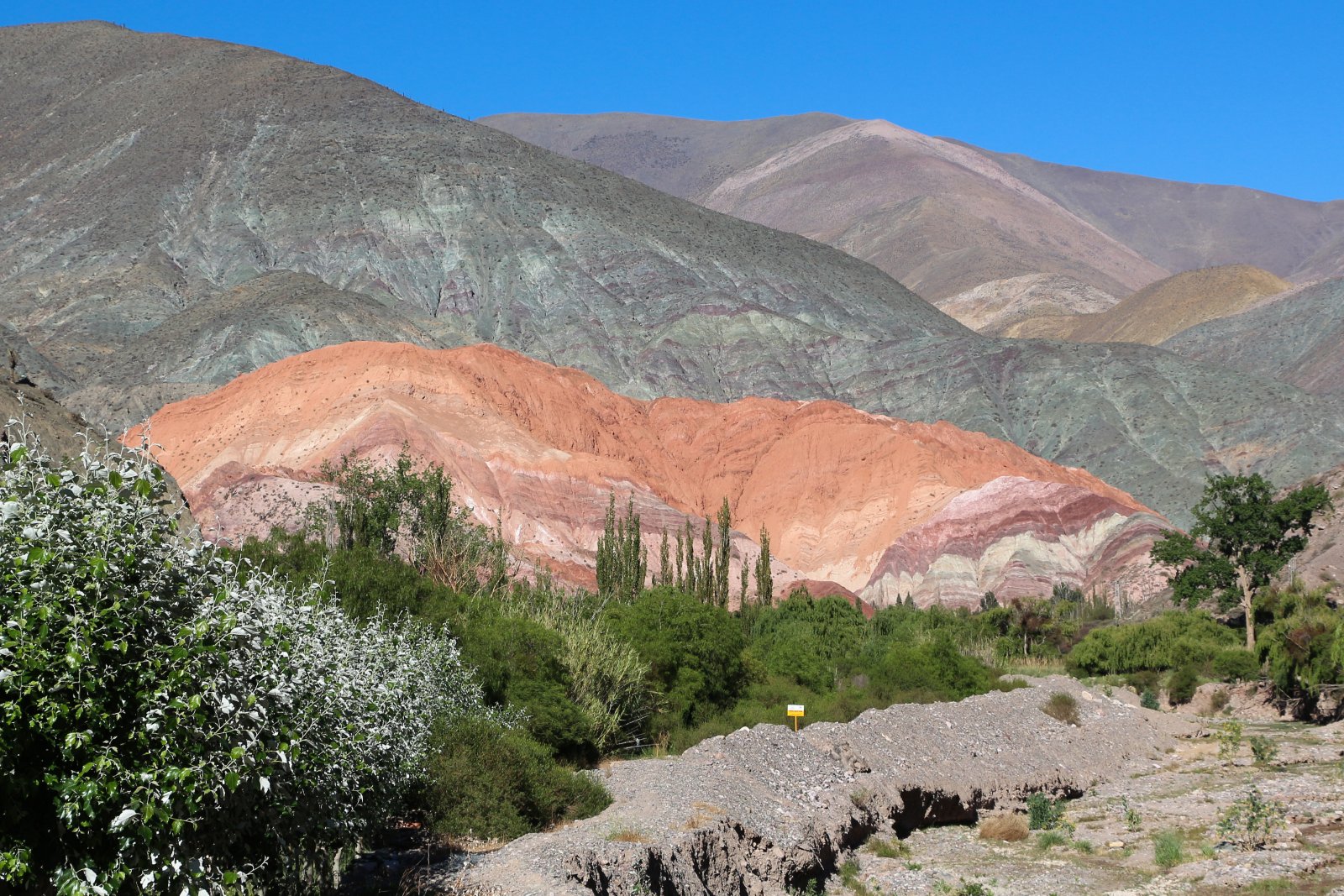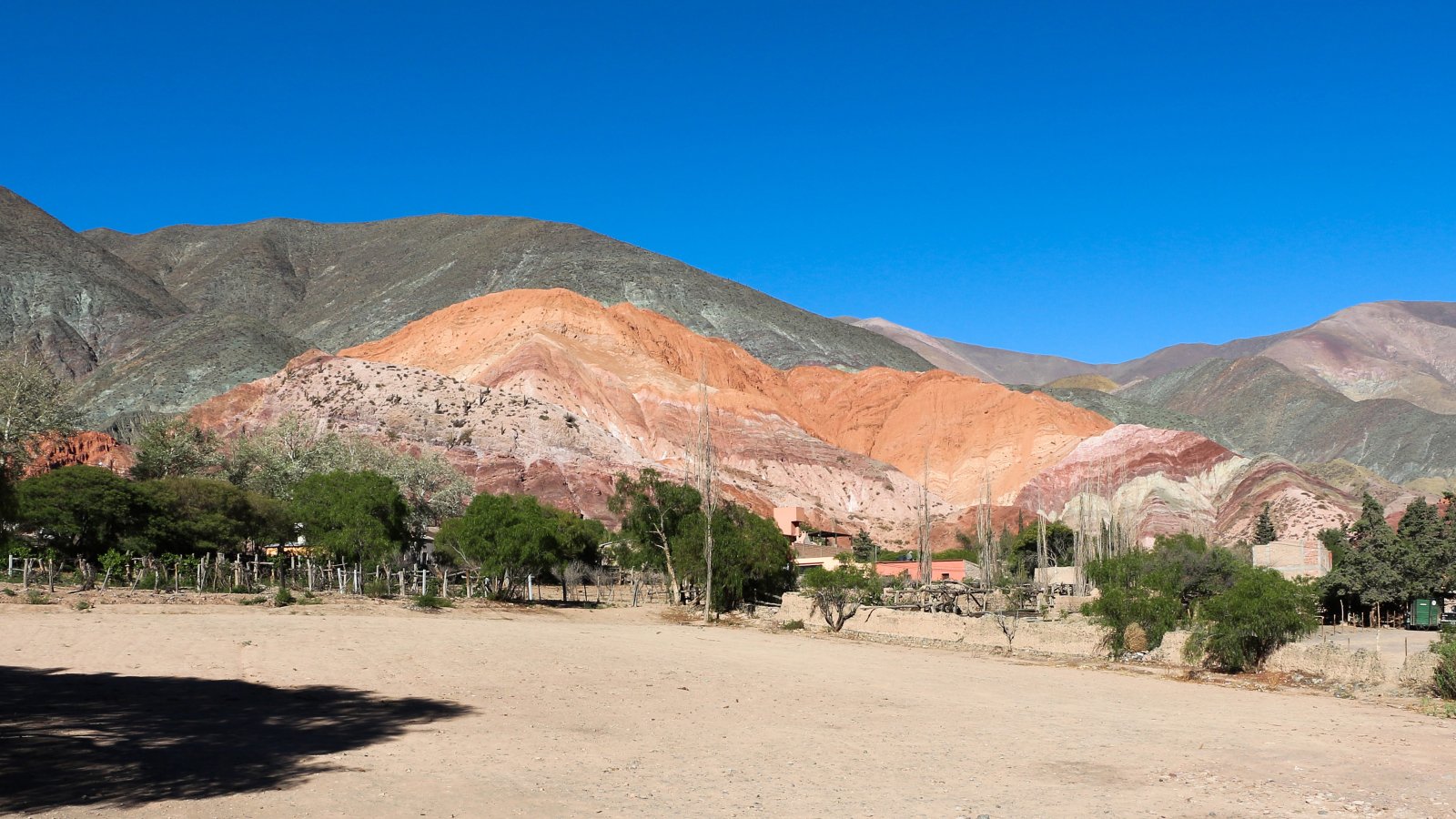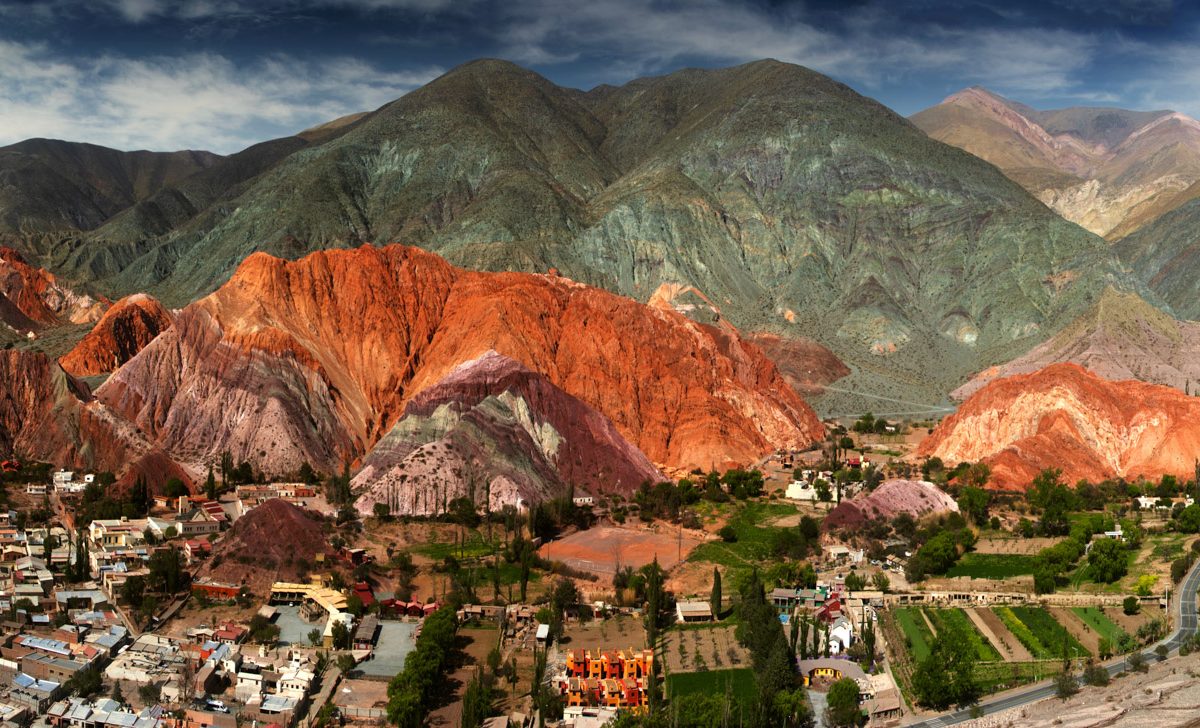

{ "title": "Purmamarca's Hill of Seven Colors: A Cultural Gem in Argentina", "description": "Nestled in the Quebrada de Humahuaca region of Northern Argentina, the quaint town of Purmamarca is a spectacle of nature and culture. Its Hill of Seven Colors (Cerro de los Siete Colores), a vibrant geological formation, draws travelers from far and wide, but the town's charm extends beyond this striking landmark. \n\n### History and Origins\nPurmamarca has a rich history that dates back to the Inca Empire, when it served as a strategic location along the Inca Trail. The name itself is derived from the Aymara words ", "Purmamarca," : "town of the colored mountains." , " The town was officially founded in the 16th century by Spanish colonists, but its roots run deep into the Indigenous cultures that inhabited the region long before European influence. The area witnessed significant historical events, including the War of Independence in the early 19th century, where local figures played crucial roles in the fight against Spanish colonial rule. Today, remnants of this history can be observed in the traditional adobe houses and the Church of Santa Rosa de Lima, built in 1648, which stands as a sentinel of the town’s heritage. \n\n### Art and Architecture\nThe architectural style in Purmamarca reflects the colonial influence blended with Indigenous elements. The town is characterized by its adobe houses, which are made from sun-dried mud bricks, creating a warm and inviting atmosphere. One of the most notable buildings is the Church of Santa Rosa, adorned with a striking wooden bell tower and a simple façade that exudes rustic charm. Additionally, the artistry of the local artisans can be found in the vibrant textiles and pottery sold in the markets, showcasing traditional Andean patterns and techniques that have been passed down through generations. \n\n### Local Culture and Traditions\nThe culture of Purmamarca is a tapestry woven from Indigenous traditions and Spanish influences. One of the most vibrant expressions of local culture is the annual Fiesta de la Pachamama, celebrated in August. During this festival, locals honor Mother Earth through rituals that include offerings of food and drinks, as well as traditional music and dance. The town also celebrates the Carnaval, where colorful parades and lively performances fill the streets, showcasing the community's joyful spirit. Visitors can witness and participate in these festivities, gaining insight into the deep-rooted customs that define the town. \n\n### Gastronomy\nWhen it comes to gastronomy, Purmamarca offers a delightful array of traditional Argentinian cuisine. One must-try dish is the empanada, a savory pastry filled with meat, cheese, or vegetables, often enjoyed as a snack or appetizer. The locro, a hearty stew made from corn, beans, and various meats, is a staple during national holidays. For a sweet treat, indulge in dulce de leche, a rich caramel-like spread found in many desserts, or sample the local mate, a traditional herbal tea often shared among friends. The regional vinito (wine) from Salta is also a must-try, offering a taste of the high-altitude vineyards nearby. \n\n### Lesser-Known Curiosities\nWhile many visitors flock to see the Hill of Seven Colors, few know that the hill’s vibrant hues are not merely a natural wonder but a result of geological processes dating back millions of years. The different colors—ochre, yellow, green, and violet—are attributed to the varying minerals in the sedimentary layers, which were formed during different geological periods. Additionally, the legend of the hill being painted by local children adds a layer of enchantment and charm, although it is a tale that reflects the community's connection to the land. For those seeking a quiet moment, the Plaza 9 de Julio is an idyllic spot, where you can sip on a local brew while gazing at the stunning backdrop of the mountains. \n\n### Practical Visitor Information\nThe best time to visit Purmamarca is during the dry season, from April to December, when the weather is pleasant and ideal for outdoor activities. Early mornings or late afternoons provide the best light for photography, especially for capturing the stunning colors of the hill. Travelers should also consider taking a guided tour to explore the surrounding landscapes, including the Salinas Grandes, vast salt flats that are a short drive away. If you’re planning to stay overnight, local guesthouses and boutique hotels offer a cozy experience, often with stunning views of the hill. \n\nTo truly immerse yourself in the wonders of Purmamarca, consider using the Secret World app to create a personalized itinerary that captures the essence of this magical destination." : " истинный \n \n \n \n \n \n \n \n \n \n \n \n \n \n \n \n \n \n \n \n \n \n \n \n \n \n \n \n \n \n \n \n \n \n \n \n \n \n \n \n \n \n \n \n \n \n \n \n \n \n \n \n \n \n \n \n \n \n \n \n \n \n \n \n \n \n \n \n \n \n \n \n \n \n \n \n \n \n \n \n \n \n \n \n \n \n \n \n \n \n \n \n \n \n \n \n \n \n \n \n \n \n \n \n \n \n \n \n \n \n \n \n \n \n \n