


When the sun begins to set behind the Andes, the rocks of the Cerro de los Siete Colores seem to catch fire. The red, yellow, purple, and green stripes that streak the mountain intensify until they become almost unreal, as if someone had painted the stone with colors too saturated to belong to the natural world. We are in Purmamarca, a small village in the province of Jujuy, in the northwest of Argentina, at about 2,200 meters above sea level.
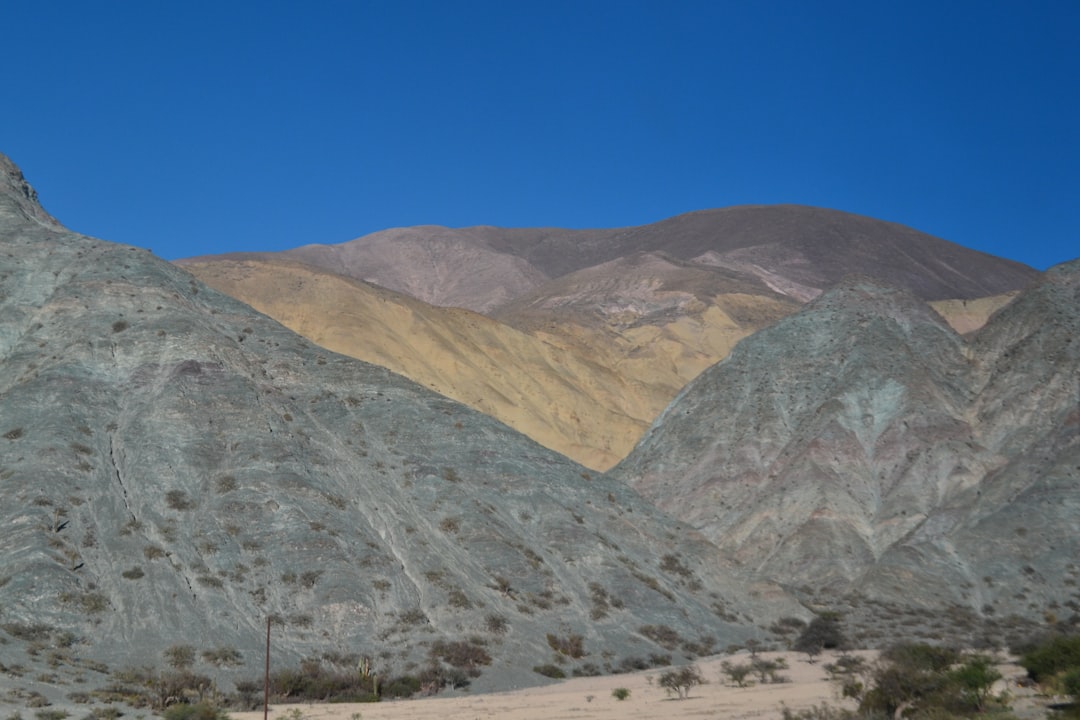
What makes this hill truly extraordinary is its geology: the seven visible shades in the rock walls are the result of millions of years of sedimentation and different mineral processes. Iron produces the red and orange hues, while other minerals like manganese and calcium contribute to the purple, yellow, and greenish tones. The Quebrada de Humahuaca, the valley that hosts Purmamarca, was declared UNESCO World Heritage Site in 2003, precisely for its exceptional pre-Hispanic landscape and cultural value.
The magical moment: the sunset over the mountain
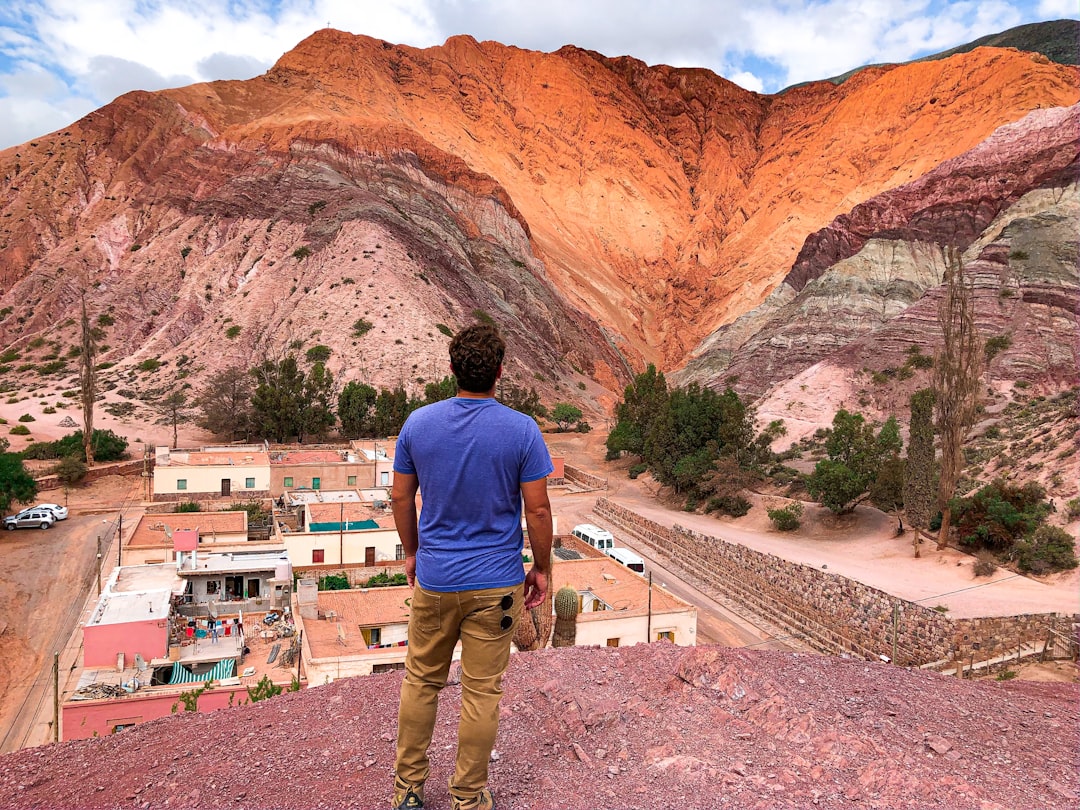
If there is a time when the Cerro de los Siete Colores reveals all its potential, it is the time between one hour before sunset and the twenty minutes following the setting of the sun. The slanting afternoon light hits the rocky walls obliquely, enhancing the contrasts between the mineral layers and casting shadows that define every single fold of the rock. The colors seem to literally pulse.
The sunset in Purmamarca generally occurs between 6:30 PM and 7:30 PM, depending on the season. In the southern summer, between December and March, the light lasts longer and offers a warmer palette. In winter, between June and August, the air is clearer and the colors tend to be sharper and more contrasted. Many visitors choose to position themselves in the Plaza 9 de Julio, the small central square of the town, from which there is an unobstructed view of the mountain.
The Camino de los Colorados: walking among the colors
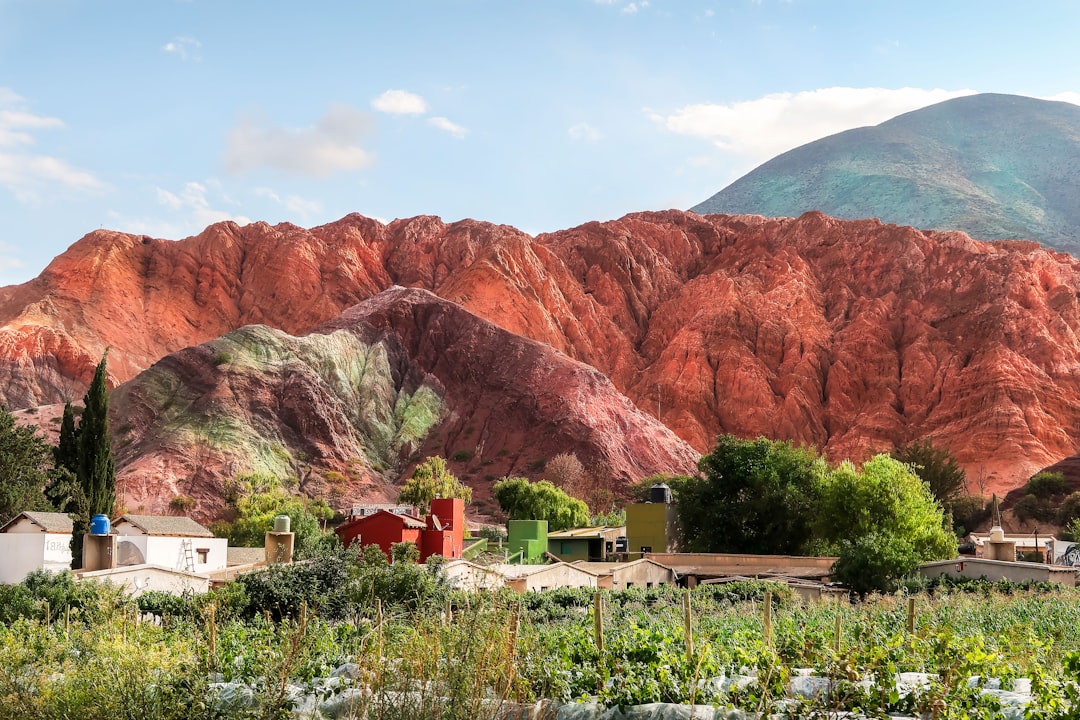
For those who want to physically approach the mountain, there is a walking path called Camino de los Colorados, a loop of about three kilometers that winds around the base of the hill. The trail is well marked and can be traversed in about an hour and a half without particular technical difficulties, although the altitude may slow down those who are not used to it. Along the way, you can closely observe the different rock layers and better understand how geology has created this spectacle over geological eras.

The most important practical advice is this: start the Camino de los Colorados at least two hours before sunset. This way, you can complete the loop calmly and arrive at the best viewpoint just when the light is at its peak. Bringing water is essential, as there are no supply points along the route. Entrance to the trail is free and directly accessible from the village.
Purmamarca: the village at the foot of the hill

The town of Purmamarca has a few hundred inhabitants and develops around its central square, shaded by an ancient algarrobo, a tree typical of the region that can live for centuries. The Church of Santa Rosa de Lima, built in 1648, is one of the best-preserved colonial buildings in the Quebrada and is worth a visit before or after sunset. Its white adobe walls contrast with the colorful mountain in the background in a visually striking way.
Around the square, there are stalls of local artisans selling fabrics made from llama and alpaca wool, ceramics, and wooden objects. Prices are affordable compared to European standards, but it is good practice not to haggle aggressively: these are often direct producers who live off their work. A meal in one of the small restaurants in the town, featuring locro or empanadas jujeñas, generally costs between 1,500 and 3,000 Argentine pesos, although prices vary with local inflation.
How to get there and when to go
Purmamarca is located about 65 kilometers from the city of Jujuy, reachable in about an hour by car along Ruta Nacional 9 and then Ruta Provincial 52. There are also bus services from the Jujuy station, with regular departures throughout the day. The best season to visit the hill at sunset is the dry season, between May and September, when the chances of clear skies are higher and clouds do not obscure the light show on the rocks.
Those arriving by car have the advantage of being able to freely choose their departure time and stop along the way to photograph the landscape of the quebrada. In any case, it is advisable to book accommodation in Purmamarca in advance during the summer months and on long weekends, when Argentine domestic tourism brings many visitors from Salta and Buenos Aires.


