
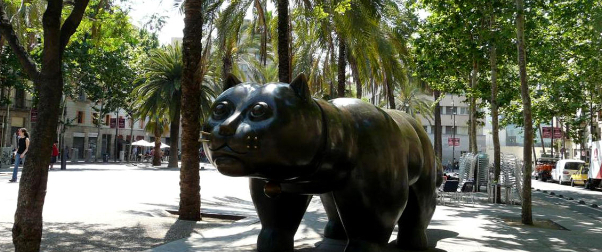

In the heart of Barcelona's vibrant Raval district, Rambla del Raval presents a captivating blend of history, culture, and modern urban life. A relatively recent addition to the city's landscape, this wide promenade offers a unique twist to the traditional concept of a 'Rambla,' transforming what was once an area of shadowy alleys into a lively public space brimming with energy and charm.
The origins of Rambla del Raval are rooted in a comprehensive urban renewal project launched in the late 20th century. Before its transformation in the early 2000s, this area was notorious for its cramped, dilapidated streets that had long been neglected. The city's initiative aimed to rejuvenate the Raval neighborhood, known historically as the Barri Xino, or "Chinatown," due to its diverse immigrant population. By clearing two derelict streets, the Rambla del Raval was born, breathing new life into the district with its broad, palm-lined avenue.
Architecturally, Rambla del Raval diverges from the traditional Catalan style seen elsewhere in the city. The promenade is defined by its modernist design, characterized by clean lines and open spaces that invite both locals and visitors to linger and explore. At the heart of this artistic urban landscape stands Fernando Botero's "El Gato," a massive bronze sculpture of a cat that has become an icon of the area. This rotund feline, with its playful expression and outsize proportions, encapsulates the whimsy and creativity that define Barcelona's artistic spirit.
The cultural tapestry of Rambla del Raval is as diverse as its history suggests. The area is home to a mosaic of communities from around the world, each contributing to the vibrant cultural life that pulses through its streets. Throughout the year, the Rambla hosts a variety of festivals and events, reflecting the eclectic mix of its residents. Notably, during the annual Festa Major del Raval, the street comes alive with music, dance, and parades, celebrating the neighborhood's rich cultural diversity.
When it comes to gastronomy, Rambla del Raval offers a culinary journey that mirrors its multicultural ethos. Visitors can savor an array of flavors, from traditional Catalan fare to dishes inspired by the Middle East, South Asia, and beyond. A must-try is the local specialty, pa amb tomàquet—a simple yet delicious combination of rustic bread rubbed with ripe tomatoes and drizzled with olive oil. To accompany your meal, consider a glass of Cava, the region's famed sparkling wine, which pairs perfectly with the vibrant street life unfolding around you.
Beyond the bustling cafes and shops, Rambla del Raval harbors a few lesser-known curiosities that intrigue the discerning traveler. One such gem is the Antic Hospital de la Santa Creu, a stunning example of Gothic architecture that now houses the National Library of Catalonia. Another hidden delight is the Mercat de Sant Antoni, just a short stroll away, offering a less-touristy alternative to the city's more famous markets, where locals shop for fresh produce and authentic goods.
For those planning a visit, the best time to experience Rambla del Raval is during the spring and fall when the weather is mild, and the atmosphere is particularly inviting. As you wander, take a moment to appreciate the mural art that adorns many of the buildings, a testament to the area's thriving street art scene. And be sure to pause at one of the many terraces for a café con leche, immersing yourself in the daily rhythm of this dynamic neighborhood.
In sum, Rambla del Raval is more than just a street; it is a microcosm of Barcelona's past and present, a place where cultures converge, and the city's artistic soul is laid bare. Whether you're drawn by its history, its art, or its culinary delights, this vibrant promenade promises an unforgettable slice of life in one of the world's most captivating cities.


