
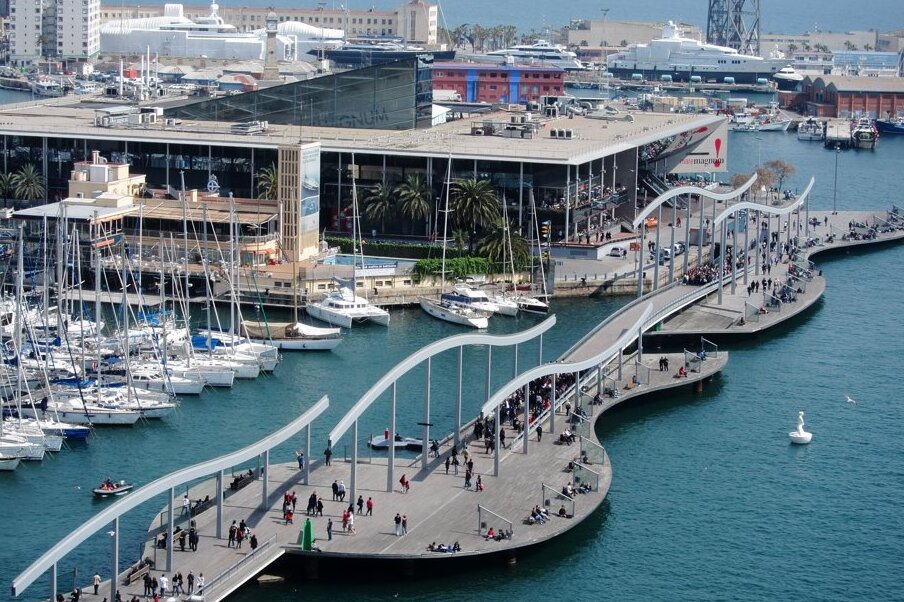

At the intersection of history and modernity, Rambla de Mar and the Monument to Christopher Columbus stand as a testament to Barcelona’s vibrant maritime heritage. The allure of this area extends beyond its picturesque views, weaving together tales of exploration, artistry, and culinary delights.
History and Origins
The history of Barcelona is rich and layered, dating back to its founding as a Roman colony called Barcino around 15 BC. The city has always had a strategic significance due to its port, which was crucial for trade and exploration. In 1492, the same year Columbus set sail from Spain, Barcelona was at the forefront of the Age of Discovery. The Monument to Christopher Columbus, erected in 1888, marks this pivotal moment in history. The 60-meter tall column, topped by a statue of Columbus pointing towards the New World, symbolizes not just the explorer’s journey but also the spirit of adventure that defines Barcelona.
The Rambla de Mar, completed in 1994 for the Universal Forum of Cultures, is a modern addition that connects the vibrant Las Ramblas to the sea. Its unique design, a wooden walkway that undulates over the water, invites visitors to experience the city from a new perspective. The juxtaposition of the historic monument and contemporary architecture illustrates Barcelona’s ability to embrace its past while looking towards the future.
Art and Architecture
The Monument to Christopher Columbus is an architectural marvel in itself. Designed by architect Gaietà Buïgas, its neoclassical style combines elements of both traditional and modern aesthetics. The bronze statue of Columbus, created by sculptor Pau Gargallo, captures the explorer’s determination and ambition. Visitors can take an elevator to the viewing platform for stunning panoramas of the port, Montjuïc, and the bustling city.
Along the Rambla de Mar, the wooden walkway is not just functional but an artwork in its own right. The design evokes the feeling of walking on waves, creating a seamless connection between land and sea. This area is also home to the Maremagnum, a shopping and entertainment complex, which complements the cultural scene with contemporary design and an array of dining options.
Local Culture and Traditions
Barcelona’s culture is a vibrant tapestry woven from its diverse history. The city celebrates numerous festivals, and the Festa de la Mercè, held in September, is particularly noteworthy. This festival honors the patron saint of the city and features parades, concerts, and traditional dances. The Castells, human towers, are a spectacular highlight, showcasing the community spirit and strength of the Catalan people.
Another important aspect of local culture is the tradition of Tapas. The Rambla de Mar is surrounded by numerous bars and restaurants where visitors can indulge in small plates of local delicacies while enjoying views of the harbor. The fusion of flavors reflects the city’s history as a melting pot of cultures.
Gastronomy
Sampling food along the Rambla de Mar is essential to the Barcelona experience. Traditional dishes like Paella, a saffron-infused rice dish often prepared with seafood, and Pintxos, small snacks served on skewers, are must-tries. For those with a sweet tooth, Churros con Chocolate is a popular treat. Pair your culinary adventure with a glass of Cava, a sparkling wine from the Catalonia region, to truly savor the essence of local gastronomy.
Lesser-known Curiosities
While the Monument to Columbus is a notable landmark, many visitors miss the fact that the statue of Columbus is facing the land, not the sea, leading to speculation about his intentions. Additionally, the Rambla de Mar is home to various marine life, and those who take the time to look over the side may spot fish darting beneath the surface, adding a touch of surprise to their stroll.
A hidden gem nearby is the Museu d’Historia de Catalunya, which offers deeper insights into the city’s maritime past and its role in global exploration. This museum is often overlooked by tourists, yet it provides invaluable context to the legacy that the Rambla de Mar and the Columbus Monument represent.
Practical Visitor Information
The best time to visit Rambla de Mar and the Monument to Christopher Columbus is during the spring (April to June) and fall (September to October), when the weather is mild and the city is less crowded. Early mornings or late afternoons are ideal for quieter explorations and stunning light for photography.
When visiting, be sure to bring a camera to capture the breathtaking views from the monument and the lively atmosphere along the waterfront. Don’t hesitate to engage with local vendors and try various tapas; this is not just a meal but a cultural experience.
For a truly personalized adventure that uncovers the hidden wonders of Barcelona, consider using the Secret World app to plan your itinerary.


