

Nestled within the vibrant heart of Thessaloniki's historic Roman center, the Galerian Complex weaves together an extraordinary tapestry of antiquity and modernity. As you stroll along Dimitrios Gounari Street, lined with record shops, pizzerias, and bars, you'll encounter an enticing blend of contemporary life. Yet, below street level, whispers of history echo through the remarkable ruins.
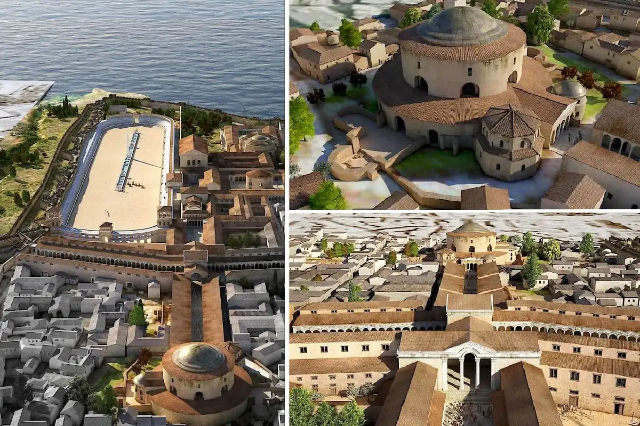
Step into the grand plaza of Navarinou, and you'll find yourself immersed in the grandeur of Roman Thessaloniki's past. This complex once served as an opulent hub, where Roman citizens indulged in the extravagance of strolling through grand stoas and socializing in lavish bathhouses. This was a city that reveled in entertainment, epitomized by the massive 450-meter-long and nearly 100-meter-wide hippodrome, where up to 15,000 spectators gathered to witness thrilling events.
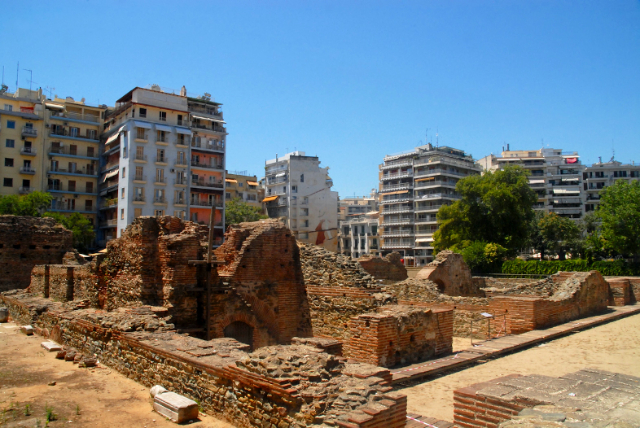
From an elevated vantage point, you can catch sight of the Palace of Galerius, but it's a space that beckons you to explore its hidden treasures. Don't miss the opportunity to venture inside; the meticulous mosaics and polychrome marble inlaid floors await discovery, unveiling a treasure trove of surprising and delightful details. The comprehensive on-site information brings this historical marvel to life.
The Palace of Galerius recently emerged from a seven-year-long restoration, reopening its doors to the public in 2018. So, you're in for a treat.
Monumental Constructions of the Galerian Complex
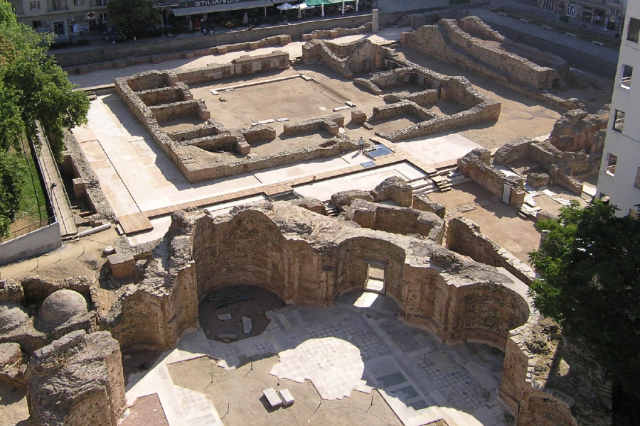
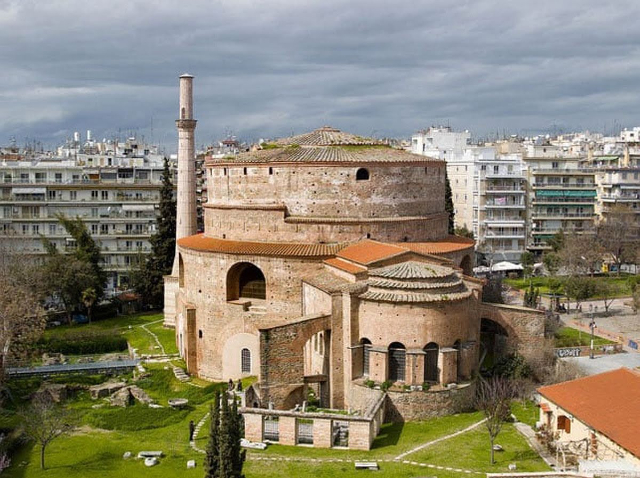
The Galerian Complex was once home to towering monumental structures, even though little remains of most of them today. To comprehend the grand scale of these buildings, envision the Rotonda as your reference point, as many of these edifices boasted similar ceiling heights. While the buildings themselves have faded into history, traces of their opulence endure, particularly in the form of intricate floor mosaics and marble inlaid floors. These floors feature a rich array of motifs, mainly geometric in nature, with some presenting complex, interlocking designs and trompe-l'oeil illusions of three dimensions.
Embellish these captivating details, and Roman Thessaloniki's grandeur comes to life before your eyes, a testament to a city that was both opulent and monumental.
Key Sights to Explore
The Octagon: The Octagon, a marvel in itself, hints at its name with intact octagonal walls, adorned with semicircular niches on seven sides, while one serves as the entrance. This remarkable 875-square-meter space was initially intended as a throne room or the formal audience hall of the Galerian Palace. However, it remained unfinished upon Galerius's passing, similar to the fate of the Rotonda. It was repurposed into a Christian church before its completion, likely in the first half of the 4th century. Imagine this space with its lofty, 29-meter-high ceiling, rivalling that of the Rotonda. Its walls once gleamed with colored marble, adorned with opulent inlaid decorations featuring vegetal and geometric motifs, known as opus sectile. Portions of the original floors have endured, offering a glimpse of their splendid complexity, composed of various colors of marble, granotem, and stone sourced from Greece, the islands, and Egypt. Sadly, the church met its demise in the 7th century due to an earthquake and later served as a reservoir until its rediscovery in 1950.
The Apsidal Hall: This basilica-like structure consisted of a rectangular space adjoining a rounded apse, believed to have been a triclinum—a place for ceremonial banquets and events for the Emperor and his court. The room, bedecked in multi-colored, inlaid marble floors and adorned with marble walls and frescoes, tells tales of opulence and grandeur.
The Basilica: While the term "basilica" may evoke thoughts of a church, this was the official audience chamber. Sporting the shape of a basilica with an apse on one end, it was a colossal hall boasting interior dimensions of 24 x 67 meters and a towering 30-meter-high roof. The decoration was equally lavish, adding to the grandeur of the space.
The Central Building Complex and Roman Villas: The central building complex consists of 11 rooms surrounding a courtyard with a central fountain. Recent excavations unveiled structures from a century or two earlier. The complex features impressive mosaic sections, both geometric and figurative, still in situ. Additionally, portions of frescoes, including one depicting a hare and another imitating marble, provide a vivid glimpse into the past.
The Stoas: The covered walkways are adorned with outstanding mosaics, particularly the west stoa, where skillfully designed geometric motifs create three-dimensional illusions.
The Baths: Sections of the Roman Baths, with substantial wall remnants, offer a glimpse into the significance of public life and recreation in Roman Thessaloniki. The reception room boasted walls and floors adorned with different colors of marble.
The Hippodrome: Some ruins of the Hippodrome can be spotted behind the church, offering insight into its monumental scale.
Fun and Games: As you wander through the ruins, watch out for worn marble blocks etched with scratched patterns—ancient board games that the sociable Romans favored. These historic games can also be found at Seikilo, known for recreating ancient Roman games. As you leave the complex, the sounds of dice rolling and tiles on backgammon boards at the cafes around the square remind you that Thessaloniki remains a sociable city, connecting the past to the present.
The Galerian Complex is a testament to the enduring legacy of Thessaloniki's rich history, where the echoes of the past seamlessly intertwine with the vibrancy of contemporary life.


