
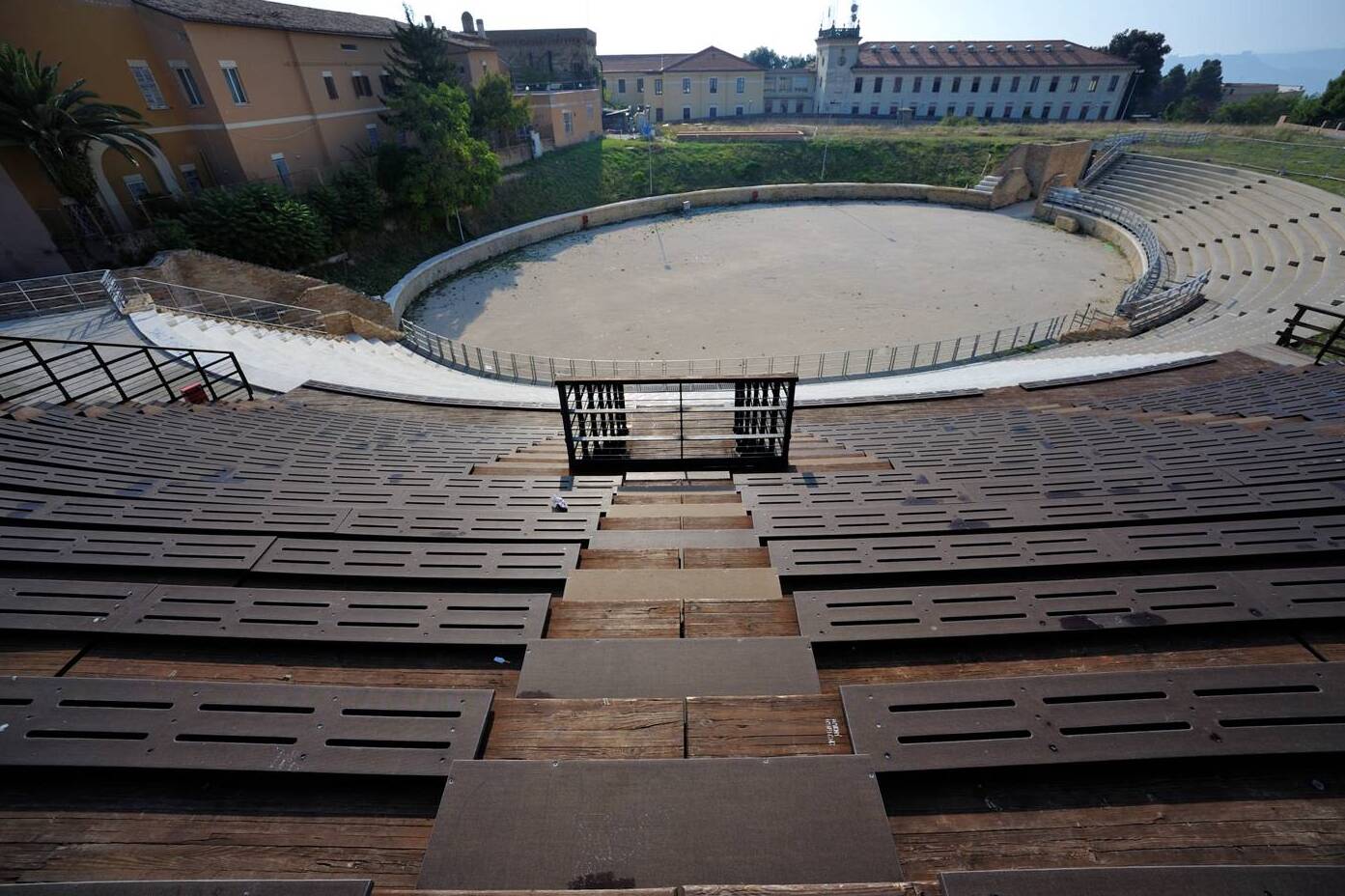

Nestled in the heart of Chieti, the Roman Theatre stands as a testament to the grandeur of ancient civilization, echoing the laughter and drama of a bygone era. Once a vibrant hub of culture, this remarkable structure offers a glimpse into the life of Teate, the Roman name for Chieti, during the 1st century A.D., a period marked by significant development and artistic expression.

The origins of the Roman Theatre of Chieti date back to approximately 30 B.C., during the reign of Emperor Augustus. As the city flourished, the theatre became a focal point for entertainment and social gatherings. While the exact date of construction remains uncertain, archaeological evidence suggests that the theatre was an integral part of a larger complex that included temples and public baths, underscoring the importance of leisure and the arts in Roman society.
The architectural design of the theatre is a marvel in itself. Constructed into the hillside, the structure showcases the ingenuity of Roman engineering. Its cavea, or seating area, originally measured over 80 meters in diameter, accommodating approximately 5,000 spectators. The theatre's layout was circular, a design that enhanced acoustics, allowing even the faintest whispers to resonate throughout the space. The use of opus reticulatum—a construction technique utilizing small stones arranged in a diamond pattern—reflects the sophisticated craftsmanship of the era. Visitors can still admire the remnants of the internal corridors and the elegant staircase leading to the main entrance, which once welcomed audiences to performances under the stars.
Art and culture flourished within the walls of the Roman Theatre, where countless plays and performances took place. While specific texts performed here have not survived, it is believed that classical works, including tragedies and comedies, would have entertained the citizens of Chieti. The theatre served as a vital cultural venue, much like the nearby Terme (baths), which were frequented by locals for relaxation and socialization.
Today, the Roman Theatre remains a vital part of local culture and tradition. Festivals celebrating the arts often take place in its vicinity, bringing together residents and visitors alike. One notable event is the *Festival Internazionale di Musica e Arte Sacra*, which, while primarily focusing on sacred music, sometimes features performances within the ancient theatre, bridging the gap between past and present. Local customs, such as reenactments of historical events and traditional performances, further enrich the cultural tapestry of Chieti.
As you explore Chieti, don’t miss the chance to indulge in its gastronomic delights. The region is known for its robust cuisine, heavily influenced by its history. Sample arrosticini, skewers of lamb grilled to perfection, which are often enjoyed alongside a glass of Montepulciano d’Abruzzo, a rich red wine that pairs beautifully with the local fare. Other must-try dishes include scrippelle ‘mbusse, a savory crepe dish typically served in broth, and pasta alla chitarra, a homemade pasta that embodies the authentic flavors of Abruzzo.
Amidst the historical splendor, lesser-known curiosities about the Roman Theatre pique the interest of discerning travelers. For instance, the theatre's discovery in the 19th century came as a surprise to many, as it had long been buried beneath urban development. Excavations revealed intricate details, including the remains of a large mosaic that once adorned the stage area. Additionally, the theatre is said to have been used for various purposes throughout its history, including as a refuge during times of conflict, showcasing its resilience and adaptability.
For those planning a visit, the best time to explore the Roman Theatre of Chieti is during the spring and early autumn months when the weather is mild, and outdoor events are plentiful. Be sure to wear comfortable shoes, as the surrounding hills can be steep, and take your time to appreciate the enchanting views of the city and its ancient architecture from the theatre’s vantage point. Look closely at the remaining structures; the interplay of light and shadow brings the ruins to life, highlighting the artistry of Roman builders.
Whether you’re captivated by its rich history, the beauty of its architecture, or the vibrant local culture, the Roman Theatre of Chieti promises an unforgettable experience. As you wander through its ancient corridors, let your imagination carry you back to the days of Roman glory, where art and life intertwined in this magnificent structure.
To make the most of your visit, consider using the Secret World app to craft a personalized itinerary that highlights the wonders of Chieti.


