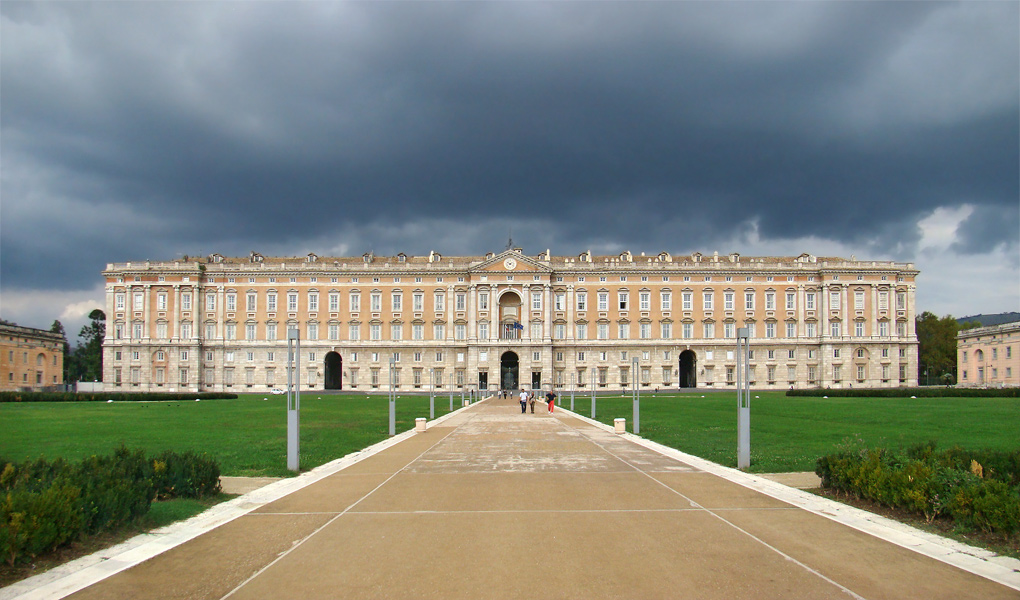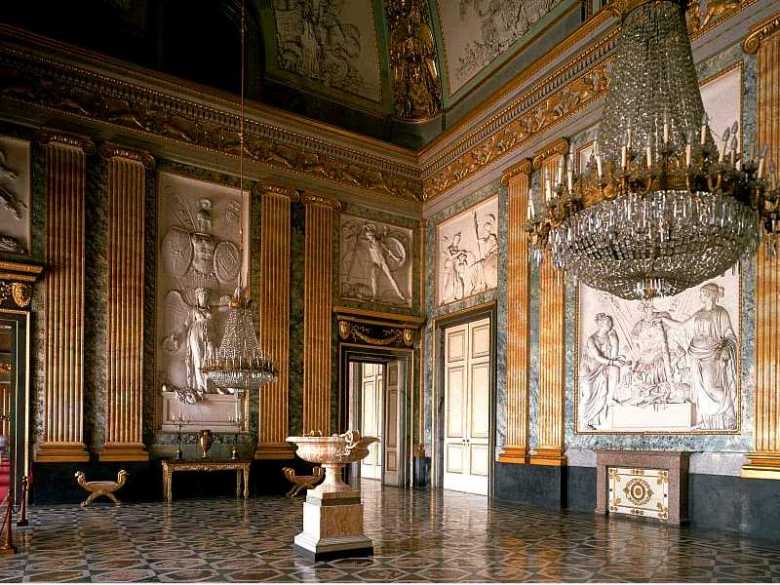

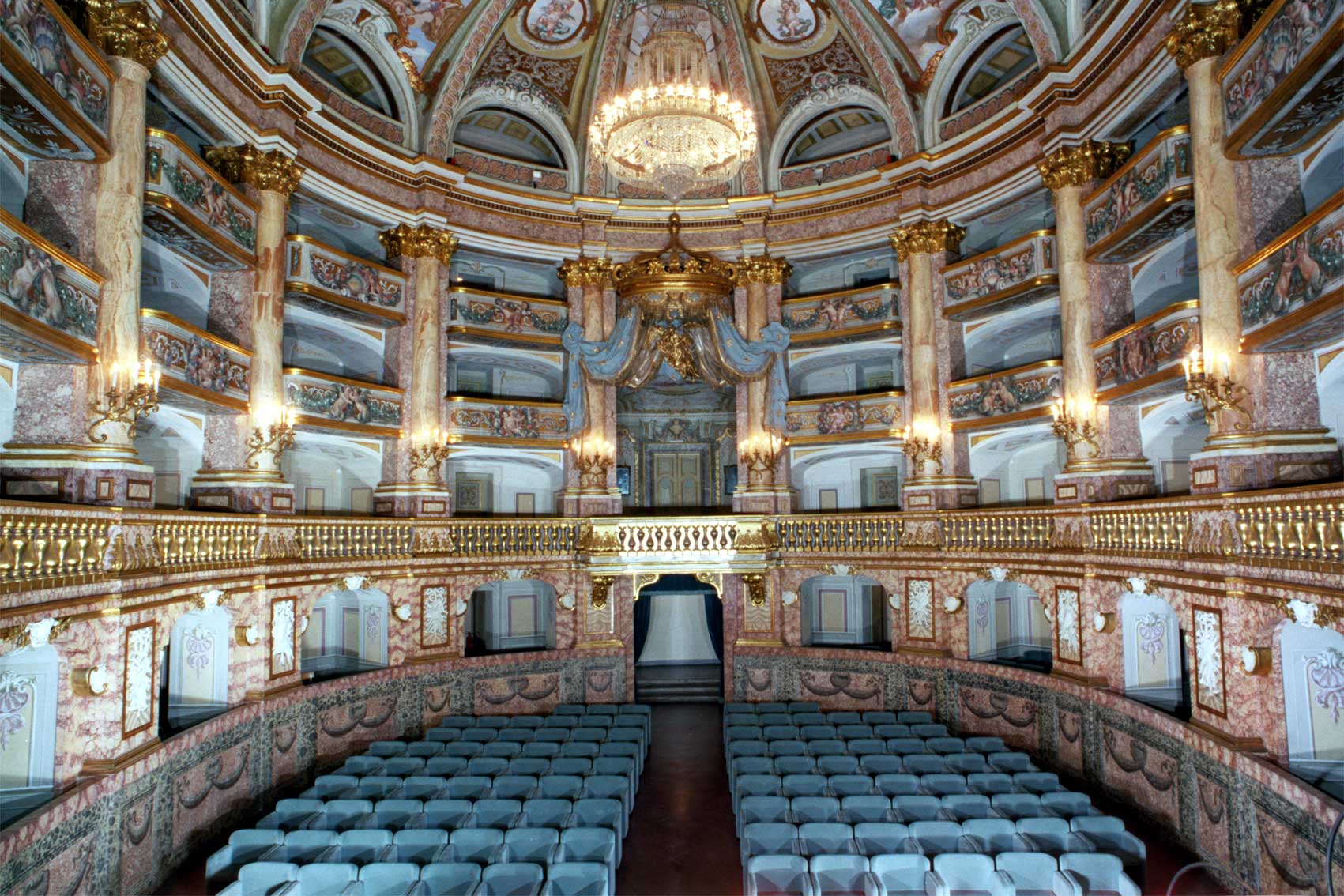
The Royal Palace of Caserta is a royal palace, with an attached park, located in Caserta. It is the largest royal residence in the world.
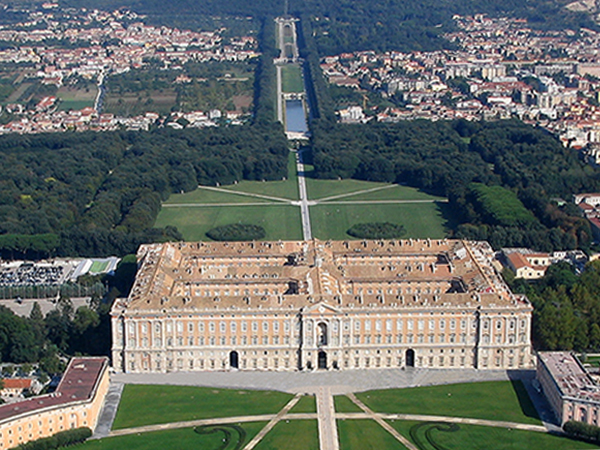
The Royal Palace of Caserta was commissioned by the King of Naples Charles of Bourbon, who, struck by the beauty of the Caserta landscape and eager to provide a worthy seat of representation for the government of the capital Naples and its realm, wanted a palace to be built that could hold its own against that of Versailles. It was initially taken for granted that it would be built in Naples, but Charles of Bourbon, aware of the capital's considerable vulnerability to possible attacks (especially from the sea), thought of building it inland, in the Caserta area-a safer place and yet not too far from Naples.
After the refusal of Nicola Salvi, who was afflicted by serious health problems, the sovereign turned to the architect Luigi Vanvitelli, at that time engaged in restoration work on the basilica of Loreto on behalf of the Papal States. Charles of Bourbon obtained permission from the Pope to commission the artist and in the meantime purchased the necessary area, where the Acquaviva family's 16th-century palace stood, from their heir Duke Michelangelo Caetani, paying 489,343 ducats for it, a sum that while enormous was certainly heavily discounted: Gaetani, in fact, had already suffered the confiscation of part of his estate for his anti-Bourbon past.
Luigi Vanvitelli, the architect of the palace. The king asked that the project include, in addition to the palace, the park and the arrangement of the surrounding urban area, with supply from a new aqueduct (Acquedotto Carolino) running through the adjoining San Leucio complex. The new palace was to be a symbol of the new Bourbon state and to manifest power and grandeur, but also to be efficient and rational.
The project was part of the broader political plan of King Charles of Bourbon, who probably also wanted to move some of the state's administrative structures to the new palace, connecting it to the capital city of Naples with a monumental avenue of more than 20 kilometers. However, this plan was only partially realized; even the royal palace itself was not completed of the originally planned dome and corner towers.
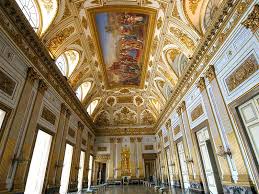
Vanvitelli arrived in Caserta in 1751 and immediately began the design of the palace, which was commissioned with the obligation to make it one of the most beautiful in Europe. On November 22 of that year the architect submitted the final design to the King of Naples for approval. Two months later, on January 20, 1752, the king's birthday, at a solemn ceremony in the presence of the royal family with squadrons of cavalry and dragoons marking the perimeter of the building, the foundation stone was laid. That moment is commemorated by Gennaro Maldarelli's fresco that stands in the vault of the Throne Room.
The pharaonic work that the king of Naples had requested of him prompted Vanvitelli to surround himself with capable collaborators: Marcello Fronton joined him in the work on the palace, Francesco Collecini in that on the park and aqueduct, and Martin Biancour, from Paris, was appointed head gardener. The following year, when work on the palace was well under way, construction of the park was begun. The work took several years in total, and some details remained unfinished. In 1759, in fact, Charles of Bourbon of Naples had ascended the throne of Spain (as Charles III) and left Naples for Madrid.