


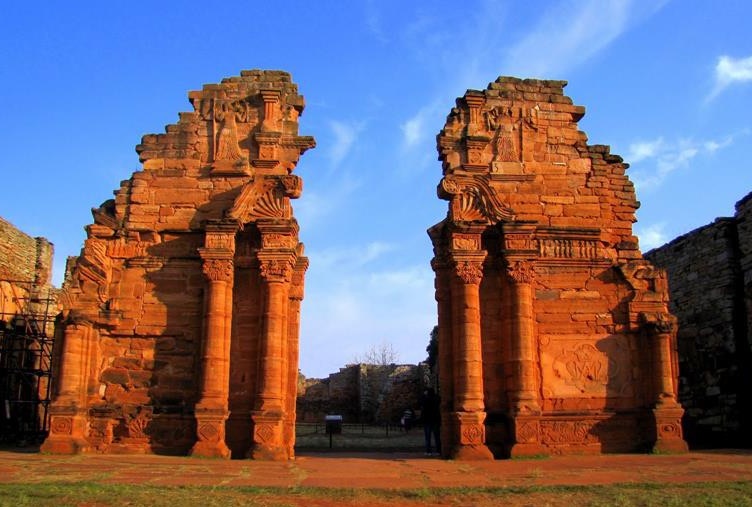
Amidst the lush subtropical landscape of northeastern Argentina lies the Ruins of San Ignacio Mini, a site that whispers tales of a bygone era. Founded in 1632 by the Jesuit Order, this mission was a cornerstone of their efforts to evangelize and educate the indigenous Guarani people. Over the course of nearly two centuries, the mission thrived, becoming a hub of culture and commerce, until it met its tragic end in the 18th century.
The ruins embody a fusion of European architectural styles and indigenous craftsmanship. The most striking feature is the baroque-style church, with its intricately carved stone facade, which still stands as a testament to the skill of the artisans who built it. The church, dedicated to St. Ignatius of Loyola, showcases impressive sculptures and reliefs depicting biblical scenes, infused with local symbolism. This architectural legacy is complemented by the remains of residential buildings, schools, and workshops that once housed the community.
The significance of San Ignacio Mini extends beyond its architecture; it represents a unique blend of cultural traditions. The Jesuits aimed not only to convert the Guarani but also to integrate their customs into the mission's daily life. Festivals held in the mission included traditional Guarani celebrations, showcasing a harmonious blend of European and indigenous traditions. Today, the local culture continues to thrive, with descendants of the Guarani people preserving their customs, music, and dance, often highlighted during local events.
When it comes to gastronomy, the region is rich in flavors that reflect both its indigenous roots and colonial influences. Typical dishes include asado, a traditional Argentine barbecue that features various cuts of meat grilled over an open flame, often accompanied by chimichurri sauce. Mandioca, or cassava, is another staple that originated from the Guarani, frequently prepared in various forms, from fried to mashed, and served alongside meals. The local drink, tereré, a refreshing infusion of yerba mate served cold, is a beloved custom among locals, especially during hot summer days.
Among the lesser-known curiosities of San Ignacio Mini is the presence of the Guardian Angel statue, a unique piece of art that stands watch over the ruins. Created in the late 20th century, this statue is a modern interpretation inspired by the spiritual legacy of the Jesuit missions. Additionally, visitors may overlook the intricate carvings on the walls of the church, where indigenous motifs intertwine with Christian iconography, a subtle reminder of the blending of cultures that occurred here.
The best time to visit San Ignacio Mini is during the dry season, from April to September, when the weather is mild and conducive for exploring the outdoors. Early morning or late afternoon visits provide the most magical light for photography, casting enchanting shadows on the ancient stones. For those looking to immerse themselves fully, consider taking a guided tour to uncover stories often missed by casual visitors, such as the details behind the ruins' restoration efforts and the ongoing cultural exchanges in the region.
As you wander through the remains of San Ignacio Mini, take a moment to appreciate the profound history and culture encapsulated within its walls. The juxtaposition of tragedy and triumph is palpable, making it a poignant reminder of the resilience of the human spirit. For a more personalized experience, consider using the Secret World app to help craft your unique itinerary for this extraordinary destination.
