
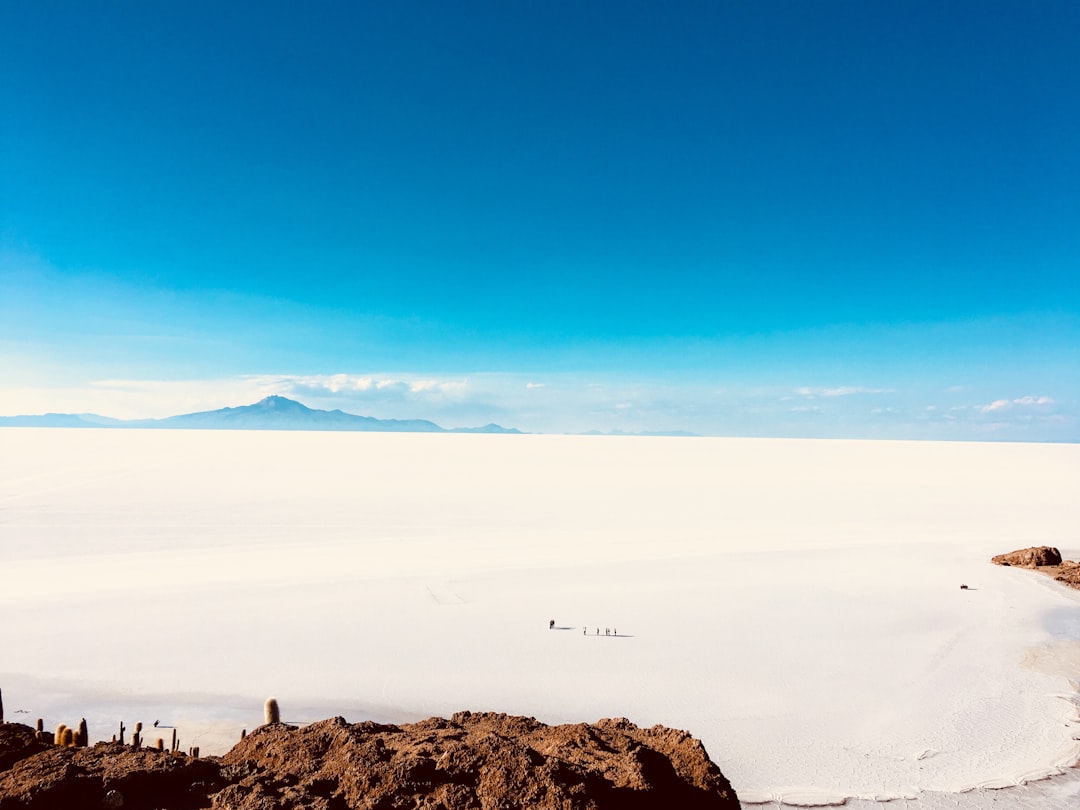

At a 3,656 meters above sea level, where the air is so thin that each breath requires a small conscious effort, lies the largest white expanse in the world. The Salar de Uyuni covers 10,582 square kilometers in the Bolivian highlands of the Potosí department, a territory shaped by millennia of volcanic activity that has left behind one of the most extraordinary landscapes on the planet. It is not just the scale that takes your breath away: it is the physical sensation of walking on something that seems impossible, a salt crust averaging five meters thick that conceals enormous reserves of lithium beneath it.
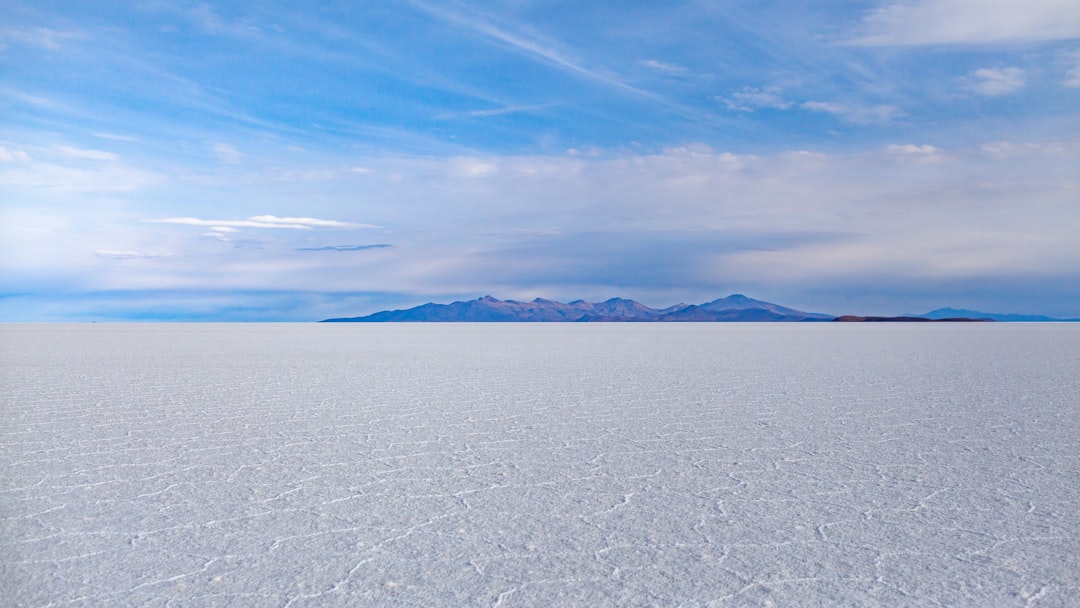
The geological history of this place begins with the prehistoric lake Lago Minchin, which later evolved into Lago Tauca, ancient bodies of water that covered much of the Andean highlands. When the climate changed and evaporation exceeded precipitation, the dissolved minerals concentrated until they crystallized. The surrounding volcanoes — including Tunupa, which rises to 5,432 meters on the northern edge of the salt flat — are not mere backdrops: they have been the tectonic protagonists that shaped the basin itself, trapping the water and sediments that over time transformed into this white ocean.
The Tunupa Volcano and the Mythology of Salt
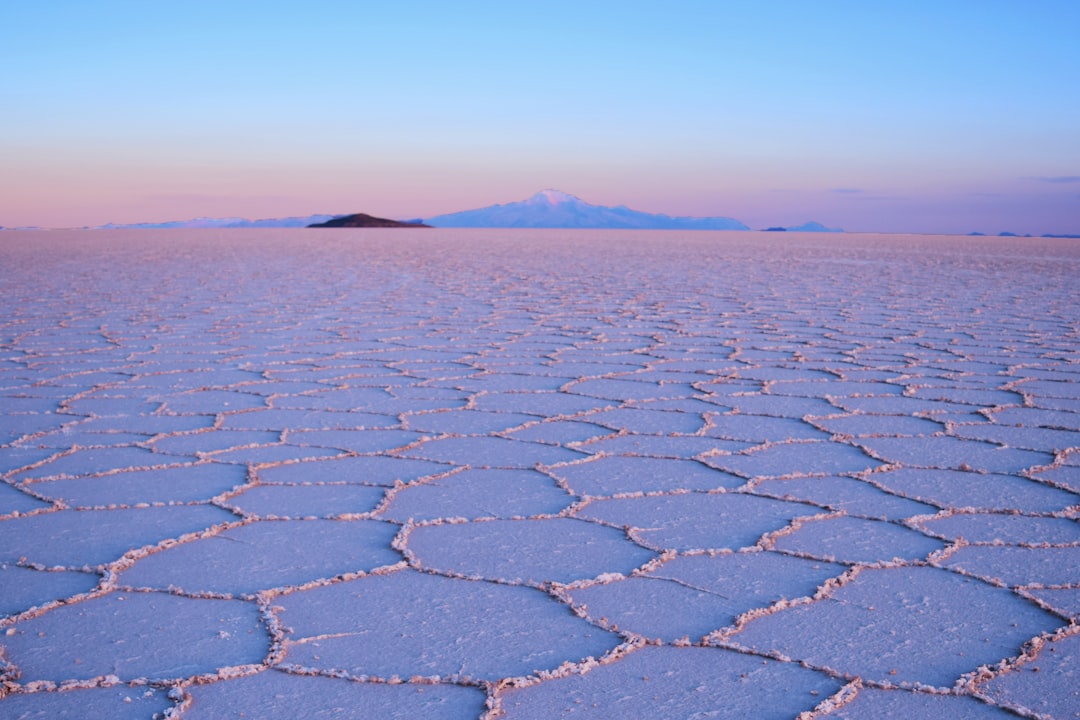
The Cerro Tunupa dominates the northern edge of the salt flat with a presence that the Aymara communities have always interpreted in a sacred way. According to local tradition, the volcano is a female deity whose tears are said to have formed the salt of the plain. Whether one believes in the legend or not, the geological fact is equally fascinating: Tunupa is a potentially active volcano, with documented fumarolic activity, and its ascent — doable with an experienced guide — offers a panoramic view of the entire white expanse that fades into the horizon without a point of reference.
On the slopes of the volcano, there are also some pre-Columbian tombs carved into the rock, testimonies of the populations that inhabited this region before the arrival of the Spaniards. The village of Coquesa, at the foot of Tunupa, preserves mummies and artifacts that the more curious tourists can visit with a small detour from the main route. It is one of those details that transform a photographic trip into a layered experience.
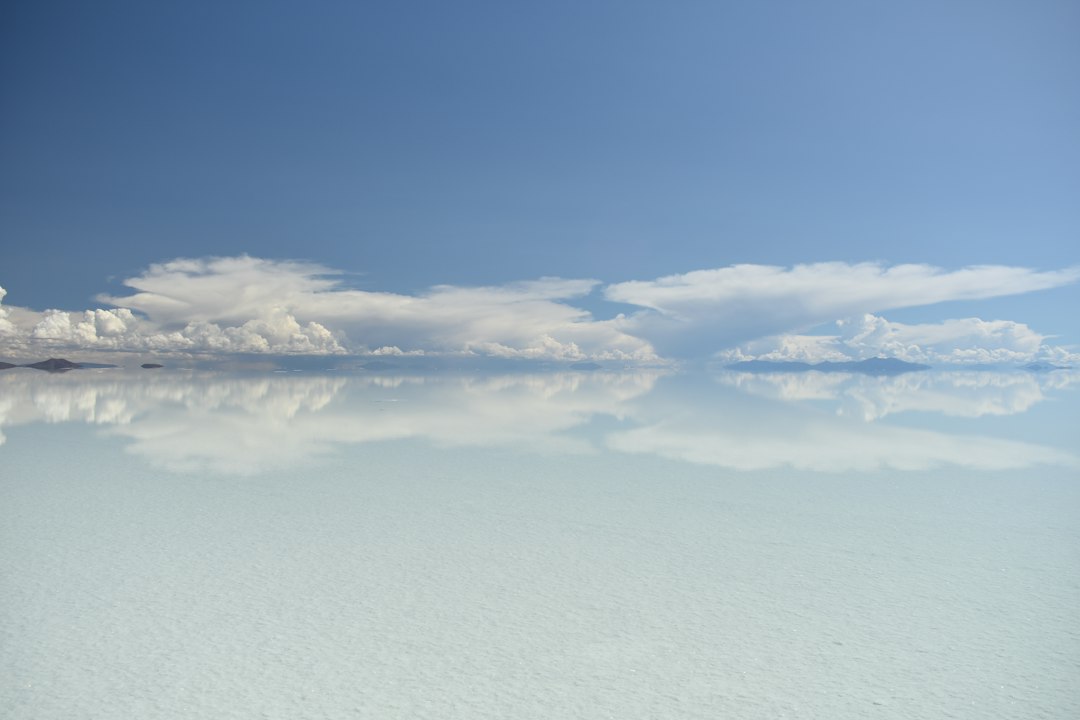
The water mirror: when the salt flat becomes sky
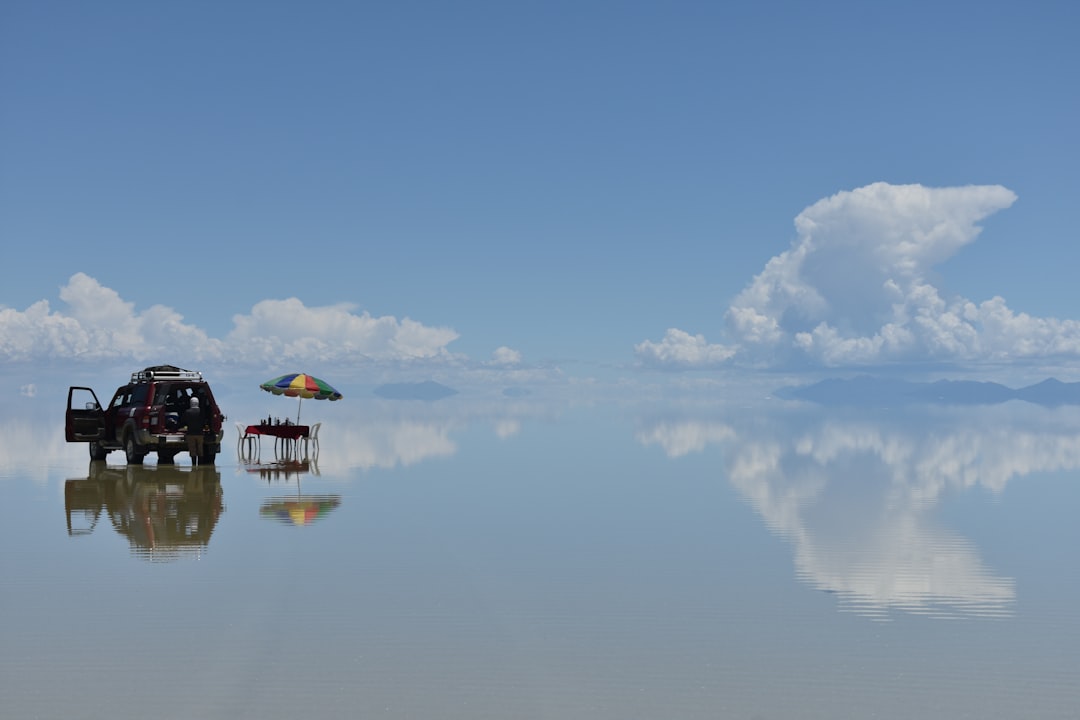
Between November and March, the rainy season brings downpours to the plateau that leave a few centimeters of water on the surface of the salt. It is during this period that the Salar de Uyuni becomes the largest natural mirror in the world: the white crust reflects the sky with such absolute precision that it completely erases the horizon line. Photographing in these conditions means capturing images where the clouds seem to exist both above and below your feet.
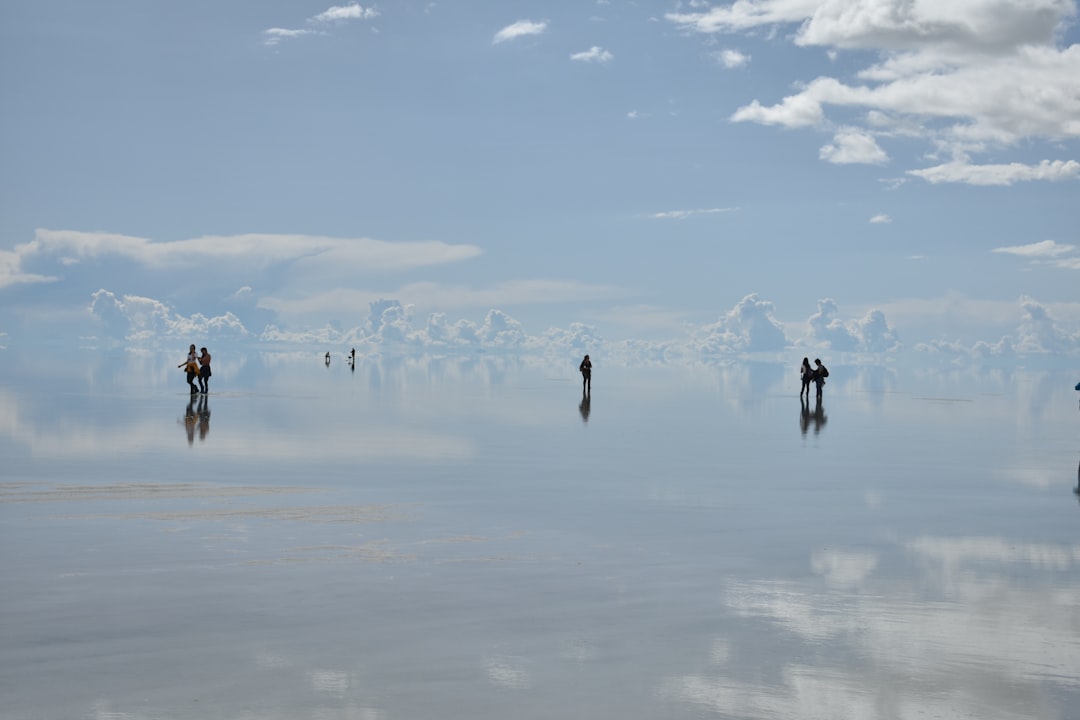
This effect is not guaranteed every day — it depends on the amount of rain that has fallen in the previous hours — but when it occurs, it creates a visual disorientation that no description can truly prepare you for. The 4x4 vehicles crossing the salt flat during this season seem to float in the sky. The surface beneath the wheels remains solid, but all around is pure reflection.
Isla Incahuasi: an island of fossil corals in the desert
At the center of the salt flat lies Isla Incahuasi, an ancient volcanic promontory that rises from the salt plain like a geological anomaly. Its surface is covered with columnar cacti of the species Echinopsis atacamensis, some of which exceed ten meters in height and are estimated to be over a thousand years old — they grow about one centimeter per year. Even more surprising is the presence of fossil corals on the rock: concrete evidence that here, millions of years ago, there was a real sea.
Access to the island requires a small fee — generally around 30-50 bolivianos per person, equivalent to a few euros — and includes a circular path that allows you to climb to the highest viewpoint. From up there, the view of the salt flat is total: white in every direction, with the silhouettes of the volcanoes on the horizon.
Practical tips for visiting the Salar de Uyuni
The logistical base for any visit is the city of Uyuni, reachable by train from Oruro or by bus from various Bolivian cities. From Uyuni, organized tours of one, three, or more days depart, including the salt flat, the geysers of Sol de Mañana, and the colorful lagoons of the Eduardo Avaroa Reserve. Three-day tours are the most recommended for those who also want to see the volcanoes and the southern lagoons.
The best time for photography is at dawn, when the slanting light colors the salt pink and orange before the sun rises and flattens the contrasts. Bringing sunglasses with high UV protection is essential: the reflection of the sun on the white surface is intense even on cloudy days. In the dry season, between May and October, the surface is completely dry and traversable at every point, but the mirror effect is lost. Choosing the period depends on what you want to see: the lunar landscape or the reflected sky.


