
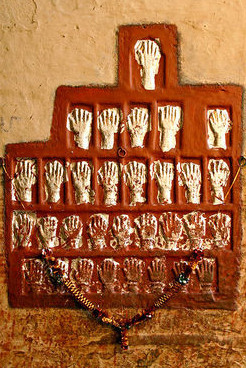

In the heart of Jodhpur, a city renowned for its striking blue buildings and majestic forts, lies a poignant reminder of the past—the Sati handprints of the Fifteen Jodhpur queens. These handprints, etched into the stone as a symbol of sacrifice and loyalty, tell an emotional story that resonates deeply within the cultural fabric of Rajasthan.
The history of these handprints is intertwined with the legacy of Maharaja Man Singh, who ruled in the mid-19th century. Upon his death in 1843, a tradition steeped in both reverence and sorrow unfolded. The practice of Sati, where widows self-immolated on their husbands' funeral pyres, was prevalent in certain Indian communities. The fifteen queens, as per the custom, chose to leave their handprints near the Loha Pol or Iron Gate of the illustrious Mehrangarh Fort, symbolizing their commitment to their king even in death. This act was both a tribute and a final farewell, marking a somber chapter in Rajasthan's royal history.
As you approach the Mehrangarh Fort, you'll be captivated by its formidable architecture. The fort, built in 1459 by Rao Jodhaji, showcases a blend of Rajput and Mughal architectural styles, characterized by intricate carvings, expansive courtyards, and grand palaces. The handprints are not the only artistic marvel here; the fort is home to several stunning palaces, including the Moti Mahal and Phool Mahal, adorned with elaborate frescoes and delicate mirrors that reflect the opulence of the Rajput era. The fort's walls echo the tales of valor, while its architecture stands as a testimony to the artistic ingenuity of the time.
Local culture in Jodhpur is vibrant and multifaceted, heavily influenced by its royal heritage. Festivals such as Diwali and Holi are celebrated with fervor, transforming the city into a kaleidoscope of colors and traditions. The annual Jodhpur RIFF (Rajasthan International Folk Festival) attracts artists and performers from around the world, showcasing the rich musical traditions of Rajasthan. The Marwar Festival, held in October, is another highlight, celebrating the region's folk music, dance, and cultural heritage. Visitors can immerse themselves in local customs, from the traditional dance forms to the intricate art of bandhani (tie-dye), a craft that has been passed down through generations.
When it comes to gastronomy, Jodhpur offers a tantalizing array of dishes that reflect its rich culinary heritage. Be sure to try dal baati churma, a traditional Rajasthani dish made of lentils and wheat rolls served with a sweetened crumb mixture. Another local favorite is gatte ki sabzi, a curry made from gram flour dumplings. Pair these with a glass of lassi, a refreshing yogurt-based drink, or indulge in sweet treats like mohan thal and jalebi, which will surely delight your taste buds.
While most visitors come to see the iconic handprints and the imposing fort, there are several lesser-known curiosities that add depth to a trip to Jodhpur. For instance, the blue houses of the old city, traditionally painted to signify the homes of Brahmins, create a stunning visual landscape against the stark desert backdrop. Moreover, local legends speak of a ghostly presence around the fort—stories of the queens wandering the premises in search of their lost king, adding a layer of mystique to your visit.
For those planning a journey to this captivating city, the best time to visit is from October to March, when the weather is pleasantly cool. Early mornings and late afternoons are ideal for exploring the fort and nearby markets, where you can find handicrafts and textiles unique to the region. Don’t forget to bring comfortable shoes, as the fort’s pathways can be steep and winding.
As you explore, take a moment to reflect on the stories behind the Sati handprints, and let the rich tapestry of Jodhpur’s history, culture, and cuisine envelop you. For a personalized travel experience, consider using the Secret World app to plan your itinerary and uncover more about this enchanting city.


