
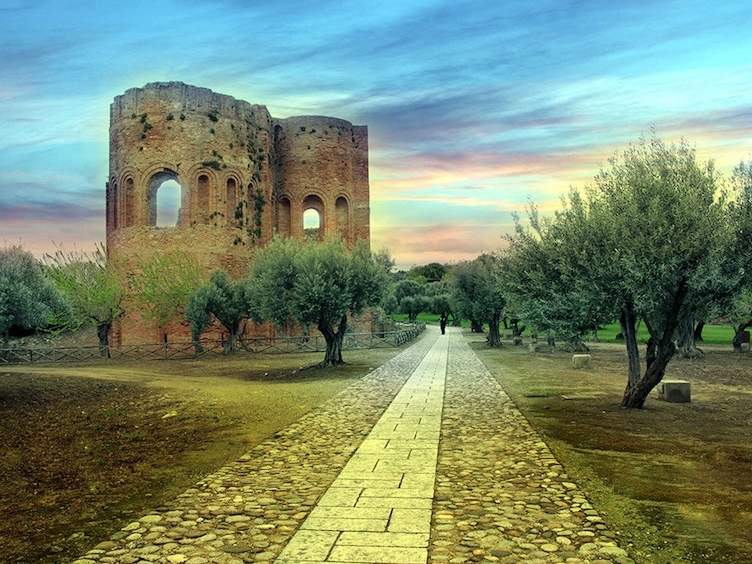

Nestled in the heart of Calabria, the Scolacium Archaeological Park is a treasure trove of history that captures the rich tapestry of human civilization over centuries. Its lush landscapes, shaded by ancient olive groves, provide a stunning backdrop for exploring the remnants of a once-thriving community that transitioned from ancient Greek roots to Roman grandeur and medieval prominence.
The origins of Scolacium can be traced back to the Greek colony of Skylletion, established in the 7th century BCE. Although nothing remains of this early settlement, it laid the groundwork for what would become a significant Roman city. The Romans, under Emperor Augustus in the 1st century CE, transformed Skylletion into Minerva Scolacium, a bustling hub named after the goddess of wisdom. This era was marked by prosperity, which is reflected in the extensive ruins that dot the park today. After falling into decline during the early medieval period, Scolacium was revived by the Normans, who erected an abbey church between the 11th and 12th centuries, a monumental structure that still stands as a testament to the area’s historical significance.
The abbey church, known as the Church of Santa Maria della Roccelletta, is a striking example of architectural fusion. The building showcases a blend of Romanesque, Byzantine, and Arab influences, featuring a single, expansive nave with a tri-partite apse that draws the eye upwards. Visitors will be captivated by the intricate details, from the beautiful arches to the stunning frescoes that adorn the interior, reflecting the artistic creativity of the time. The church’s design not only served a spiritual purpose but also functioned as a defensive fortress, a nod to its strategic importance in the region.
As you wander through the park, the remnants of the Roman forum, theatre, and amphitheatre come alive, each telling stories of the vibrant social life that once flourished here. The theatre, with its semi-circular seating, echoes the laughter and applause of ancient audiences, while the amphitheatre, capable of hosting gladiatorial contests, invites visitors to imagine the thrill of the crowd. The necropolis offers a somber yet fascinating glimpse into the burial practices of the past, revealing the deep connection between the living and the dead. Additionally, an oil mill showcases the region's agricultural heritage, emphasizing the significance of olive oil production in ancient times.
The Archaeological Museum within the park further enriches the experience, presenting a collection of artifacts that vividly illustrate daily life in Scolacium. Items ranging from pottery to tools and jewelry highlight the craftsmanship and cultural practices of the people who once inhabited this area. Each piece adds depth to the narrative of the city, allowing visitors to connect with its history on a personal level.
Local culture in the region is vibrant and steeped in tradition. The annual "Armonie d'arte Festival" transforms the park into a stage for artistic expression every summer. This festival celebrates music, dance, and theatre, drawing artists and audiences from across Italy and beyond. It’s a unique opportunity to experience the cultural heartbeat of Calabria in a historic setting, where ancient stones resonate with modern creativity.
When it comes to gastronomy, Scolacium and the surrounding area offer a delightful array of local flavors. Visitors should not miss trying 'nduja, a spicy spreadable salami that exemplifies Calabrian cuisine. Pair it with a glass of Greco di Bianco, a sweet white wine that complements the region’s rich culinary offerings. Additionally, the area is renowned for its olive oil, which is often celebrated in local dishes and served fresh on warm bread. The combination of these flavors reflects the agricultural bounty of Calabria and its lasting culinary traditions.
For those venturing to Scolacium, timing can enhance the experience. The best time to visit is during the spring and early autumn months, when the weather is mild and the park is less crowded. Be sure to wear comfortable walking shoes, as the site covers a substantial area, and explore at a leisurely pace to fully appreciate the intricate details of the ruins.
Among the lesser-known curiosities about Scolacium is the nearby legend of the "Moro di Roccelletta," a tale of a Moorish prince who fell in love with a local woman. It is said that his spirit still wanders the ruins, forever longing for his lost love. This romantic lore adds an enchanting layer to the already rich history of the site, inviting visitors to ponder the stories that lie beneath the surface.
As you prepare to explore this captivating archaeological park, remember to take a moment to immerse yourself in the history that surrounds you. From the ancient ruins to the vibrant local culture, Scolacium offers an unforgettable journey through time.
To make the most of your visit, consider using the Secret World app to plan a personalized AI itinerary that caters to your interests.


