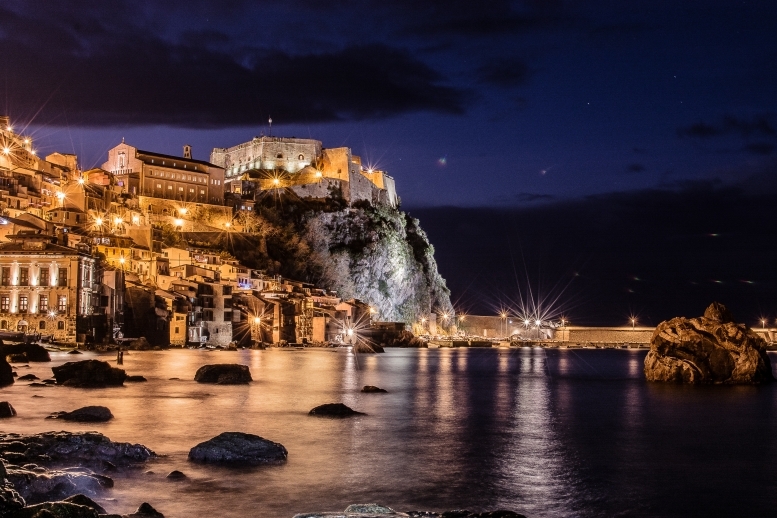

Scilla, a quaint coastal village in the province of Reggio Calabria, beckons travelers with its stunning vistas and rich history. Perched on a dramatic rocky spur overlooking the shimmering Tyrrhenian Sea, this gem is often overshadowed by its more famous neighbors, yet it holds a beauty that captivates every visitor.
### History and Origins The history of Scilla is as enchanting as its landscape. Legend has it that Homer immortalized the village in his epic, the Odyssey, depicting it as the lair of the sea monster Scylla, who terrorized sailors. The town's origins trace back to ancient times, with evidence of settlements dating to the Bronze Age. Historically, it was a flourishing center during the Greek and Roman periods, serving as a vital point for maritime trade.
In the Middle Ages, Scilla became a notable stronghold, and the Ruffo Castle, built in the 11th century, stands as a testament to its strategic significance. This castle, associated with the powerful Ruffo family, offers panoramic views of the surrounding coastline and the distant Strait of Messina. Throughout the centuries, Scilla has witnessed various invasions, including the Saracens and later the Spanish, each leaving their mark on this picturesque village.
### Art and Architecture One of Scilla's defining characteristics is its captivating architecture. The village is a blend of Mediterranean and Sicilian styles, evident in the narrow, winding streets and colorful houses that seem to cascade down towards the sea. The Chianalea district, often referred to as “Little Venice,” is particularly charming; here, homes are built right against the water, with boats bobbing in the tide beneath their balconies.
Notable structures include the Church of San Rocco, a beautiful example of Baroque architecture adorned with intricate frescoes. The Ruffo Castle, with its imposing stone walls, not only serves as a historical monument but also as an art installation, showcasing the craftsmanship of local artisans through the ages.
### Local Culture and Traditions Scilla's culture is steeped in tradition, with festivals that celebrate its rich heritage. The Feast of San Rocco, held every September 16th, is the most significant event, featuring a vibrant procession that honors the patron saint. Locals dress in traditional attire, and the streets come alive with music, dance, and culinary delights.
Another unique tradition is the “Festa della Madonna della Consolazione,” which takes place in the summer. This event draws visitors from all over, showcasing not just the local customs but also the tight-knit community spirit of Scilla. During these festivities, visitors can experience authentic Calabrian hospitality, sampling local wines and delicacies.
### Gastronomy No visit to Scilla is complete without indulging in its culinary offerings. The region is famous for its seafood, particularly swordfish, which is often grilled or served in a rich tomato sauce. Another local delicacy is ‘nduja, a spicy, spreadable salami that adds a kick to any meal.
For those with a sweet tooth, pignolata—a dessert made from fried dough and covered in honey—is a must-try. Pair your meal with a glass of Greco di Bianco, a local white wine that perfectly complements the fresh flavors of the sea. The food here tells the story of the land and its people, infused with passion and tradition.
### Lesser-known Curiosities While many tourists flock to the scenic beaches, fewer know that Scilla is also home to several hidden gems. One fascinating aspect is the Scilla Lighthouse, built in 1854, which is often overlooked. Its light once guided sailors through the treacherous waters of the Strait of Messina.
Additionally, the legend of Scylla remains an integral part of the local lore. Many fishermen still recount tales of encounters with the mythical sea monster, adding an air of mystique to this coastal haven. Moreover, the Scilla’s Grotto, a lesser-known cave, offers a glimpse into the geological wonders that define this area.
### Practical Visitor Information The best time to visit Scilla is from April to June or September to October, when the weather is pleasantly warm, and the crowds are fewer. While Scilla can be reached by car or train, parking can be limited in the high season, so plan accordingly.
Be sure to wander the narrow streets of Chianalea, where you can appreciate the stunning views of the sea and perhaps enjoy a meal at one of the local trattorias. Don't miss the chance to explore the Ruffo Castle for breathtaking views at sunset.
In conclusion, Scilla is more than just a picturesque village; it is a blend of history, culture, and gastronomic delights that invites travelers to explore its charms. For a personalized experience to uncover the secrets of Scilla, consider using the Secret World app to plan your journey.
