


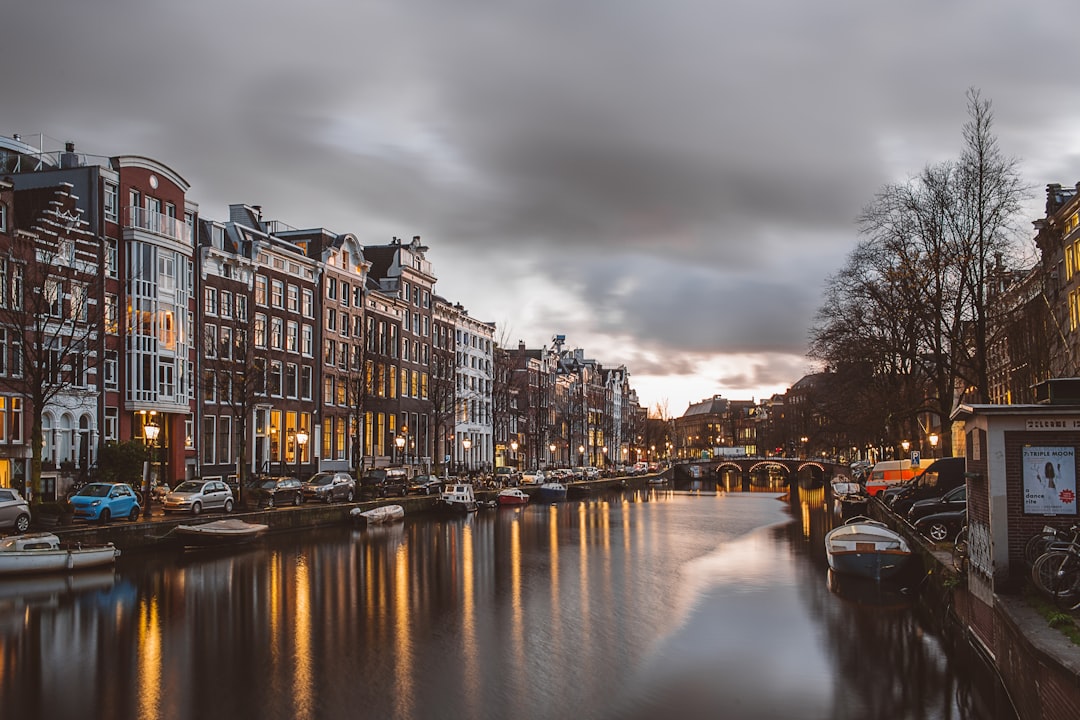
Amsterdam has 165 canals, over 1,500 bridges, and a historic center where the distance between the Rijksmuseum and Vondelpark is just a 10-minute walk, but the distance between Jordaan and the De Pijp neighborhood can seem like a maze if you don't know the city. Add to this the museums that require mandatory reservations weeks in advance — like the Anne Frank House, where online tickets cost €16 and sell out in a few hours — and you immediately understand why planning a trip to Amsterdam is not as straightforward as it seems.
In 2026, the most common answer to this problem is to rely on an AI trip planner. But not all tools are the same. The comparison between Secret World vs Wanderlog has become one of the most sought after by those who want to optimize every day in Amsterdam without wasting time searching through dozens of different sites. Let's see what they really offer, with data in hand.
Wanderlog, TripIt and Google Trips: what works and what doesn't

Wanderlog is probably the most popular trip planner among digital travelers. It allows you to import booking emails, create collaborative maps, and organize itineraries day by day. For Amsterdam, it works reasonably well: you can mark the Van Gogh Museum (entrance €22, at least 2 hours recommended), the Rijksmuseum (€25, minimum 3 hours), and build a logical route between the canals. The real limitation of Wanderlog is that it remains a tool for passive organization: it helps you gather information you have already found elsewhere, but it does not generate it intelligently nor contextualize it based on your travel profile.
TripIt excels in managing travel documents — flights, hotels, transfers — but for planning activities in Amsterdam, it is almost useless. It does not suggest itineraries, does not know the neighborhoods, does not realize that the Albert Cuyp Market in De Pijp is worth a whole morning and that the Negen Straatjes is the right place for vintage shopping in Jordaan. Google Trips has effectively been abandoned and its functions absorbed by Google Maps, which remains excellent for navigation but not for building deep thematic itineraries. Roadtrippers, finally, is designed almost exclusively for road trips in the United States: in Amsterdam, a city of bicycles and trams, it is practically out of context.

Why Secret World Changes the Rules of the Game for Amsterdam
Secret World AI Trip Planner is born with a different approach: it is not a booking aggregator nor a simple digital calendar. It is an artificial intelligence system that generates personalized itineraries based on your preferences, available time, and the actual characteristics of the destination. For Amsterdam, this makes a huge difference: the AI knows that visiting the Jewish Quarter with the Portuguese Synagogue (entrance €17.50) and the Jewish Museum naturally pairs with a walk along Waterlooplein, and that all of this can be done in half a day starting from Centraal Station with tram 14.

The Secret World database covers over 1 million destinations worldwide, with a level of detail that goes far beyond the usual points of interest. In Amsterdam, this means finding not only the Rijksmuseum or Vondelpark, but also the American Bookstore on Spui, the Flower Market on Singel open every day except Sunday, or the Foam Photography Museum on Keizersgracht — places that generalist tools simply ignore.
KnowWhere and the audio guides: explore Amsterdam like a local
One of the most original features of Secret World is KnowWhere, an interactive game that challenges you to learn more about the destinations you are about to visit. For Amsterdam, you might find yourself answering questions about which architect designed the Rijksmuseum (Pierre Cuypers, 1885) or how many museums the city officially has (over 75). It is not entertainment for its own sake: it is a way to arrive in Amsterdam with real cultural context, transforming a visit into a conscious experience.
The integrated audio guides of Secret World complete the picture. As you walk along the Prinsengracht or approach the Anne Frank House, the app narrates the history of the place in a storytelling manner, without the rigidity of traditional audio guides. Unlike Wanderlog, which shows you a pin on a map, Secret World immerses you in the context. For a city like Amsterdam — where every canal house facade hides centuries of mercantile history and every bridge has a story — this difference is substantial.
Secret World vs Wanderlog: the verdict for your trip to Amsterdam
If you are just looking for a place to save the links of your bookings, Wanderlog does its job. But if you want to arrive in Amsterdam with a tailor-made itinerary that optimizes travel times between Museumplein and the NDSM district, that suggests you book the Anne Frank House at least three weeks in advance, and that tells you about the city while you experience it, then Secret World is in a different category. In the direct comparison Secret World vs Wanderlog, the former wins for depth, customization, and overall experiential value.
Planning Amsterdam in 2026 doesn’t have to be a full-time job. Download Secret World AI Trip Planner and let the artificial intelligence build the perfect itinerary for you — from the canals of Jordaan to the hidden alleys of De Pijp, from the collections of the Rijksmuseum to the less-traveled streets that only those who truly know the city can find.


