
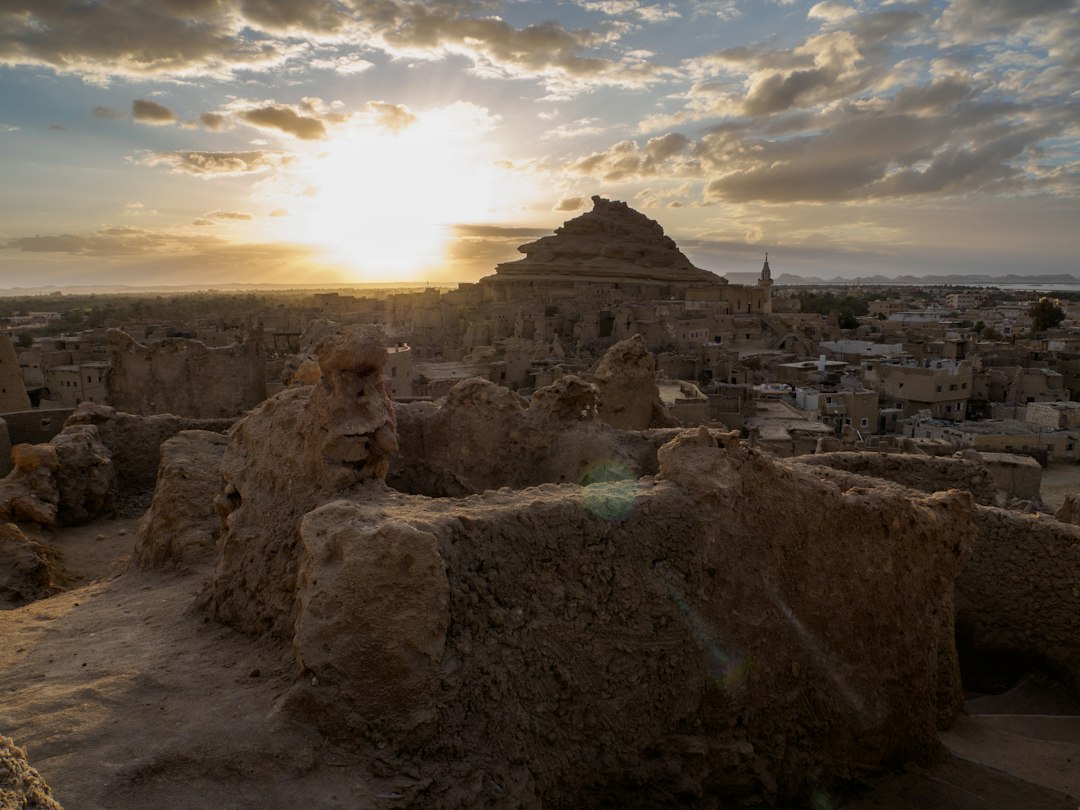

From the center of the oasis of Siwa, a few kilometers from the Libyan border, rises a shapeless mass of towers and ochre walls that seems to be slowly returning to the earth from which it was born. The fortress of Shali is entirely built of kershef, a local material made from blocks of dried salt and lake mud, mixed with straw. When it rains — a rare event in the Sahara, but not impossible — the walls visibly erode, and the entire structure loses a few centimeters of itself. It is this process of slow dissolution that makes Shali unique among the defensive architectures of North Africa.
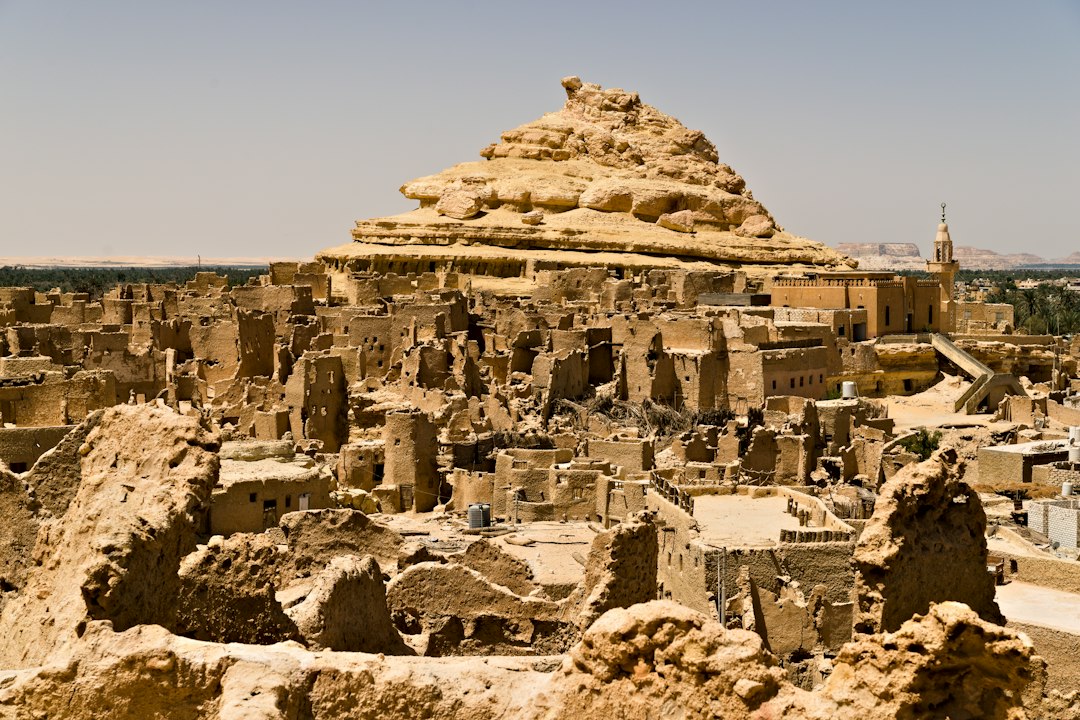
The fortress was built around 1203 AD by the inhabitants of the oasis, who sought protection from the raids of Bedouin marauders. For centuries, the entire population of Siwa lived within its walls, in multi-level stacked dwellings, accessible via internal stairs and narrow passages. Today, those upper floors have mostly collapsed, but the supporting structure endures, and climbing to the highest point of the fortress is still possible and absolutely recommended.
The architecture of kershef: building with salt
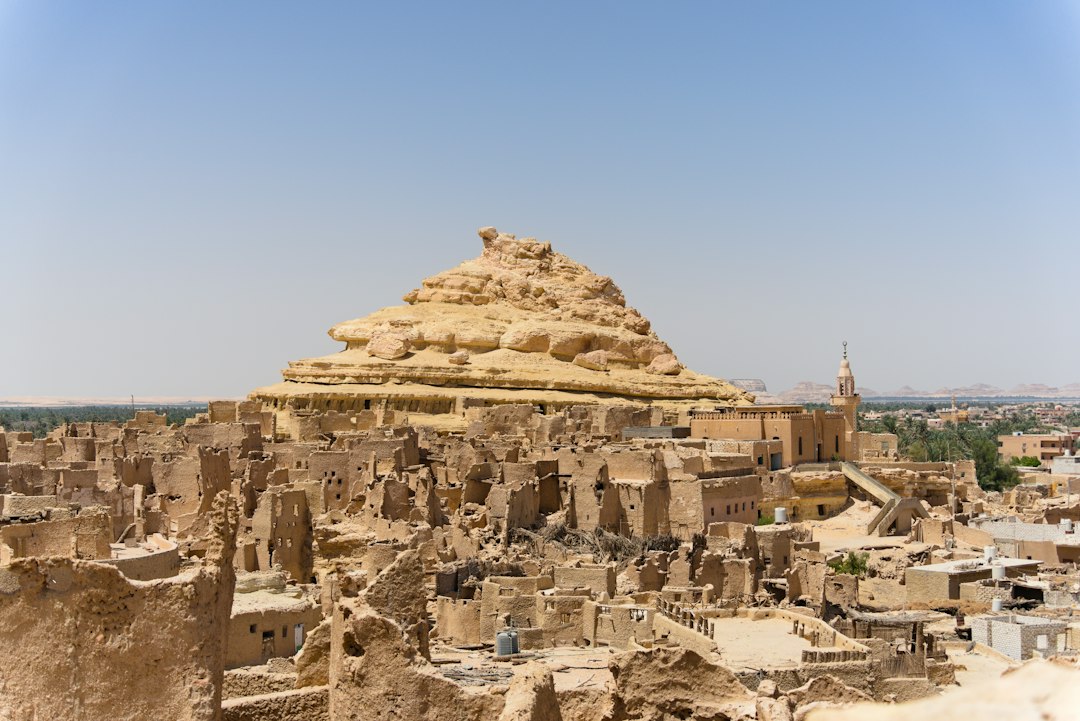
Walking along the streets that perimeter Shali means closely observing a construction technique that has no equivalents in the world. The blocks of kershef are cut from the shores of the salt lakes that surround the oasis — particularly from Lake Birket Siwa — and left to dry in the sun before being layered with a mixture of mud and straw. The result is a compact yet fragile masonry that cannot withstand prolonged humidity.
Looking closely at the walls, one can notice the white veins of salt that surface, especially during the hottest hours of the day, when evaporation is at its peak. Some sections show overlapping layers from different periods of construction and restoration, readable like a stratigraphy visible to the naked eye. There are no sculptural decorations or frescoes: the aesthetics of Shali lie entirely in the texture of the material and the organic shape of the towers.
The view from the roof and the treasures of the landscape
Reaching the top of the fortress requires caution: the internal paths are uneven and some sections of the floor are unstable. But the view that opens up from the roof rewards every effort. From up there, you can simultaneously see the salt lakes reflecting the sky to the west, the expanses of date palms surrounding the inhabited center — Siwa has several hundred thousand cultivated palms — and on the horizon, the first dunes of the Great Sand Sea, the desert that literally begins at the edge of the country.
Below, the market and the streets of the historic center appear miniature. The flat roofs of modern houses stand out next to the remains of the historic homes abandoned in 1926, when an exceptional three-day rain severely damaged the fortress, convincing the inhabitants to move to more solid constructions outside the walls. That date marks the end of Shali as an inhabited center and the beginning of its life as a monument.
Artistic and Decorative Details to Look For
Shali is not rich in ornaments in the traditional sense of the term, but those who observe closely find interesting architectural elements. The window openings, in the few rooms still accessible, show slightly pointed arch shapes, typical of Berber-North African influence. Some thresholds retain traces of geometric decorations engraved in the kershef before drying, a type of local craftsmanship that is also found in the traditional houses of the oasis.
In the evening hours, the fortress is illuminated by spotlights that enhance its rough texture and irregular volumes. It is at this moment that Shali appears most photogenic: the shadows cast by the fragmented walls create changing geometries, and the color of the kershef shifts from ochre to brick red. The night lighting has been installed in recent years as part of tourism enhancement interventions in the oasis.
Practical information for the visit
Access to the base of the fortress is free and open: you can walk around the structure at any time. To go inside and reach the viewpoints, it is advisable to ask for directions from local residents or accommodations in the center, who can indicate the safest routes. The best time to visit is late afternoon, about an hour before sunset: the slanting light enhances the textures of the kershef and the temperatures are bearable even in summer.
Siwa can be reached from Marsa Matruh, on the Egyptian Mediterranean coast, by bus that covers about 300 kilometers of desert road in three to four hours. Alternatively, there are private transfers from Alexandria, Egypt. Once in the oasis, the fortress is located in the heart of the town and can be reached on foot from the central market in a few minutes. Bringing sturdy-soled shoes is essential: the ground around the ruins is uneven and often scattered with fragments of kershef.


