
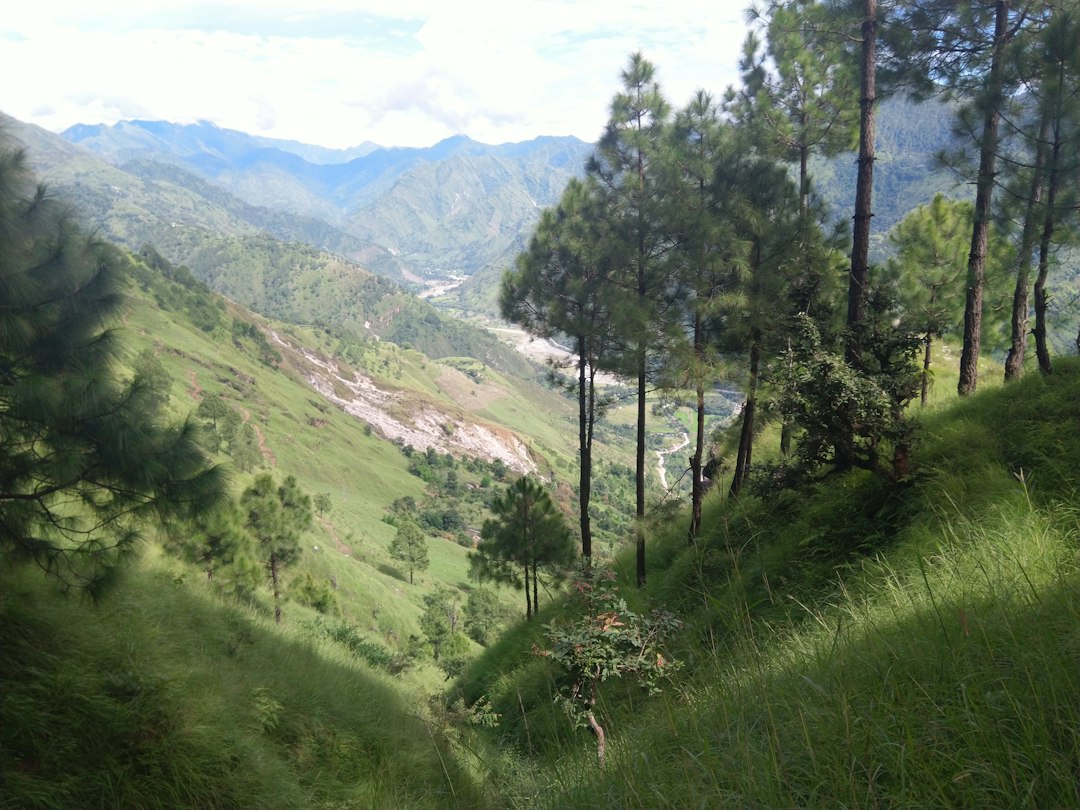

Twenty-three watchtowers rise along the stone walls that embrace Sighnaghi, a walled city built in the 18th century on the hills of the Kakheti region, in the heart of eastern Georgia. From up here, the gaze sweeps unobstructed over the Alazani valley, where vineyards stretch out in geometric order to the foot of the Caucasus Mountains, with snow-capped peaks closing the horizon like a theatrical backdrop. This is not a reconstructed scenario for tourists: the walls are the original ones, erected at the behest of King Erekle II in the second half of the eighteenth century to protect the city from incursions by the Lezgins from the north.
Sighnaghi is one of the best-preserved cities of medieval and modern Georgia. Its walls extend for about four kilometers along the hilly perimeter, and visitors can walk a good part of it on foot, moving from one tower to another, observing the construction details in local stone and enjoying ever-changing views of the surrounding countryside. It is not a closed museum: the walls are an integral part of the urban fabric, and between the bastions, alleys open up with houses featuring carved wooden balconies, Orthodox churches, and small cellars where local producers offer their wine.
The history of the walls and King Erekle II
The walls of Sighnaghi were built in the second half of the 18th century, during the reign of Erekle II, a central figure in modern Georgian history. The king, who ruled over Kakheti and then over the unified eastern Georgia, ordered the construction of fortifications to defend the local population and the merchants traveling along the region's trade routes. The choice of site was not random: the elevated position of the hill ensured excellent visibility over the underlying plain, making any undetected enemy approach difficult.
The 23 intact watchtowers are the most immediate testimony of that era. Some can be visited from the inside, with narrow and steep stone stairs leading up to the original arrow slits. Looking through these openings, one immediately understands the defensive logic of the system: each tower covered a specific sector of the surrounding territory, and together they ensured continuous surveillance without blind spots. The building material is locally quarried limestone, which over time has taken on a particularly beautiful golden hue during sunset hours.
What to observe while walking along the walls
The path along the walls typically requires two hours of leisurely walking, with some ups and downs that test the legs but offer stunning viewpoints. The best-preserved sections are found in the southern and eastern parts of the city walls, where the towers are closer together and the walls still maintain their original height. In some places, it is possible to walk along the walkway, a sensation that directly conveys the scale and solidity of the construction.

Details worth looking for: the protruding stone brackets that once supported wooden structures for the defenders, the variations in the type of stonework that indicate restoration efforts in different eras, and the historical graffiti etched on the inner walls of some towers. The main gate of the city, still functioning as a vehicular access, retains the original wrought iron hinges and the stone arch with its sober decoration typical of Georgian military architecture.
The context of wine and the valley
Sighnaghi is located in Kakheti, the region that produces most of the Georgian wine. Georgia boasts a winemaking tradition that dates back over eight thousand years, and the traditional method of fermentation in buried terracotta vessels, called qvevri, is recognized by UNESCO as an intangible cultural heritage. From the walls, you can literally see the vineyards that sustain this tradition: orderly rows covering the plain up to the Alazani River, with indigenous varieties like Rkatsiteli and Saperavi cultivated for generations.
Many wineries in the city offer tastings directly in their underground cellars, often carved out of the same historic structures adjacent to the walls. Prices are generally affordable compared to Western European standards, and some family-run wineries welcome visits without reservation. It is one of the most direct ways to understand why this region is considered the cradle of wine.
Practical Information for the Visit
Access to the walls and towers is generally free and does not require an entrance ticket, although some specific areas may have different conditions. The best time to visit is in the late afternoon, when the slanting light enhances the colors of the stone and the shadows of the towers stretch over the vineyards. In summer, the heat can be intense during the central hours, so it is preferable to start the morning tour before ten.
Sighnaghi is about one hundred and twenty kilometers from Tbilisi and can be easily reached by marshrutka, the collective minibuses that depart from the Ortachala station in the Georgian capital. The journey takes about two and a half hours. Those who prefer to have more flexibility can rent a car: the road is paved and well signposted. It is advisable to stay at least one night in the city to enjoy the evening atmosphere, when the day visitors leave and Sighnaghi regains its authentic tranquility.


