
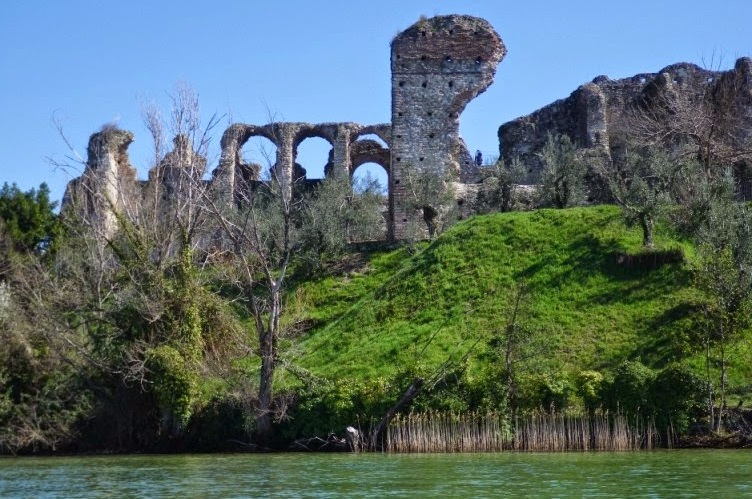

Nestled on the picturesque peninsula of Sirmione, the Monastery of San Salvatore stands as a testament to Italy's rich historical tapestry. Founded in the late 8th century, specifically around 760 AD, by Queen Ansa, the wife of Desiderio, the last king of the Longobards, this monastic site once thrived as part of a female monastic complex. Although only fragments remain today, the three semicircular apses of the church can still be admired from the nearby public gardens, a serene space located between the local nursery and elementary school. The central apse, larger than its companions, hints at the grandeur that once characterized this sacred space, now softened by time yet resolutely standing against the backdrop of Sirmione’s vibrant life.
The history of San Salvatore is woven into the very fabric of the region, reflecting the turbulent yet fascinating narrative of the Longobard dynasty and its eventual decline. Following the fall of the Longobards, the monastery became a crucial site for female monastic life, fostering religious devotion and education. It played a pivotal role during the Middle Ages, serving as a sanctuary for women seeking refuge or a life dedicated to spiritual pursuits. Over the centuries, the monastery faced various challenges, including invasions and the changing political landscapes of Italy, but its core mission of nurturing faith remained steadfast.
Architecturally, the Monastery of San Salvatore is a striking example of early medieval Lombard architecture. The simplistic yet powerful design of the apses, characterized by their semicircular forms, evokes a sense of tranquility that complements the surrounding landscapes. The surviving walls, primarily at the foundation level, tell a silent story of resilience. Visitors can appreciate the craftsmanship that has endured through centuries, allowing a glimpse into the aesthetic values of the time. While there are no notable artworks left within the monastery itself, the essence of the place invites reflection on the artistic expressions of the period, particularly the illuminated manuscripts and religious icons that would have adorned its interiors.
Culturally, Sirmione is vibrant, deeply rooted in traditions that highlight the life of its inhabitants. Festivals throughout the year celebrate local customs, with the Festa di San Giovanni (Festival of St. John) in June being particularly significant. During this time, locals and visitors partake in various activities, including processions and fireworks, all while enjoying the enchanting atmosphere created by the stunning backdrop of Lake Garda. The monastery’s historical significance is frequently woven into these celebrations, reminding the community of its rich heritage.
When it comes to gastronomy, the region is famed for its culinary delights, which reflect the agricultural bounty of the area. Local specialties include tortellini di Sirmione, a handmade pasta typically filled with rich meats or cheeses, and polenta, a staple dish that can be served in numerous ways. The nearby vineyards produce exquisite Lugana wine, known for its crisp and refreshing qualities, making it a perfect complement to regional dishes. Enjoying these flavors while overlooking the serene waters of the lake creates an unforgettable dining experience.
For those intrigued by the lesser-known curiosities of the Monastery of San Salvatore, it is worth noting that it is often overshadowed by more prominent attractions in Sirmione, such as the Scaliger Castle. However, this sanctuary offers a unique lens into the spirituality and resilience of women in the Middle Ages, a narrative often overlooked. A lesser-known fact is that the area surrounding the monastery is home to an ancient Roman villa, adding another layer of historical intrigue to your visit.
The best time to visit the Monastery of San Salvatore is during the shoulder seasons of spring (April to June) and autumn (September to October). These months provide pleasant weather and fewer crowds, allowing for a more intimate exploration of the site. Visitors should look for the remnants of the apses and the foundation walls, which are often missed in the haste of local tours. A leisurely walk through the nearby gardens can also offer a moment of reflection on the serenity that once filled this sacred space.
As you prepare for your journey to Sirmione, consider using the Secret World app to craft a personalized itinerary that captures the essence of this enchanting destination.


