
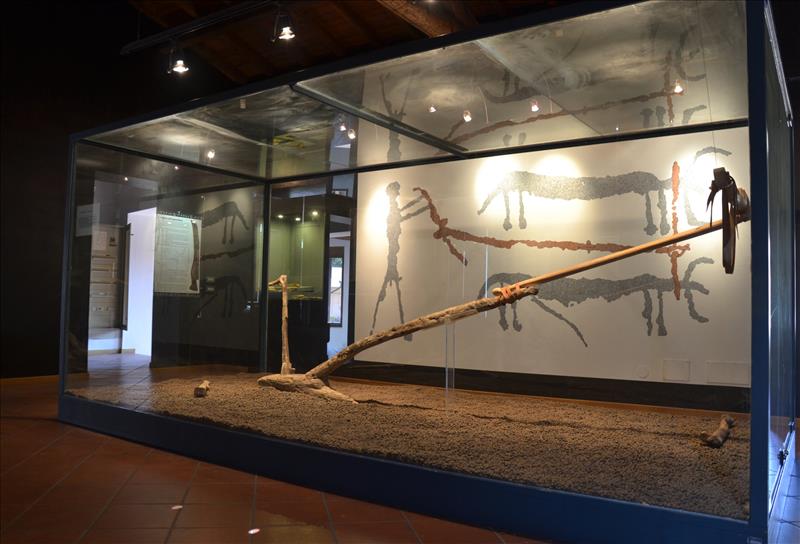

Nestled in the picturesque town of Desenzano del Garda, Italy, the Civic Archaeological Museum offers an extraordinary glimpse into ancient agricultural practices with its remarkable exhibit: the world's oldest known plow. Dating back to around 2000 B.C., this near-complete Bronze Age artifact is not merely a relic but a testament to human ingenuity and the evolution of farming.
The plow, discovered in the ancient pile-dwelling at Lavagnone, serves as an invaluable window into the agricultural techniques of early civilizations. It consists of three main components: the stump-vomere, the bure, and the stick. The stump-vomere acts as the plow's working body, while the bure facilitates attachment to the yoke, and the stick serves as a guiding rudder. Notably, this particular plow belongs to the "of Trittolemo" type, characterized by a one-piece bure and stump-vomere. Although the actual plowshare remains undiscovered, it was presumably a wooden insert designed to enhance its effectiveness in tilling soil, a crucial development for sustaining early agricultural societies.
The craftsmanship of the accompanying yoke is equally impressive. It showcases exquisite work, featuring ties that connect it to the bar with three central teeth, demonstrating sophisticated design for its time. The yoke’s leather straps, which secured the animal to the apparatus, provide insight into the daily lives of the people who utilized these tools. The discovery of a similar yoke fragment in Fiavé, dating back to the Middle Bronze Age, further emphasizes the significance of this region in the history of agricultural innovation.
Desenzano del Garda is not only steeped in agricultural history but also rich in art and architecture. The town is marked by a blend of Roman, medieval, and Renaissance influences. The Castello di Desenzano, a medieval castle perched on a hill, offers panoramic views of Lake Garda and is a fine example of the region's architectural evolution. The castle's stone walls and towers echo tales of past sieges and the strategic importance of the area throughout history.
Visitors will find that the local culture is vibrant and alive with traditions. The annual Festa dell'uva e del vino (Grape and Wine Festival) celebrated each September, showcases the region’s rich viticulture, inviting locals and tourists alike to sample wines from the surrounding vineyards. Additionally, the Sagra di San Giovanni, celebrated in June, features parades, music, and fireworks, reflecting the community’s deep-rooted customs that honor both religion and local heritage.
When it comes to gastronomy, the culinary offerings of Desenzano del Garda are a delight for the senses. Local specialties include tortellini di Valeggio, a stuffed pasta celebrated across the region, and baccalà alla vicentina, a traditional salted cod dish that is rich in flavor and history. The region is also known for its olive oil, produced from the nearby groves, which adds a unique zing to the local cuisine. Dining at a lakeside trattoria, one can enjoy these dishes while soaking in the stunning views of the lake.
For those interested in lesser-known curiosities, the museum's plow isn’t the only surprise Desenzano holds. The town is home to the ruins of a Roman villa, featuring stunning mosaics that depict scenes of daily life and mythology, which often go unnoticed by casual visitors. Additionally, the Pieve di Santa Maria, a Romanesque church dating back to the 8th century, boasts an enchanting bell tower and beautiful frescoes, yet remains a hidden gem overshadowed by more prominent attractions.
The best time to visit Desenzano del Garda is during the spring and early fall months when the weather is mild, and the tourist crowds are fewer. To make the most of your visit, consider taking a leisurely stroll along the lakeshore promenade or exploring the local markets, where you can find artisanal products and fresh produce.
As you plan your journey to this enchanting town, consider seeking personalized recommendations and insights to enhance your experience. With its rich history, vibrant culture, and stunning scenery, Desenzano del Garda is a destination that beckons exploration. Use the Secret World app to craft your ideal itinerary and uncover the hidden treasures of this remarkable locale.


