
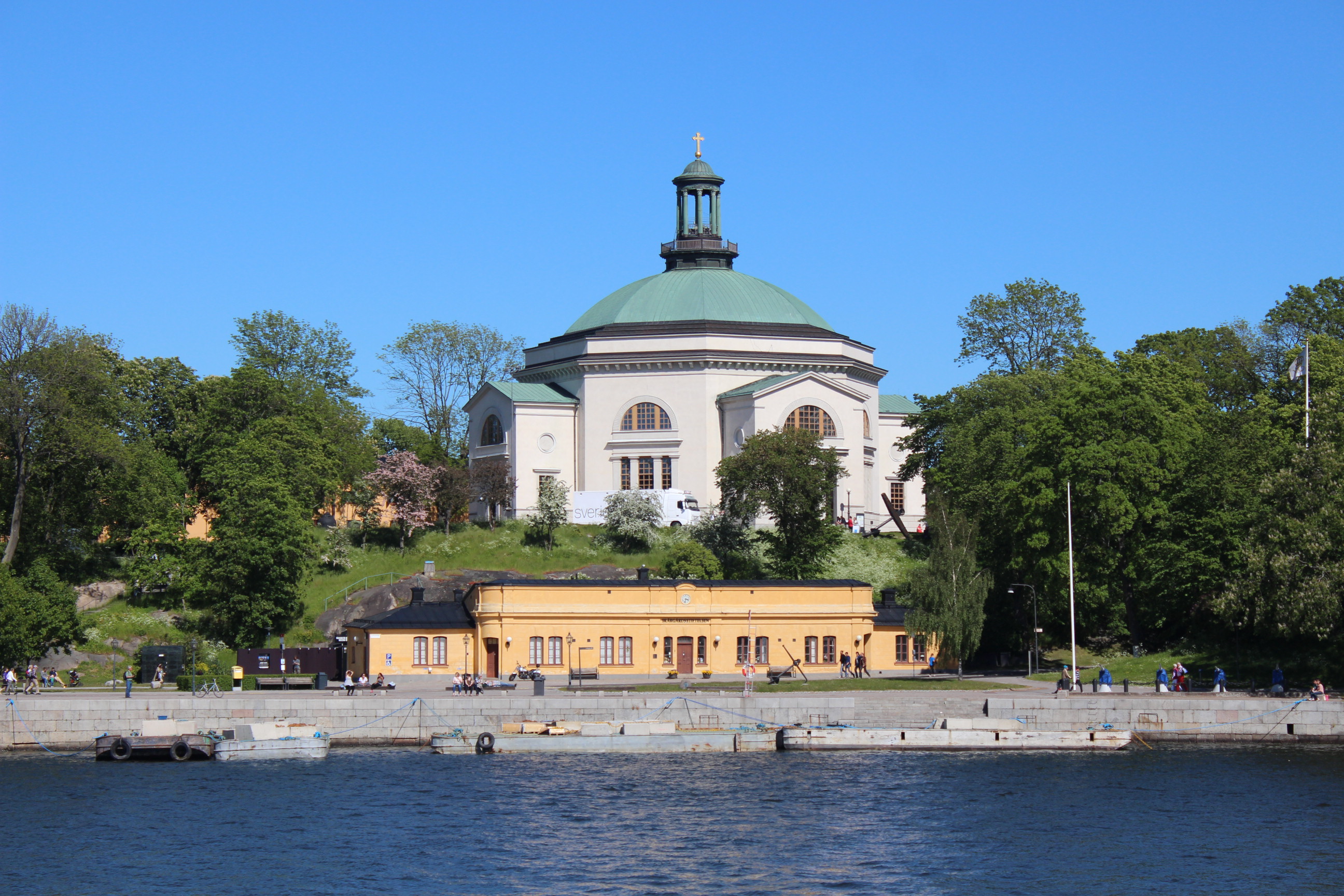

Nestled on the serene islet of Skeppsholmen in Stockholm, Skeppsholmskyrkan stands as a testament to the city’s rich architectural and cultural heritage. This church, originally constructed between 1823 and 1849, was designed to replace a modest wooden church that succumbed to the flames in the catastrophic 1822 fire that ravaged much of Stockholm. Inaugurated by King Charles XIV John, the church is a remarkable example of neoclassical architecture, embodying a blend of historical significance and aesthetic beauty.
The architectural prowess of Fredrik Blom, the mind behind Skeppsholmskyrkan, is evident in its octahedral form, which draws inspiration from the Pantheon in Rome. The church’s exterior features plain white walls, which were meticulously restored in 1998, pierced by portals held aloft by four sturdy pillars. These pillars seamlessly support the semi-circular lunettes that adorn the structure. Inside, the church reveals its cruciform layout, where a double cupola is framed by paired Doric columns and rounded arches, creating an ethereal ambiance.
As you step inside, your gaze is immediately drawn to the painted altarpiece, which is complemented by niches housing statues of the apostles. Two plaster groups further enrich the interior, enhancing the spiritual atmosphere of this sacred space. The church's design not only reflects the artistic ideals of its time but also serves as a cultural landmark that resonates with the local community.
Beyond its architectural grandeur, Skeppsholmskyrkan is woven into the cultural fabric of Stockholm. The church has been a site for various local customs and celebrations, particularly during the Advent season, when the community gathers for traditional services. Although secularized in 2002, the church continues to be a cherished venue for concerts and artistic performances, bridging the gap between history and contemporary culture.
Gastronomically, the area surrounding Skeppsholmen offers a tantalizing glimpse into Swedish cuisine. Visitors can indulge in local delights such as kanelbullar (cinnamon buns) and smörgåsbord, a traditional buffet featuring herring, meatballs, and various pickled delicacies. The proximity to the harbor also means that fresh fish dishes, particularly grilled salmon, are widely available. Pair these culinary experiences with a glass of locally brewed beer or glögg, a spiced mulled wine, for a truly authentic taste of Sweden.
For those interested in lesser-known curiosities, Skeppsholmskyrkan has its share of hidden gems. One fascinating aspect is the church's lantern light, which replaces the oculus seen in the Pantheon, symbolizing the divine light. Additionally, the church's location on Skeppsholmen offers stunning views of the surrounding waterways, often overlooked by visitors who stick to the busy mainland.
When planning a visit, the best time to explore Skeppsholmskyrkan is during the summer months, when the vibrant gardens and the surrounding area come alive with activity. However, winter can also be enchanting, as the church is beautifully illuminated during the festive season. Arriving early in the morning or later in the evening allows for a more tranquil experience, perfect for capturing the stunning architecture against the backdrop of a setting sun.
As you wander through the serene islet, don’t forget to look for the unique details that adorn the church’s façade. The interplay of light and shadow on the white walls creates a mesmerizing effect, especially during sunset. Also, take a moment to enjoy the peaceful atmosphere of Skeppsholmen, where locals often gather for leisurely walks or picnics along the water’s edge.
In conclusion, Skeppsholmskyrkan is not just a church; it represents the rich history and culture of Stockholm, inviting visitors to explore its architectural beauty and local traditions. To make the most of your visit, consider using the Secret World app to create a personalized itinerary that highlights your interests while discovering the hidden treasures of this remarkable city.


