
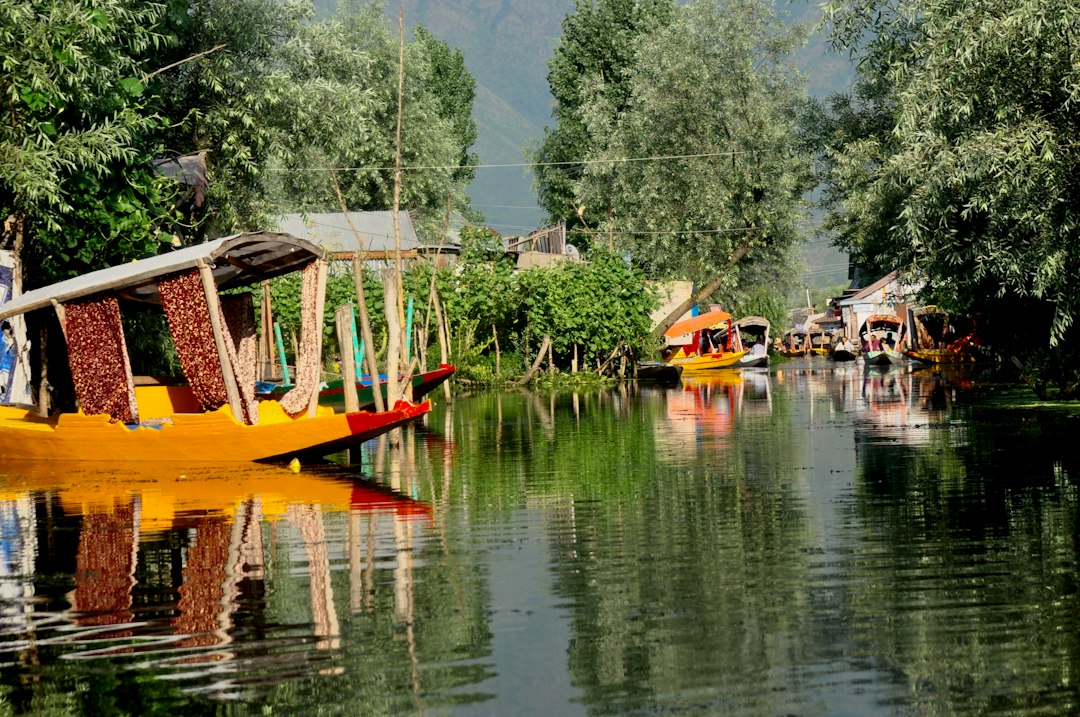

Every April, on the shores of Dal Lake, a spectacle unfolds that lasts a few weeks and leaves a mark for years. The Tulip Garden of Srinagar — officially known as Indira Gandhi Memorial Tulip Garden — stretches over terraced slopes descending towards the lake, with the snow-capped peaks of the Himalayas providing a backdrop. It is not a retouched postcard: it is exactly what you see when arriving early in the morning, when the slanting light transforms every petal into something almost unreal.
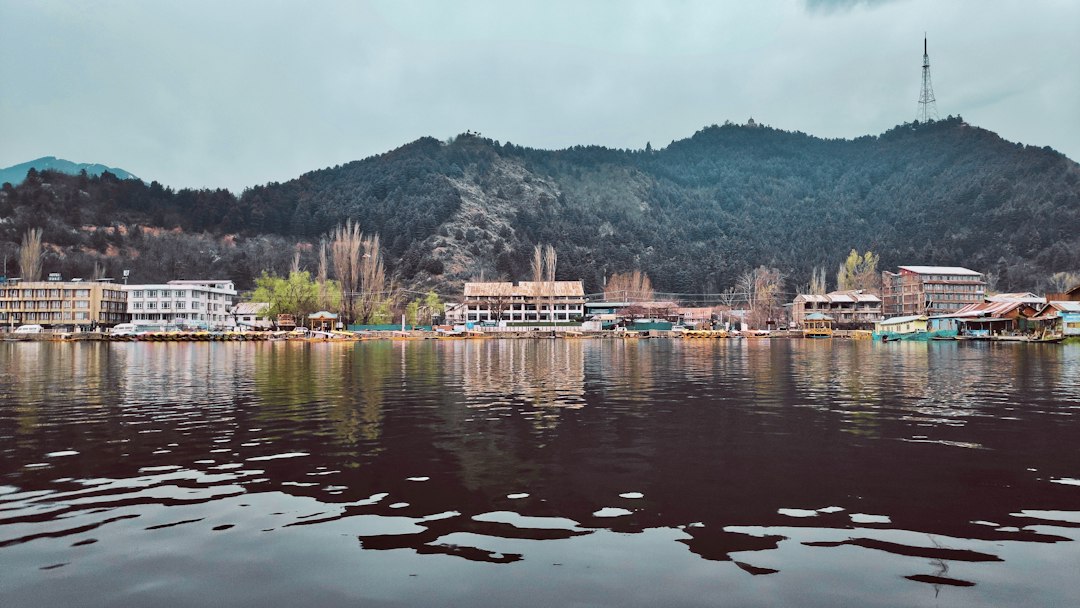
Inaugurated in 2007 with the aim of promoting tourism in the Kashmir valley, the garden spans about 30 hectares of terraced slopes at the foot of Zabarwan Hill. Every year, over 1.5 million tulips of more than 60 varieties are planted, accompanied by irises, hyacinths, and daffodils that bloom in a staggered sequence. It is the largest tulip garden in Asia, and its geometry — inspired by the tradition of Mughal gardens — is clearly read while walking along the tree-lined avenues that descend towards the lake.
The legacy of Mughal gardens in the landscape of Kashmir
The context in which the Tulip Garden is located is not accidental. Just a few minutes away are two of the most famous Mughal gardens of the subcontinent: Nishat Bagh, built in 1633 by the brother of the famous Nur Jahan, and Shalimar Bagh, commissioned by the emperor Jahangir for his wife at the beginning of the 17th century. Both gardens are laid out on overlapping terraces with central water channels, fountains, and geometric flowerbeds planted with irises, roses, and saffron.
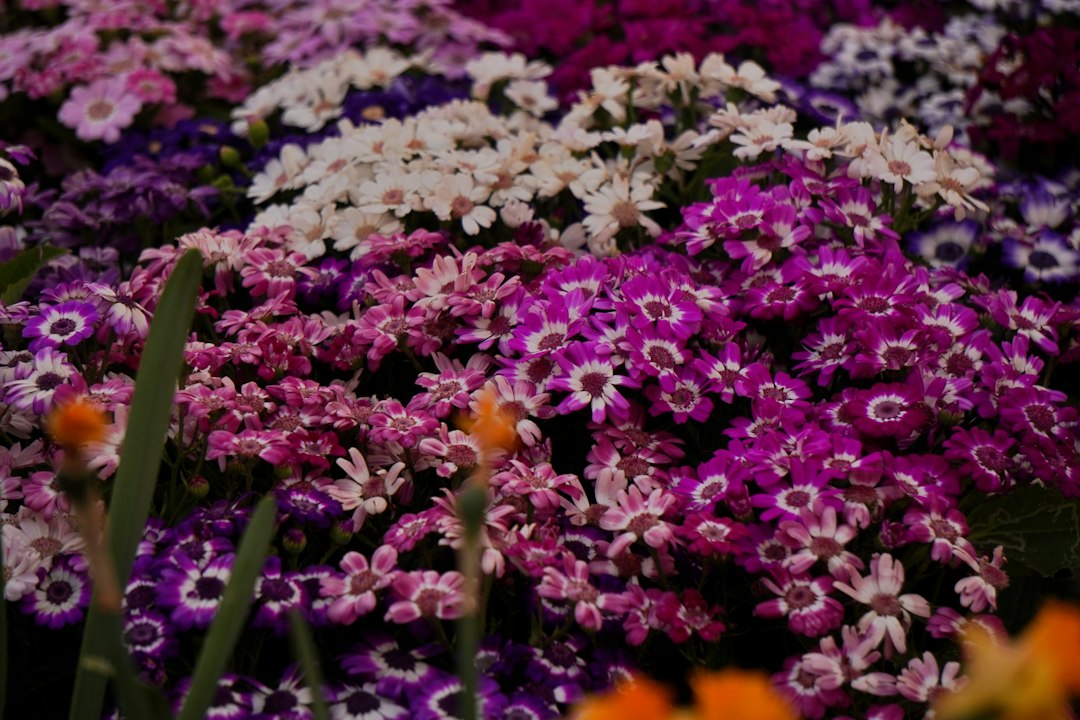
Visiting the Tulip Garden thus means entering a centuries-old landscape tradition. The terraces of the modern garden explicitly take up that multi-level structure, with each level offering a different perspective on the underlying lake. Walking down, one passes from expanses of bright red tulips to patches of canary yellow, then to the deep purple of the irises, with Dal Lake appearing and disappearing among the branches of the flowering fruit trees.
What to observe on site: details that make a difference
Those who visit the garden during the Tulip Festival, which usually takes place in the first or second week of April, will also find Kashmiri cultural performances, local crafts, and traditional music. But even outside of the events, the garden offers details worth seeking out: the varieties of tulips are labeled with tags indicating their name and origin, allowing one to distinguish, for example, parrot tulips from peony-flowered tulips.
A physical element that immediately strikes is the structure of the stone channels that run through the terraces, a irrigation technique inherited directly from the Mughal gardens. Water visibly flows along the channels, creating a background sound that accompanies the entire visit. During the central hours of the day, the reflection of the sun on the water and petals creates continuously changing chromatic effects.
Practical tips for organizing the visit
The best time to visit is between the end of March and mid-April, when the blooming is at its peak. The garden generally opens at 9:00 AM and closes at sunset. The entrance ticket is affordable — around 50-100 Indian rupees for adult visitors, with variations for foreigners — and it is worth arriving as soon as it opens to avoid the crowd that gathers during the central hours.
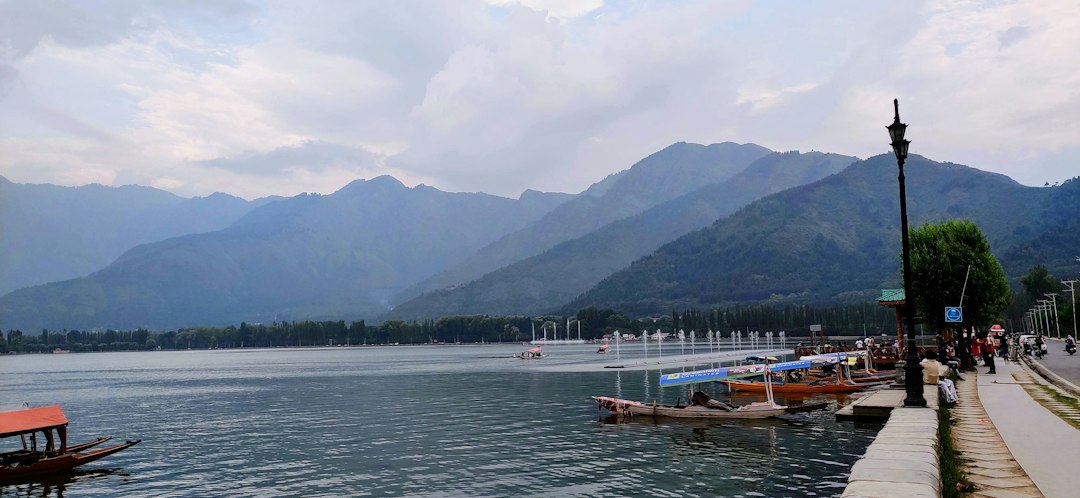
To reach the garden from the center of Srinagar, you can take a shared car or a taxi along the shore of Dal Lake: the route runs alongside the lake and passes in front of the docks of the characteristic shikara, the traditional Kashmiri boats. Avoiding weekends during the festival is a good strategy if you prefer a quieter experience. Wearing comfortable shoes is essential: the terraces require some climbing and descending on stone paths that can be slippery if the ground is wet. A light jacket is also recommended in April, as mornings in Srinagar remain cool.
Kashmir in Spring: Beyond the Garden
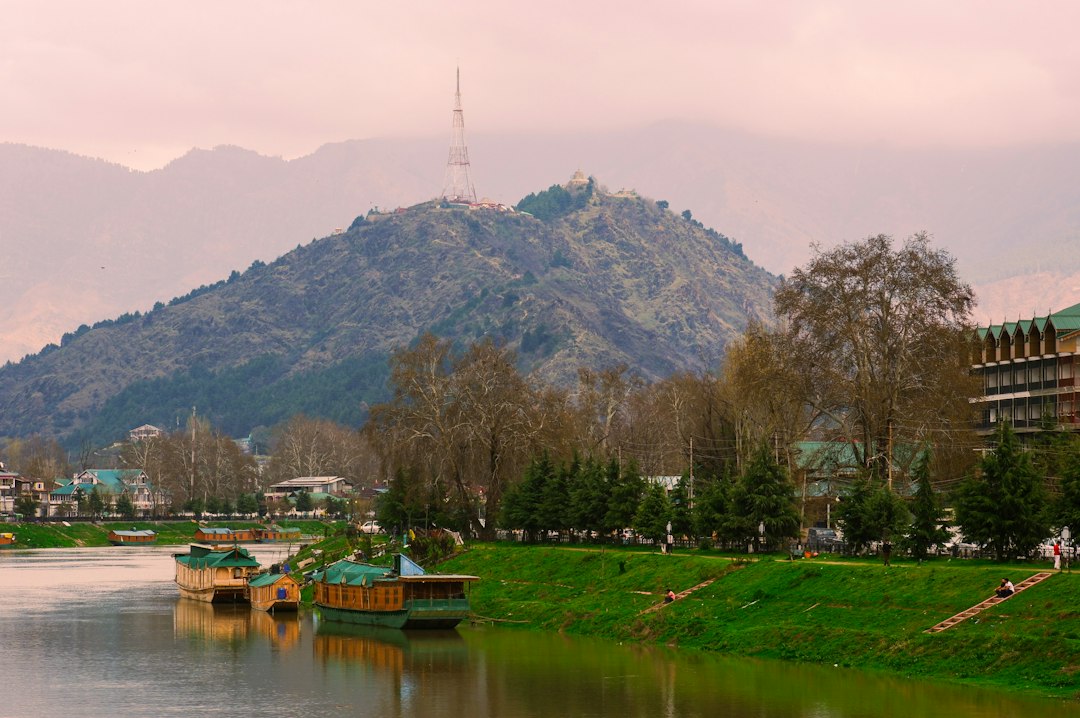
A visit to the Tulip Garden naturally combines with a walk in the nearby Mughal gardens and a ride in a shikara on Dal Lake, where the houseboats reflect the afternoon light. The Kashmir valley in spring also offers orchards of apple and cherry blossoms along the back roads, often overlooked by the main tourist routes but easily reachable on foot or by bicycle.
Those with time can venture towards Pahalgam or Gulmarg, a few hours away, where the landscape changes radically to alpine meadows and coniferous forests. But the Tulip Garden remains the ideal starting point to understand why Mughal travelers — and later the British during the colonial era — considered Kashmir one of the most extraordinary destinations in the entire Asian subcontinent.


