
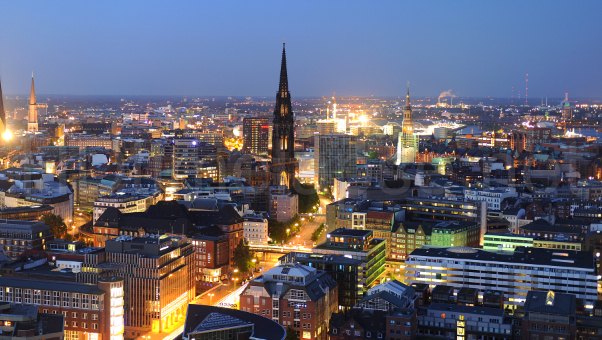

Amidst the bustling streets of Hamburg lies a poignant relic of the past: the hauntingly beautiful St. Nicholas Church. A testament to both human creativity and the scars of war, it stands as a stark reminder of history's impact on this vibrant city.
History and origins Originally consecrated in 1195, St. Nicholas Church was one of Hamburg's five main Lutheran churches, named after the patron saint of sailors, reflecting the city's deep maritime roots. The church has undergone numerous transformations, with its most notable reconstruction completed in 1846 by architect Gottfried Semper, whose neo-Gothic design was celebrated as one of the tallest buildings globally at the time. However, during Operation Gomorrah in World War II, the church was severely damaged by Allied air raids, leaving it in ruins.
Art and architecture The church's neo-Gothic spire, which once soared to 147 meters (482 feet), remains a dominant feature of Hamburg's skyline. The intricate stonework and ribbed vaults evoke a sense of awe, showcasing the architectural prowess of the 19th century. Today, the church's crypt houses a museum, where the art and exhibits serve as a somber reminder of wartime destruction and resilience. The presence of contemporary artists' installations further enriches the narrative of peace and reconciliation.
Local culture and traditions Hamburgers hold the St. Nicholas Church in reverence, not only as a historical site but as a cultural emblem. The church serves as a venue for various events commemorating peace, including lectures, concerts, and exhibitions. During the annual Harbor Birthday Festival, locals and tourists alike are drawn to the church, reflecting on its past while celebrating the present.
Gastronomy While St. Nicholas Church itself doesn't offer culinary experiences, its proximity to Hamburg's vibrant neighborhoods provides a taste of local gastronomy. Indulge in a classic Franzbrötchen, a cinnamon pastry, or savor the city's renowned Fischbrötchen—a fresh fish sandwich often enjoyed by the Elbe River, offering a perfect complement to a day exploring Hamburg's history.
Lesser-known curiosities Few visitors realize that the church's crypt, beyond its role as a museum, contains a unique acoustic feature. The silent space amplifies even the faintest whispers, creating an eerie yet captivating experience. Additionally, the church's bell, salvaged from the ruins, is displayed as a testament to survival and continuity.
Practical visitor information The best time to visit St. Nicholas Church is during spring or early autumn when Hamburg's weather is mild, allowing for comfortable exploration. The church is easily accessible by public transport, and a visit can be complemented by a stroll through the nearby Speicherstadt, a UNESCO World Heritage site. Look out for guided tours that delve deeper into the church's history, offering insights beyond the surface.
Discover more about Hamburg and plan your visit using the Secret World app, where you can create a personalized AI itinerary for this remarkable city.


