
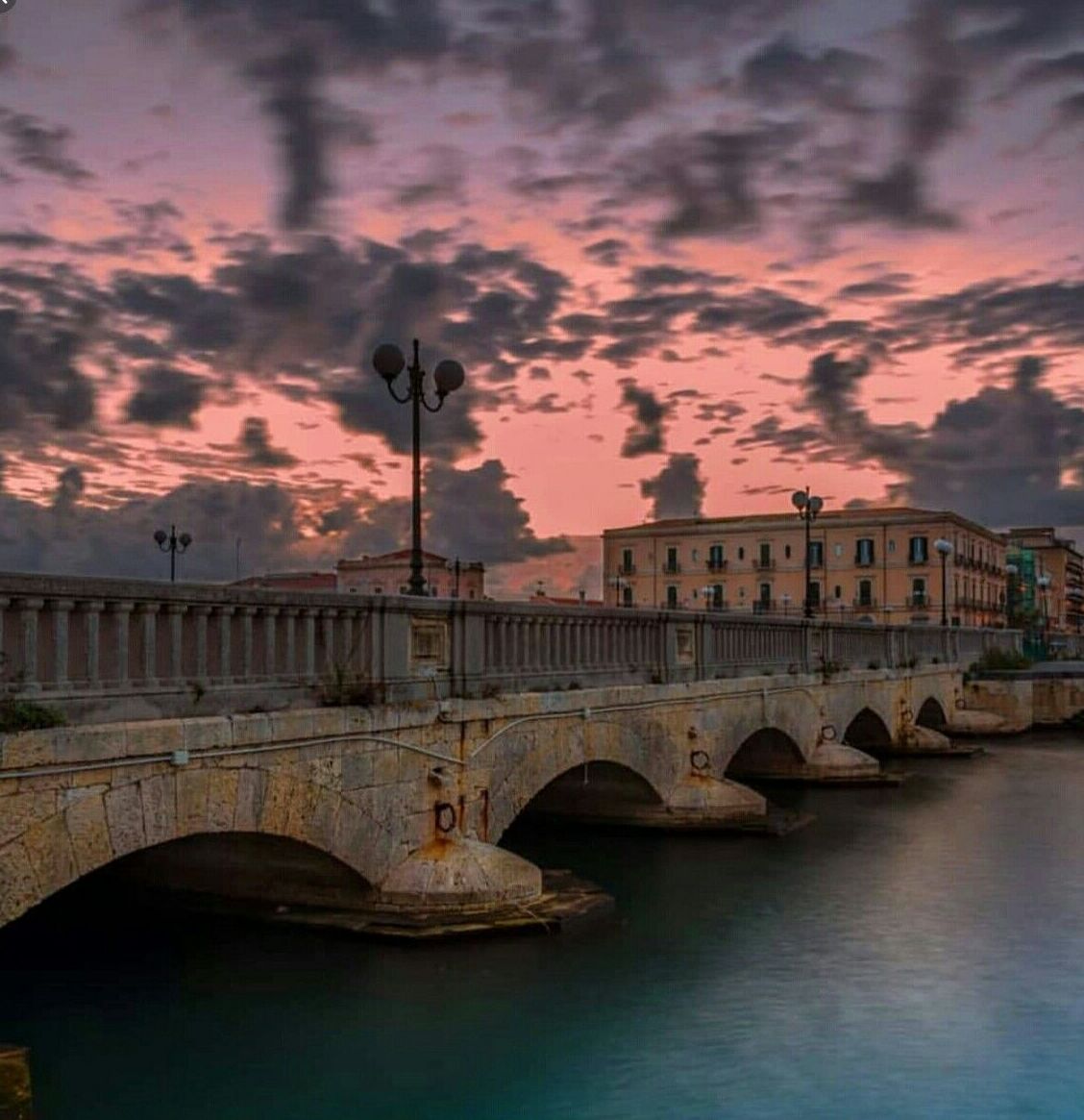

In the heart of Siracusa, the Umbertino Bridge stands as a testament to the city's rich history and vibrant culture. Named after Umberto I, the King of Italy during its reconstruction in the late 19th century, this bridge is not merely a passage between the old and new parts of the city but a symbol of connection and transformation. Originally built in the 16th century, the bridge underwent significant changes following the demolition of its Spanish components, leading to its current embodiment of Neoclassical architecture. The structure boasts impressive stone arches that span the Anapo River, allowing for breathtaking views of Ortigia, the historical island that is the heart of Syracuse. The bridge is often bustling with locals and visitors alike, making it a perfect spot to observe the flow of daily life in this ancient city.
The history of Syracuse dates back to 734 B.C., when it was founded by Greek settlers from Corinth. Throughout its storied past, the city has been a focal point of political and cultural significance, witnessing the rise and fall of empires. Notably, it was home to the great mathematician and inventor Archimedes. The Umbertino Bridge, with its strategic location, played a significant role in connecting the bustling trade routes and facilitating the movement of people and goods between the ancient city and the newer districts that flourished in later centuries.
Architecturally, the bridge is a stunning representation of Neoclassical style, characterized by its graceful arches and robust stonework. The bridge's symmetry and proportion enhance the visual harmony of its surroundings, making it a favorite subject for local artists. Notable artworks can be found in the nearby areas, with many local artists inspired by the bridge and the picturesque views of the Mediterranean Sea it provides. This artistic significance has allowed the bridge to remain a vibrant part of the city's cultural landscape.
Local culture in Syracuse is deeply intertwined with its historical roots. Festivals such as the Infiorata, where streets are adorned with elaborate floral designs, celebrate the arrival of spring and the rich agricultural heritage of the region. The Feast of Saint Lucia, held in December, is another important event, showcasing the local devotion and cultural traditions. These celebrations often see the community coming together, highlighting the importance of heritage in contemporary Syracuse life.
When it comes to gastronomy, Syracuse is a treasure trove of flavors. The Sicilian cuisine reflects the island's diverse history, with influences from Greek, Arab, and Spanish culinary traditions. Visitors should not miss trying arancini (fried rice balls), caponata (a sweet and sour eggplant dish), and cannoli filled with sweet ricotta. Local wines, particularly Nero d'Avola and Frappato, pair beautifully with the region's rich dishes, making any meal a delightful experience.
For those seeking lesser-known curiosities, the Umbertino Bridge has its share of secrets. One notable aspect is the incredible acoustics that can be experienced under the arches; whispers can carry surprisingly well, a phenomenon that has fascinated locals for years. Additionally, the bridge is often a backdrop for artistic performances and local gatherings, where stories of the past are shared, making it a living part of the community's narrative.
Visitors will find that the best time to experience Siracusa is during the spring and fall when the weather is mild and the city is alive with activity. To truly appreciate the Umbertino Bridge and its surroundings, take a leisurely stroll at dusk when the bridge is beautifully illuminated, casting reflections on the water. Bring a camera, as this is a prime spot for capturing the essence of Syracuse.
As you explore the historical and cultural tapestry that is Syracuse, consider using the Secret World app to craft a personalized itinerary that highlights the best of this enchanting city.


