
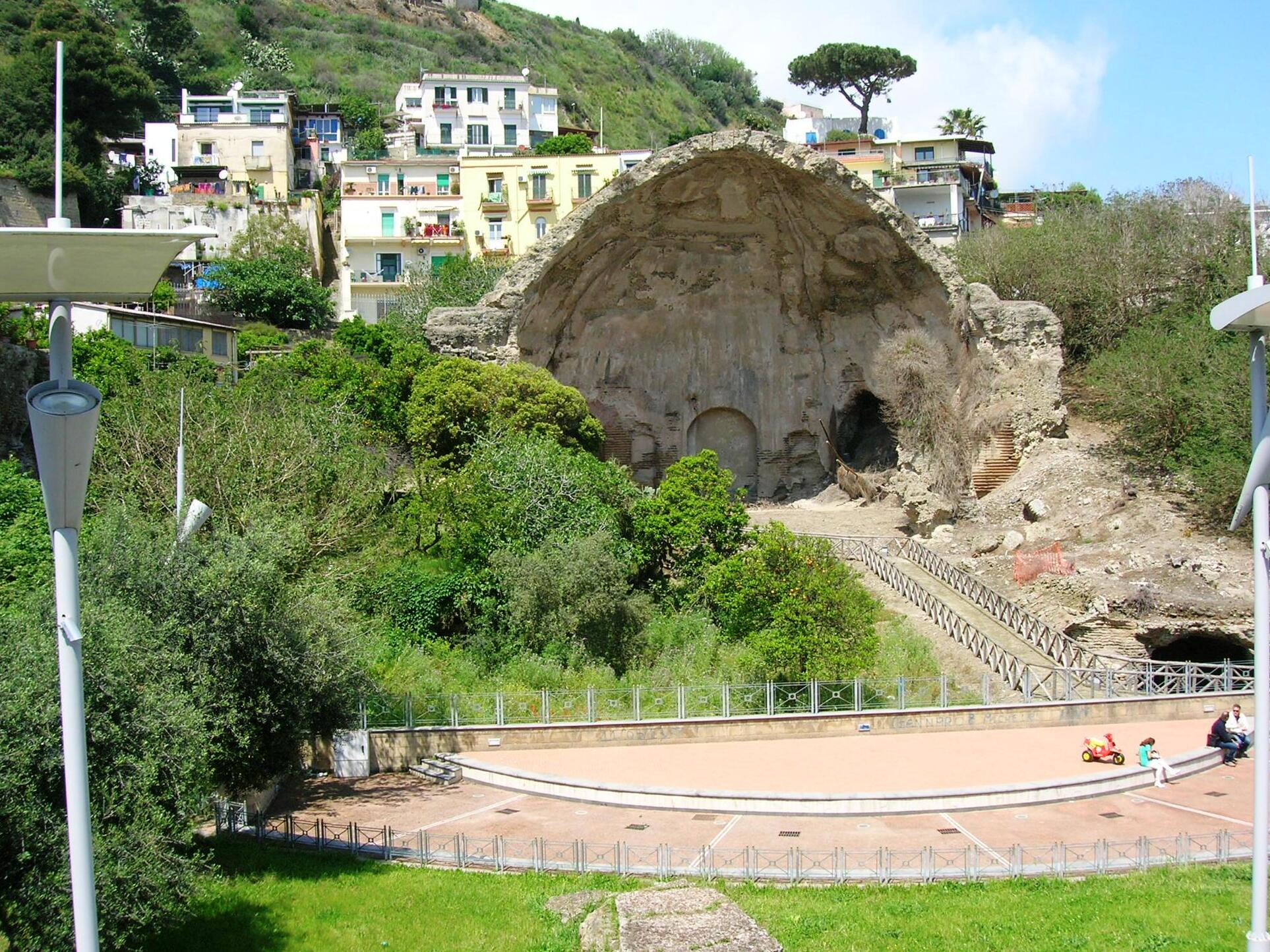

Nestled along the charming coastline of Bacoli, the Temple of Diana stands as a captivating remnant of ancient Roman architecture and spirituality. This remarkable structure, often shrouded in mystery, was named by Neapolitan antique dealers after the discovery of exquisite marble bas-reliefs depicting dogs and deer alongside a fragment inscribed with the name of the goddess Diana. It is believed that this temple served as a sanctuary dedicated to the goddess of the hunt and the moon, embodying both the natural beauty and the rich cultural heritage of the region.
Dating back to the 1st century BC, the temple is an architectural marvel featuring a large circular hall inscribed within an octagon. Constructed in opus listatum up to the base of the elegant arches framing its windows, the temple showcases a harmonious blend of tuff and brick in its upper structure, designed in the now-fragmented ogival dome style. The presence of natural hot and cold thermal springs in the vicinity led scholars to theorize that this rotunda might have functioned as a natatio, a place for water-based recreation and ritualistic bathing, further enhancing its allure as a sacred site.
The Temple of Diana is located near the stunning Baia bay, historically significant for its thermal baths and lavish villas during the Roman Empire. Bacoli, nestled in the Campania region, boasts a rich history intertwined with that of ancient Rome, where wealthy families would escape to the coast for leisure and relaxation. Bacoli itself was known as a favorite haunt of the Roman elite, including Emperor Augustus, who reportedly enjoyed the therapeutic properties of the region's thermal springs.
Architecturally, the temple is a stunning example of ancient Roman engineering, with its expansive dome and intricate designs that once adorned its walls. The opus listatum technique utilized in its construction involved alternating layers of tuff and brick, providing structural strength while allowing for grand openings that framed views of the lush surroundings. Although much of the temple has succumbed to time and nature, the remaining structures allow visitors to glimpse the artistry and devotion that went into its creation.
Local culture in Bacoli is rich with traditions that celebrate its storied past. Festivals such as Natività di Maria in September and Sagra del Pesce in August highlight the community's connection to its maritime roots and religious heritage. During these events, locals gather to honor their patron saint, enjoy traditional music, and indulge in local delicacies, fostering a sense of camaraderie and cultural pride.
Speaking of local delicacies, Bacoli's gastronomy is a delightful exploration of coastal flavors. The region is renowned for its seafood, particularly the spaghetti alle vongole (spaghetti with clams) and frittura di pesce (fried fish platter), which feature fresh catches from the nearby waters. Pairing these dishes with a glass of Falanghina or Greco di Tufo, local white wines, enhances the dining experience and offers a taste of the region's viticultural heritage.
As you explore the Temple of Diana, keep an eye out for lesser-known curiosities. For instance, the temple's alignment with the nearby Isola di Ischia and Procida may have held astrological significance, connecting the site to broader cosmic beliefs held by ancient Romans. Additionally, the temple's unique construction materials reflect the geological diversity of the area, with local tuffs and bricks showcasing the craftsmanship of ancient builders.
The best time to visit the Temple of Diana is during the spring and early autumn months when the weather is mild, and the surrounding landscape is vibrant with blooms. Early mornings are ideal for avoiding crowds and soaking in the serene atmosphere of this historical site. Don’t forget to bring a camera, as the interplay of light on the temple’s stones creates a captivating visual experience.
As you prepare your visit to Bacoli, consider using the Secret World app to curate a personalized itinerary that unveils the hidden gems of this enchanting destination.


