
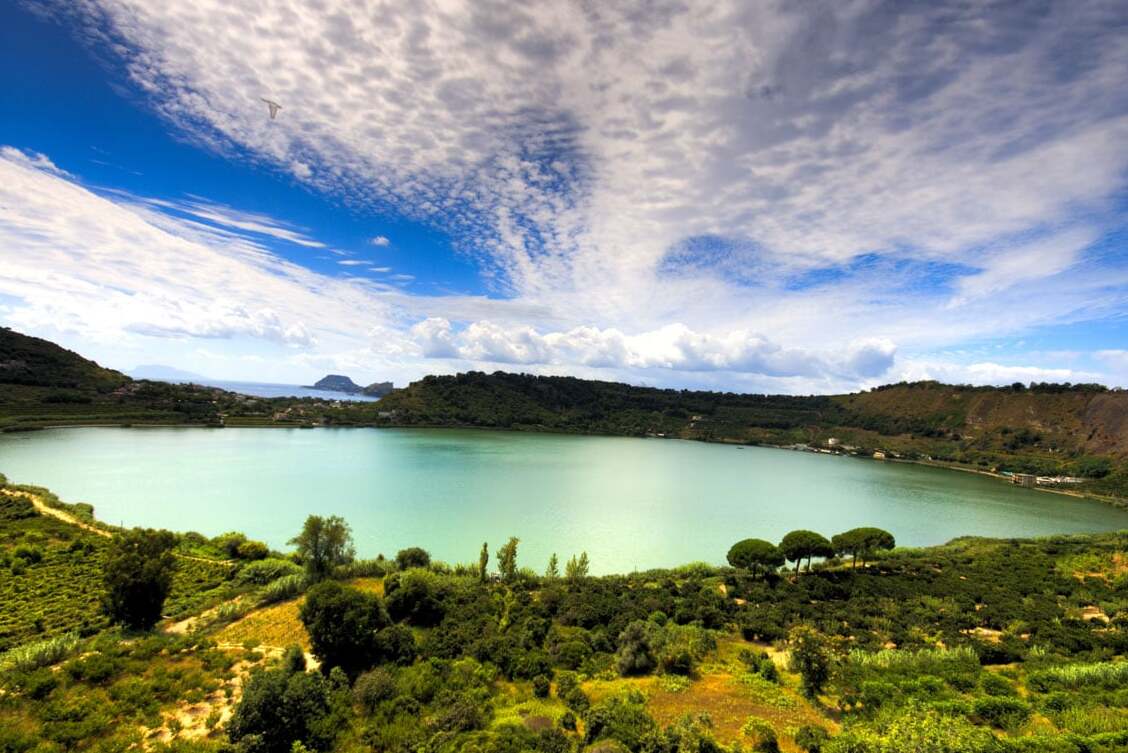

Nestled in the heart of Campania, Lake Averno is a mesmerizing volcanic lake that has captivated the imaginations of locals and travelers alike for centuries. Just west of Naples, within the municipality of Pozzuoli, its serene waters are steeped in myths and history, making it a site of both natural beauty and cultural significance.

History and Origins
The history of Lake Averno dates back to ancient times, with its origins linked to volcanic activity that shaped the landscape. The lake is often identified with the entrance to the Underworld, as described in Virgil's Aeneid. Ancient Greeks referred to it as "Avernus," which translates to "without birds," due to the toxic gases emitted by the surrounding volcanic craters that made the area inhospitable to avian life.
By the 5th century BCE, the Cumaeans, an ancient Greek tribe, established one of the first settlements in the area, drawn by the lake's mystical reputation. The Romans later revered it, building temples and structures that would become integral to their mythology. Notably, the Temple of Apollo, dedicated to the god of prophecy, was constructed nearby, solidifying the lake’s status as a spiritual hub.
Art and Architecture
Lake Averno is surrounded by a wealth of architectural treasures that reflect its rich history. The Temple of Apollo stands out with its Doric columns, remnants of which still evoke the grandeur of Roman religious practices. The Cave of Cocceius, a subterranean passageway believed to lead to the Underworld, showcases ancient engineering prowess and offers an eerie glimpse into the past.
Art enthusiasts will find inspiration in the natural beauty surrounding the lake. The picturesque landscape has long been a muse for painters and poets, reflecting the interplay between nature and mythology. The interplay of light on the water, the greenery of the surrounding hills, and the remnants of ancient structures create a harmonious tableau that continues to attract artists today.
Local Culture and Traditions
The culture around Lake Averno is deeply rooted in local customs that celebrate its unique heritage. Each summer, the nearby town of Pozzuoli hosts the Festa di San Gennaro, honoring the patron saint of Naples. The festival features a vibrant parade, traditional music, and culinary delights, drawing locals and tourists to revel in the spirit of the community.
Additionally, the area is known for its religious traditions centered on the lake. Pilgrimages to the Temple of Apollo are still practiced, where devotees seek blessings and insight, echoing the ancient rites that once filled the area with fervor.
Gastronomy
No visit to Lake Averno would be complete without indulging in its gastronomy. The region is famed for its fresh seafood, particularly the frittura di paranza, a mix of fried fish that captures the essence of the Mediterranean. Local restaurants often serve this dish alongside linguine alle vongole, a pasta tossed with fresh clams sourced from the nearby coast.
For those with a sweet tooth, pastiera napoletana, a traditional Neapolitan Easter cake made with ricotta cheese, wheat, and orange blossom, is a must-try delicacy. Pair these dishes with a glass of Lacryma Christi, a local wine with origins steeped in legend, and you’ll experience the true flavors of Campania.
Lesser-known Curiosities
While Lake Averno is widely recognized for its beauty and historical significance, several lesser-known facts add to its charm. For example, the lake has been a site for various archaeological discoveries, including artifacts linked to the ancient cult of Dionysus. Moreover, the lake is home to a rich variety of wildlife, including rare bird species and turtles, making it a hidden gem for nature lovers.
Another intriguing aspect is the Cocceio Tunnel, which connects Lake Averno to the Bay of Pozzuoli. This ancient Roman aqueduct not only served practical purposes but also adds an element of mystery, often overlooked by visitors.
Practical Visitor Information
The best time to visit Lake Averno is during the spring and early autumn when the weather is mild, and the flora is in full bloom. Late spring, particularly from May to June, offers a vibrant display of wildflowers and lush greenery, while September provides a quieter atmosphere post-summer.
When visiting, take time to walk around the lake. Trails lined with cypress trees and wildflowers provide stunning views and opportunities for birdwatching. Be sure to bring your camera to capture the enchanting reflections of the surrounding hills on the lake's surface.
For a richer experience, consider exploring the nearby Campi Flegrei, a volcanic area with fascinating geological features, or take a boat tour to witness the beauty of the coastline.
With its blend of myth, history, and natural splendor, Lake Averno invites you to embark on a journey through time and tradition. To plan your personalized adventure, consider using the Secret World app for tailored itinerary suggestions.


