
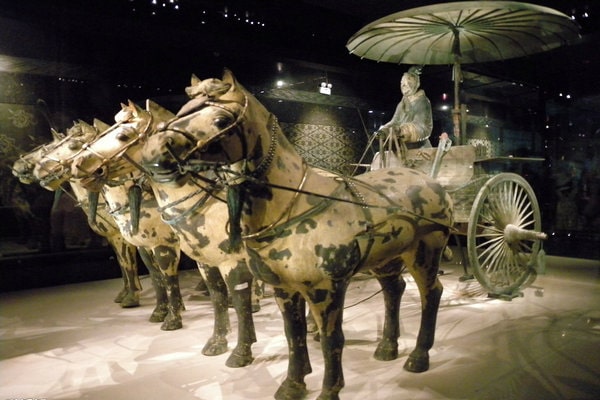

As dawn breaks over the ancient city of Xi'an, the first rays of sunlight illuminate one of humanity's most extraordinary archaeological finds: the Terracotta Army. This silent legion of clay warriors stands as a testament to the ambition and artistry of China's First Emperor, Qin Shi Huang, whose vision and legacy continue to captivate the world.
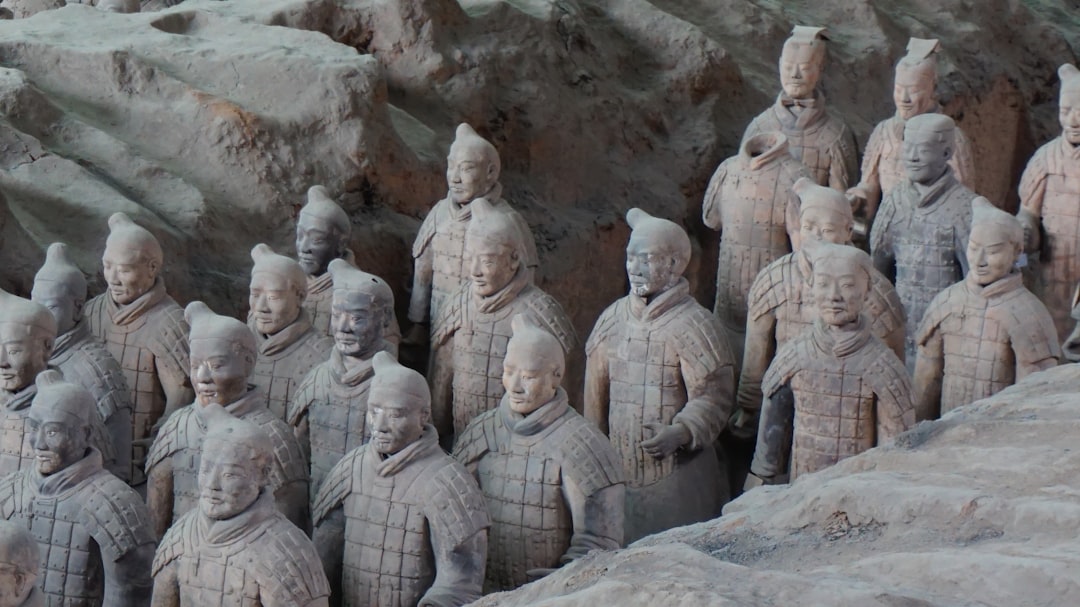
The story of the Terracotta Army begins in the 3rd century BCE, during the tumultuous Warring States Period. Qin Shi Huang, born Ying Zheng, ascended to the throne of the state of Qin at the tender age of 13. By 221 BCE, he had unified the fractured Chinese territories into what would become the first Chinese empire. To ensure protection in the afterlife, Qin Shi Huang ordered the construction of a massive burial complex, complete with a life-sized army crafted from terracotta to guard his eternal rest.
The artistry involved in creating the Terracotta Army is nothing short of remarkable. Discovered in 1974 by local farmers digging a well, the site revealed thousands of meticulously crafted soldiers, each unique in facial features and expressions, arranged in battle formation. The figures, which include warriors, chariots, and horses, are crafted in a realistic style reflecting the armor and weaponry of the time, providing invaluable insights into the military prowess and cultural sophistication of ancient China.
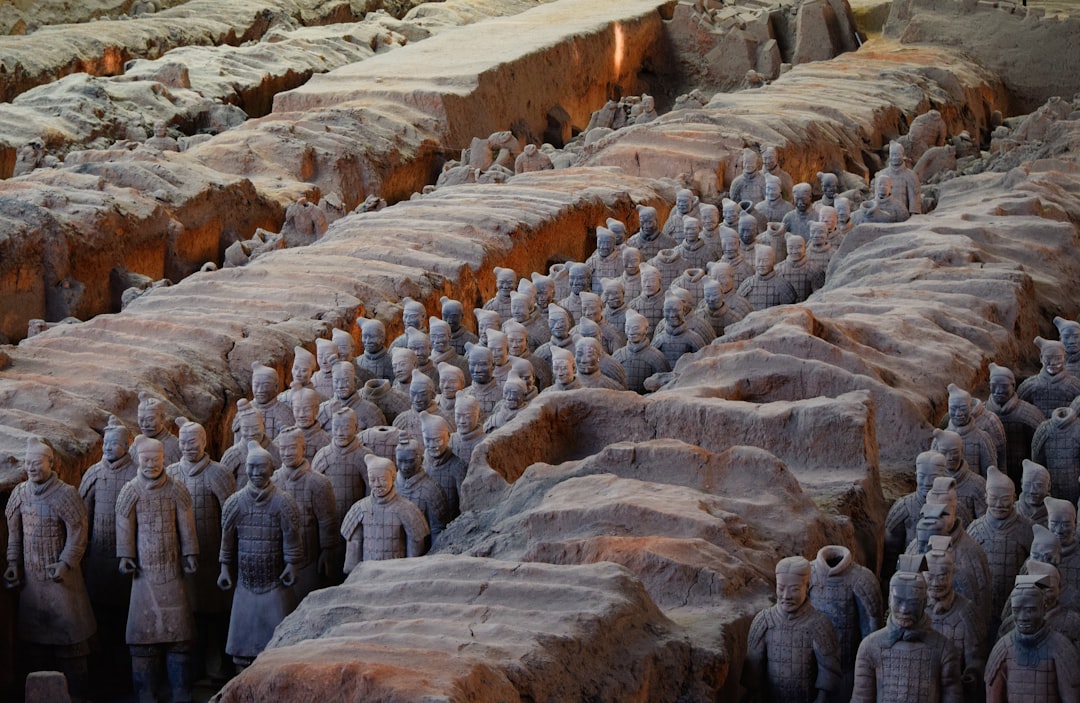
Beyond the awe-inspiring spectacle of the army itself, the site is a treasure trove of artistic and architectural achievements. The soldiers were originally painted in vibrant colors, though time and exposure have left most of them in their natural terracotta hue. The complexity of the underground vaults, the precision of the clay sculptures, and the sheer scale of the work—over 8,000 soldiers in the main pits—underscore the advanced craftsmanship and organizational skills of Qin-era artisans.
Xi'an, once known as Chang'an, was the ancient capital of China and a vibrant hub of culture and trade. This rich history is reflected in its local customs and traditions. The city is known for its lantern festivals, where intricate paper lanterns light up the night sky, echoing the grandeur of its imperial past. Traditional music and dance performances, such as the Tang Dynasty Music and Dance Show, offer visitors a glimpse into the region’s vibrant cultural tapestry.
Gastronomy in Xi'an is a feast for the senses, influenced by its historical position at the start of the Silk Road. Visitors should not miss the chance to try Yang Rou Pao Mo, a flavorful lamb soup with crumbled flatbread, or Biang Biang noodles, known for their wide and chewy texture. The local food scene is a delicious blend of flavors, showcasing the diverse culinary heritage of the region.
While the Terracotta Army is undoubtedly the star attraction, there are lesser-known curiosities that add depth to the experience. For instance, early excavation efforts revealed that many of the soldiers were equipped with real weapons, such as bronze swords and crossbows, showcasing the martial sophistication of the Qin dynasty. Additionally, recent studies suggest that the life-sized figures might have been inspired by Greek art, hinting at early cultural exchanges between East and West.
For those planning to visit, practical information is key to making the most of the experience. The best time to visit Xi'an is in the spring (March to May) or autumn (September to November) when the weather is mild and pleasant. The Terracotta Army Museum is located about 40 kilometers east of Xi'an and is accessible by bus or taxi. It's advisable to arrive early in the morning to avoid crowds and to fully appreciate the scale and detail of the site. A guided tour can enhance the visit by providing context and stories behind the exhibits.
As you stand before these silent soldiers, it's impossible not to feel the weight of history and the enduring legacy of Qin Shi Huang's vision. The Terracotta Army is more than just an archaeological marvel; it is a bridge to a time when emperors dreamed of eternity, and artisans breathed life into clay, crafting a timeless testament to the power and grandeur of ancient China.


