
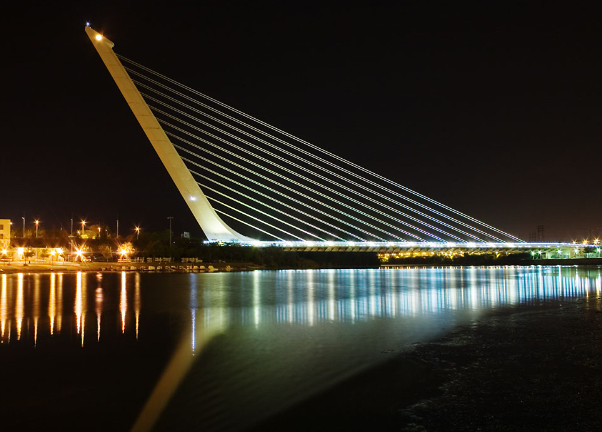

Sevilla, a city renowned for its vibrant history and culture, is home to one of Europe’s most groundbreaking structures—the Alamillo Bridge. This stunning bridge, with its sleek, modern lines, stands as a testament to the city’s forward-thinking spirit while reflecting its rich historical tapestry.
History and Origins
Sevilla’s strategic location on the Guadalquivir River has long made it a hub of trade and culture. The bridge was constructed in 1992 for the Universal Exposition held in Sevilla. Designed by the renowned architect Santiago Calatrava, the Alamillo Bridge connected the city to the exposition site on La Isla de la Cartuja. This event was pivotal, marking Sevilla’s resurgence on the global stage and revitalizing the city’s infrastructure.
Art and Architecture
The Alamillo Bridge is a striking example of contemporary architecture. Its design is characterized by a single, bold pylon that tilts at a daring 68-degree angle. This pylon, filled with concrete, acts as a counterweight, allowing for the absence of backstays—a pioneering feature at the time. Calatrava’s signature bright white color enhances the bridge’s elegance, making it not just a feat of engineering but a piece of art that reflects the city’s blend of tradition and innovation.
Local Culture and Traditions
Sevilla is synonymous with flamenco music, passionate festivals, and a deep-rooted sense of community. The bridge itself has become a symbol of the city’s modern cultural identity. During events like the Feria de Abril, the bridge serves as a gateway for visitors flocking to the city, providing breathtaking views of Sevilla’s skyline.
Gastronomy
The culinary landscape of Sevilla is as rich and varied as its history. Visitors crossing the Alamillo Bridge are just a short distance from savoring iconic dishes like tapas, salmorejo, and jamón ibérico. Pair these with local wines or fino sherry for a true taste of Andalusian hospitality.
Lesser-known Curiosities
While the bridge itself is a marvel, few know that it was once proposed to feature two symmetrical pylons. Calatrava, however, argued for the single-pylon design, which led to its current unique form. The bridge has also appeared in numerous films and commercials, serving as a symbol of modernity and innovation.
Practical Visitor Information
The best time to visit Sevilla and its iconic bridge is during spring or fall when the weather is mild. As you walk along the bridge, look for the detailed engravings that tell the story of its construction. For photographers, the evening light offers stunning views of the bridge’s reflection on the river.
For a personalized experience, plan your visit to Sevilla using the Secret World app, an ideal way to uncover the city’s hidden gems.


