
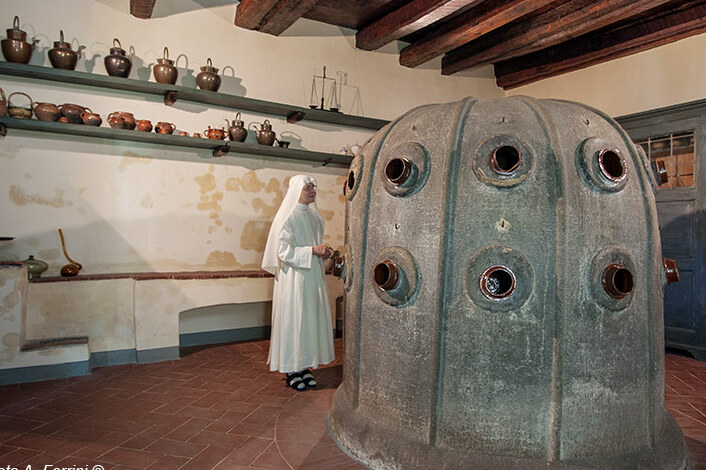

In the heart of Pratovecchio, nestled among the verdant hills of Tuscany, lies a hidden gem steeped in centuries of history: the monastery of San Giovanni Evangelista. This ancient site, home to the Camaldolese nuns, conceals a remarkable secret that dates back to the thirteenth century—a dry stove alembic, a relic of early pharmaceutical practices that offers a glimpse into the past.
The origins of the monastery can be traced back to 1048, when the Camaldolese order was established to provide care for the poor and pilgrims. These monks were not only spiritual guides but also pioneers in the fields of pharmacy and alchemy. The monastery's connections to local health care underscore its significance in medieval society. The alembic, preserved within the monastery's walls, is one of the largest and oldest known, a testament to the innovative spirit of the time. Its design, featuring multiple terracotta mouths, allowed for the simultaneous production of various concoctions, showcasing the advanced understanding of distillation that the monks possessed.
Architecturally, the monastery exemplifies a blend of medieval and Romanesque styles, characterized by sturdy stone walls and simple, yet profound, interiors that reflect the austere lifestyle of the monks. The central room housing the alembic is crowned by an octagonal dome that draws the eye upwards, creating a sense of reverence. Visitors marvel at how the light filters through, illuminating the intricate details of the stonework and the terracotta vessels that hint at the alchemical processes once conducted here.

Local culture in Pratovecchio is heavily influenced by its religious heritage. The community honors numerous traditions, many of which revolve around the monastic calendar. Festivals such as San Giovanni Battista, celebrated in late June, see the streets come alive with processions and local music. The townsfolk gather to share in the joy of their patron saint, blending spirituality with a deep sense of community. The area is also known for its folk customs, where ancient rituals are periodically revived, revealing the town's connection to its storied past.
When it comes to gastronomy, the flavors of Pratovecchio are as rich as its history. The region is renowned for its chestnuts, which have been a local staple for centuries. Castagnaccio, a traditional chestnut cake, is a must-try, often enjoyed with a glass of local vin santo—a sweet dessert wine. Visitors can also savor pici, a hand-rolled pasta served with a variety of sauces, and cacciucco, a hearty fish stew that reflects the region's culinary diversity. Each dish tells a story, connecting the present to the past through its ingredients and preparation methods.
One of the lesser-known curiosities of the monastery is the legend surrounding the alembic itself. It is said that the monks would gather at night, using the light of the moon to guide them as they experimented with various herbal mixtures in search of remedies for ailments. Some locals whisper that the spirits of these early alchemists still linger, ensuring the preservation of their secrets. Additionally, the monastery’s isolation in the picturesque hills has made it a favorite among artists and writers who seek inspiration in its tranquil environment.
For those wishing to visit, the best time to experience Pratovecchio is during the spring and early autumn, when the weather is mild, and the surrounding countryside is ablaze with color. The monastery can be accessed by ringing the bell at designated times, allowing visitors to step into a world where time seems to stand still. It's advisable to check the visiting hours ahead of time, as they can vary.
While at the monastery, take a moment to absorb the atmosphere. The combination of history, architecture, and spirituality creates a unique ambiance that invites contemplation. Don’t forget to wander through the surrounding village, where charming streets are lined with local shops and eateries, offering a taste of everyday life in this quaint Tuscan town.
As you plan your journey to explore the secrets of Pratovecchio, consider using the Secret World app to craft a personalized itinerary that will make your visit truly unforgettable.


