
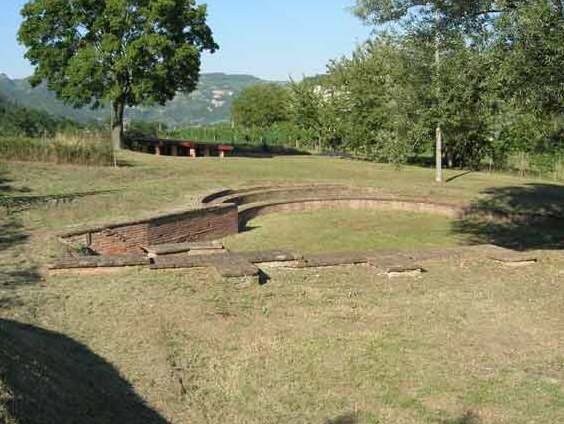

Nestled amidst the picturesque hills of Galeata, the ancient Roman city of Mevaniola whispers tales of a storied past. With roots tracing back to the early days of the Roman Empire, Mevaniola, a municipium included by Augustus in the royal palace VI, stands as a testament to the vibrant cultural tapestry of Umbria. Its name, meaning "little Mevania," links it directly to the nearby town of Bevagna, showcasing the interwoven histories of these ancient settlements.
Mevaniola's history is rich, marked by its strategic location along significant trade routes. Although specific details about its founding are scarce, it is believed to have been established during the reign of Augustus (27 BC – AD 14), capitalizing on the political stability and economic prosperity of the time. The city thrived as a center for commerce and culture, drawing inhabitants from various regions. Archaeological excavations have unearthed remnants of this past, revealing the theatre, thermal baths, and a small cistern that speak volumes of the city's once-thriving community.
The art and architecture of Mevaniola provide a fascinating glimpse into Roman life. The theatre, though partially preserved, is a remarkable structure that reflects the architectural ingenuity of the Romans. With a seating capacity that could accommodate hundreds, performances in this venue would have been a significant aspect of community life. The thermal baths, designed for relaxation and socialization, showcase advanced engineering techniques, including heated floors and intricate drainage systems. These structures, along with the artifacts displayed in the nearby Civic Museum 'Mons. Domenico Mambrini', serve as poignant reminders of the artistic and architectural prowess of the Roman era.
Local culture remains vibrant in Galeata, where traditions echo the past. Festivals celebrating ancient customs are still observed, bringing the community together. One such event is the Festa di San Giovanni, held each June, which includes traditional music, dance, and a procession that honors the town’s patron saint. Visitors can often witness the vibrant display of local craftsmanship, from pottery to weaving, which has been passed down through generations. These cultural practices not only enrich the local identity but also provide a unique lens through which to understand the historical significance of Mevaniola.
The gastronomy of the region is equally compelling, offering a taste of history through its traditional dishes. Umbria is known for its robust flavors, and Galeata is no exception. Local specialties include strangozzi, a homemade pasta often served with a rich tomato sauce or truffle, and porchetta, a succulent roast pork that is a staple at festivals and gatherings. Sagrantino di Montefalco, a bold red wine, complements these dishes perfectly and is a must-try for any culinary enthusiast. The area's commitment to preserving traditional recipes ensures that visitors can savor the rich flavors of the past.
Among the lesser-known curiosities of Mevaniola is its connection to the renowned poet Virgil, who is believed to have drawn inspiration from the landscapes and communities of the region. The remnants of the old Roman roads, which can still be traced, tell stories of ancient travelers and traders who once traversed these paths. Additionally, the remnants of the thermal baths hint at the social dynamics of Roman society, where relaxation and leisure were as important as commerce and politics.
For those looking to explore this hidden gem, the best time to visit Mevaniola is during the late spring and early autumn months, when the weather is mild, and the surrounding countryside is lush and inviting. Visitors should plan their trip to include a visit to the Civic Museum, where fascinating artifacts from the excavations are displayed, providing context to the ruins outside. Appointments for guided tours can be arranged through the Municipality of Galeata, ensuring a thorough exploration of the archaeological site.
In conclusion, Mevaniola serves as a captivating window into the ancient world, blending history, culture, and gastronomy in a stunning landscape. To fully immerse yourself in the rich offerings of Galeata, consider using the Secret World app to plan a personalized AI itinerary tailored to your interests.


