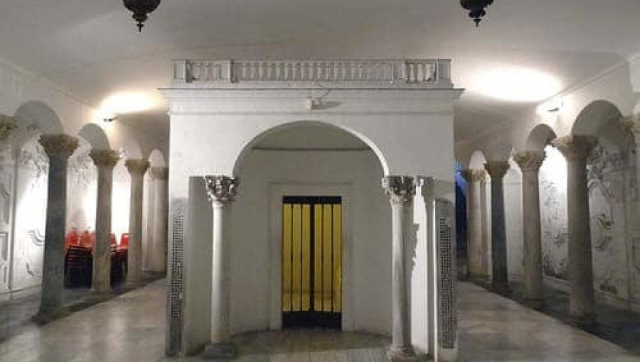
The Duomo of Capua, located in Piazza Matteotti and dedicated to St. Mary Major, represents a historical icon of the city and a valuable testimony to the first centuries of Christianity. According to the historical narrative, the church was founded by Saint Symmachus Bishop in 432, after his participation in the Council of Ephesus, which proclaimed Mary as Mother of God. The building stands on the site of the ancient grottoes of St. Priscus, the first bishop of the Church of Capua, and is distinguished by its impressive and significant architecture.

The Basilica di Santa Maria Maggiore is one of the few churches in Campania to have five naves in addition to side chapels, giving it a majestic and imposing dimension. Inside the basilica, among the many historical testimonies, are the remains of the mosaic floors of the ancient baptismal font, dating back to the fifth century. These mosaics represent not only a valuable artistic expression, but also tangible evidence of the long history and religious importance of Capua Cathedral.
Throughout the centuries, Capua Cathedral has been at the center of the city's religious and cultural life, continuing to be a place of prayer and reflection for the faithful and a point of reference for scholars and visitors interested in the history and sacred art of the region. Its beauty and historical importance make it an essential stop for those who visit the city of Capua and wish to immerse themselves in its rich cultural and spiritual heritage.