
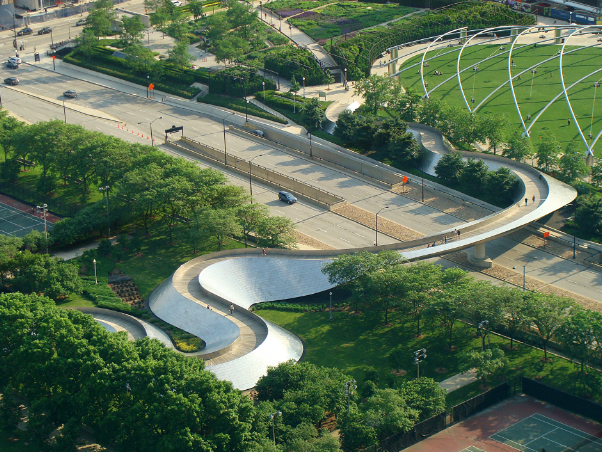

In the heart of Chicago, where urban dynamism meets artistic genius, lies the BP Pedestrian Bridge, a striking testament to modern design and functionality. As one traverses this unique structure, designed by the renowned architect Frank Gehry, they are not only moving between spaces but stepping into a narrative rich with history, art, and local culture.
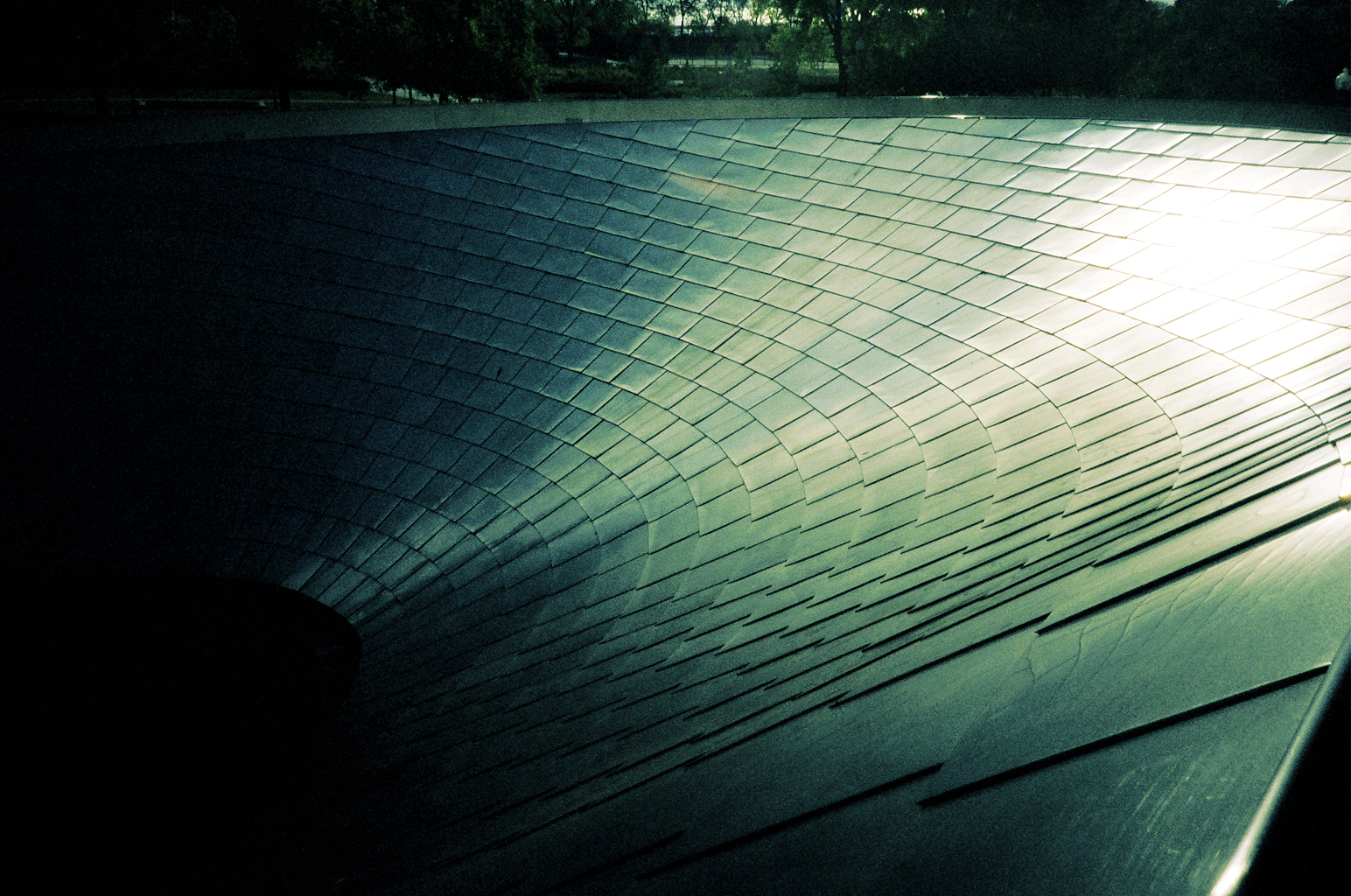
The bridge, a part of the larger Millennium Park project completed in 2004, stands as the first Gehry-designed bridge ever built. Gehry, known for his avant-garde architectural style, used the bridge to complement his work on the nearby Jay Pritzker Pavilion. This connection is not just physical but artistic, as both structures share the same aesthetic language of stainless steel panels and undulating forms, lending a sense of continuity across the park. The bridge itself spans 925 feet, gracefully curving over Columbus Drive to link Millennium Park with Maggie Daley Park, thus blending functionality with the artist's unmistakable flair.
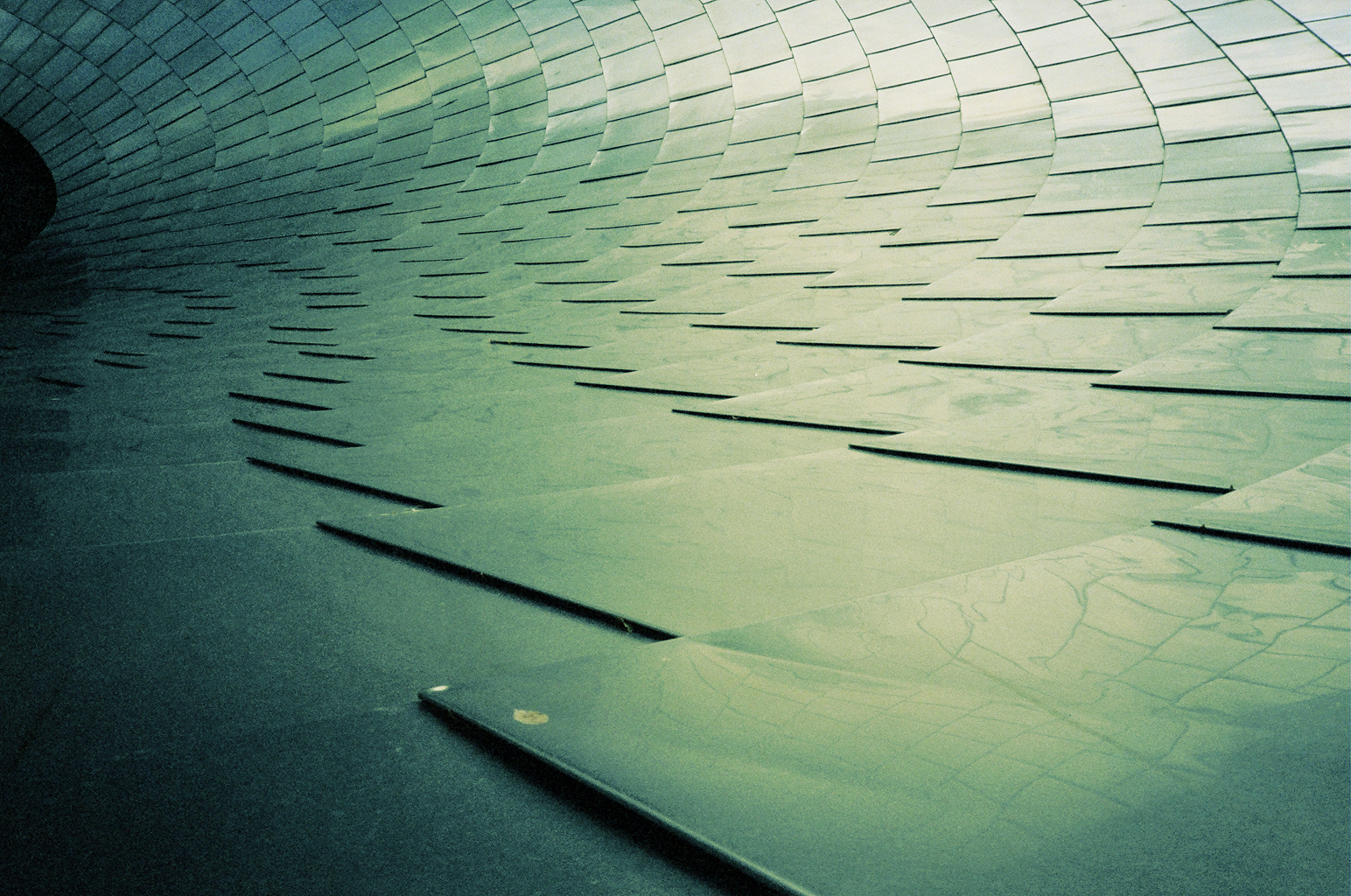
Gehry's design is a modern marvel, where the bridge's serpentine path and sleek metallic surface mirror the fluidity of Chicago's skyline. The panels, often compared to scales, shimmer under the city's ever-changing light, creating a dynamic visual experience for visitors. The bridge not only serves as a passage but as a piece of public art, offering views of Lake Michigan, the downtown skyline, and the lush landscapes of the parks it connects.
In the context of local culture, the BP Bridge is more than an architectural feat; it is a conduit of Chicago's vibrant public life. Millennium Park, home to iconic landmarks like the Cloud Gate (often referred to as "The Bean"), is a cultural hub that hosts numerous festivals and events throughout the year. The bridge often plays a supporting role in these festivities, guiding throngs of visitors between music festivals, art exhibitions, and seasonal celebrations.
While the bridge itself might not serve as a culinary destination, its location places it at the heart of Chicago's rich gastronomic scene. Just a short walk away, visitors can indulge in the city's culinary offerings, from classic Chicago-style hot dogs and deep-dish pizza to more contemporary dishes at nearby eateries. The vibrant food culture around Millennium Park reflects the city's diverse heritage and its reputation as a culinary capital.
For those keen on uncovering the lesser-known aspects of the BP Bridge, there are delightful details to discover. The bridge's surface is ingeniously designed to reduce noise from the traffic below, a thoughtful feature that enhances the pedestrian experience. This attention to detail extends to its construction, where the bridge's path gently slopes to ensure accessibility for all visitors, including those with mobility challenges—a reflection of Chicago’s commitment to inclusivity.
Visiting the BP Pedestrian Bridge offers more than just a walk across an artistic structure; it provides a unique vantage point from which to appreciate the juxtaposition of nature and urbanity. The best time to visit is during the late spring or early fall when the weather is mild, and the city's outdoor events are in full swing. Early morning visits allow for a serene experience, with fewer crowds and a chance to witness the city waking up.
When exploring the bridge, take time to pause and absorb the panoramic views, capture the interplay of light and shadow on the metal panels, and listen to the subtle hum of the city below. Notice how the design invites interaction, encouraging visitors to linger, observe, and engage with their surroundings.
In essence, the BP Pedestrian Bridge is a microcosm of Chicago itself—innovative, vibrant, and constantly evolving. It stands as a testament to the city's ability to blend art with infrastructure, offering both locals and tourists a passage that is as much about the journey as it is about the destination.


