
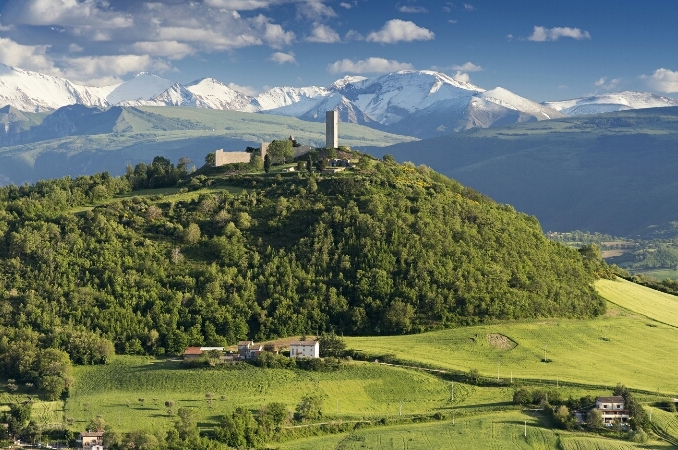

Perched majestically atop a hill, the Castle of Pitino beckons with tales of ancient glory and a rich tapestry of history. This remarkable fortress, built in the thirteenth century, stands sentinel over a site that was once a thriving Picenum settlement, showcasing the region's deep historical roots.

The origins of Pitino trace back to the Piceni, an ancient Italic tribe known for their sophisticated culture and artistry. Archaeological evidence suggests that this area was home to significant Picenian settlements, with the necropolis of Monte Penna, Frustellano, and Ponte di Pitino offering insights into their elaborate burial practices. Today, many of the exquisite artifacts unearthed from these sites can be admired in the Archaeological Museum of San Severino Marche and the National Museum of Ancona.
The castle itself was strategically rebuilt in 1220, reflecting the architectural trends of the time, characterized by robust defensive structures. Visitors can marvel at the sandstone entrance gate, which still stands as an imposing entry point. The city walls, stretching approximately 400 meters, are punctuated by rectangular towers that once provided vantage points for sentinels. Dominating the skyline is the keep, soaring to 23 meters without a single opening, a testament to the castle's formidable design. Historical accounts suggest that access to the keep was once facilitated through a network of underground passages, now sealed, adding an air of mystery to its past.

Within the castle walls, two sacred sites offer a glimpse into the spiritual life of the community. The smaller of the two churches, dating back to the fifteenth-sixteenth centuries, features captivating votive frescoes that reflect the artistic styles of the period. Adjacent lies the church of S. Antonio, rebuilt in the nineteenth century, notable for its quaint dome bell tower that punctuates the skyline and invites contemplation.
Beyond the historical architecture, the local culture of Pitino is steeped in tradition. Festivals celebrating local saints and harvests fill the calendar, with the Feast of San Rocco in August drawing visitors from surrounding areas. This lively event features processions, local music, and traditional dances, encapsulating the spirit of the community. The warmth of the locals and their dedication to preserving their heritage create an inviting atmosphere for travelers.
Gastronomically, Pitino offers a delightful array of local flavors. The region is known for its artisanal cheeses, particularly the Caciotta, a semi-soft cheese made from cow's milk that pairs beautifully with local wines. Vincotto, a sweet, syrupy reduction of cooked grape must, is often drizzled over cheeses or used in desserts, showcasing the culinary ingenuity of the area. Exploring the local osterias, visitors can savor traditional dishes like Stracciatella soup, a comforting broth with egg and greens, or Maccheroni alla chitarra, a handmade pasta that embodies the essence of Italian cuisine.
For those who venture to Pitino, the surrounding landscape offers a feast for the eyes. As you leave the castle walls, a picturesque walk leads you towards the sea, where an ancient archway, entwined with an old cypress tree, beckons visitors to the old cemetery. Here, time stands still as you wander among tombstones from the early twentieth century, with some graves marked by empty spaces, hinting at stories untold. The panoramic views extend all the way to Monte Conero, providing a breathtaking backdrop that encapsulates the beauty of the Marche region.
While Pitino is a gem often overlooked by tourists, there are lesser-known curiosities that reveal the town's character. The castle, for instance, is said to be haunted by the spirit of a medieval knight, whose presence is felt by some who wander its halls after sunset. Additionally, the town's name itself is steeped in legend, with some believing it derives from the Latin word "pietas," reflecting the deep sense of devotion that the locals hold for their land and its history.
To make the most of your visit, the best time to explore Pitino is during the spring and early autumn months when the weather is mild and the landscapes are vibrant. Be sure to wear comfortable shoes for the winding paths and cobbled streets, and keep an eye out for local artisans showcasing their crafts.
In this enchanting corner of Italy, where history meets breathtaking landscapes, the Castle of Pitino offers a unique experience that lingers in the heart long after departure. Allow yourself to be swept away by its stories and flavors, and consider using the Secret World app to craft a personalized itinerary for your visit to this hidden treasure.


