
← Back

The Cathedral of San Cerbone in Massa Marittima

Piazza Giuseppe Garibaldi, 58024 Massa Marittima GR, Italia ★★★★☆ 346 views
Paola Cortese
Massa Marittima
🏆 AI Trip Planner 2026

Get the free app

Discover the best of Massa Marittima with Secret World — the AI trip planner with 1M+ destinations. Get personalized itineraries, hidden gems and local tips. Free on iOS & Android.

🧠 AI Itineraries 🎒 Trip Toolkit 🎮 KnowWhere Game 🎧 Audio Guides 📹 Videos
Download on the App Store Get it on Google Play
Scan to download Scan to download

About The Cathedral of San Cerbone in Massa Marittima

The Cathedral of San Cerbone in Massa Marittima - Massa Marittima | Secret World Trip Planner

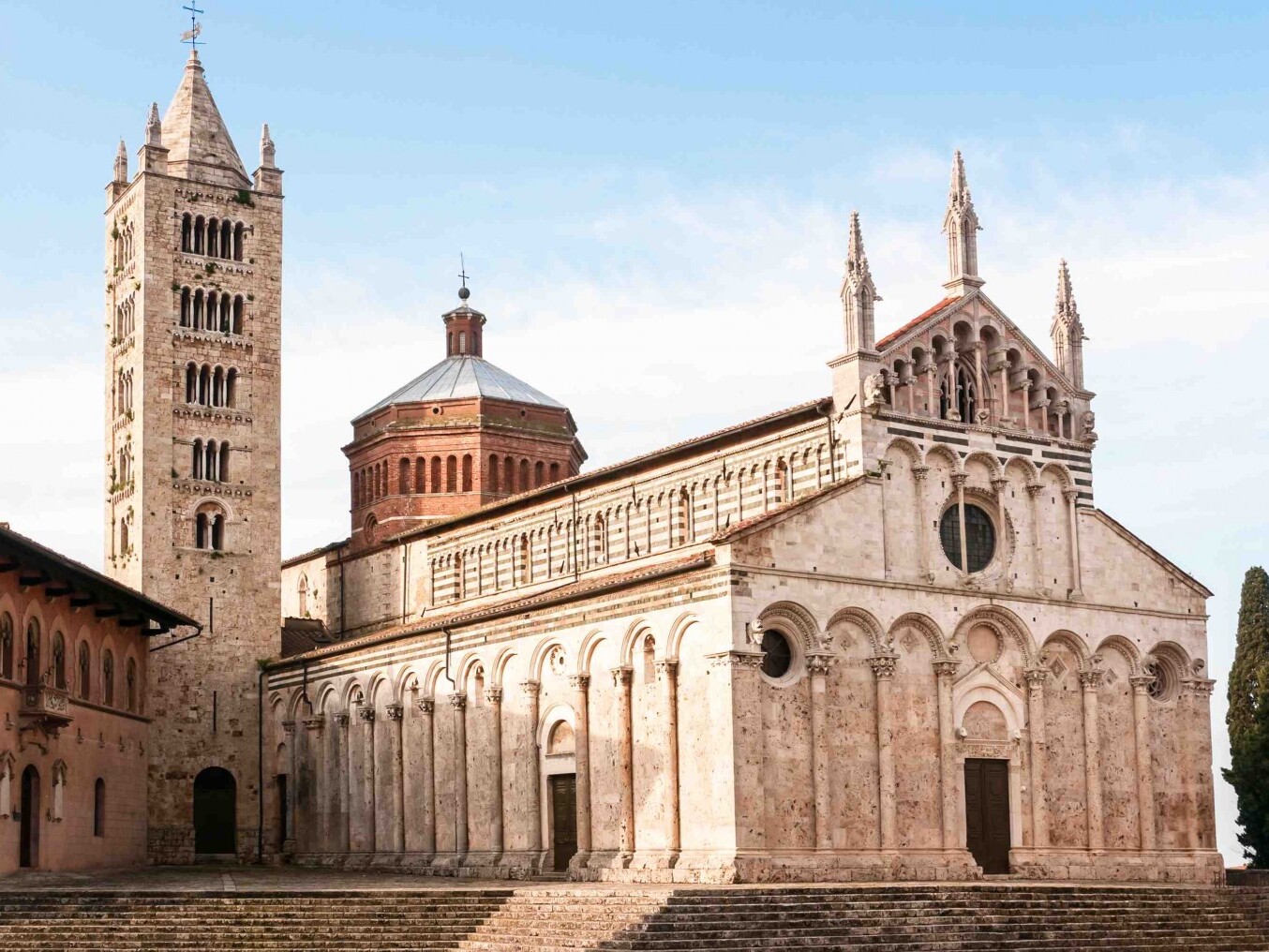
We enter the Cathedral of San Cerbone, which the people of Massa Carrara familiarly call the Duomo, through an imposing staircase that makes the building truly majestic. The construction was begun in the eleventh century and is a remarkable example of Romanesque-Gothic architecture. Great artists participated with their works in its realization: Giovanni Pisano, Goro di Gregorio, Segna di Bonaventura, Giroldo da Como and Duccio da Boninsegna. After ten years of restoration work, the interior of the dome has returned to view, which has reserved a magnificent surprise. Today we can establish that the dome belongs to the first construction of the Romanesque building and to this we owe the paintings of the architectural simulation motif, the frescoes with the symbols of the 4 Evangelists and the stories of Saint Cerbone. The author of this work has been identified in a painter from Pisa: Enrico di Tedice. The building overlooks Piazza Garibaldi from the top of an imposing staircase, whose steps are very steep on the right side. Already at first glance you can see that the building has undergone numerous renovations and changes over the centuries, reaching its final appearance at the beginning of the fourteenth century. Also for this reason, some sculptural elements of the Cathedral have been replaced and today they are kept in the Museum of Sacred Art. The façade is in Pisan style of the XI-XII century and the portal that opens on it is surmounted by an architrave with a bas-relief representing some scenes of the life of Saint Cerbone, bishop of Vetulonia and patron saint of Massa Marittima. The façade, divided into several levels, is rich in columns, arches and statues by the famous sculptor Giovanni Pisano. The apse was enlarged and modified from 1287 in Gothic style with Romanesque elements, probably also by Giovanni Pisano. Even the bell tower in Romanesque-Lombard style, dating from between the 12th and 13th centuries, was extensively restored and the upper part was almost completely rebuilt. Inside, the Cathedral is divided into three naves separated by travertine columns, at the top of which stand out the capitals that once again recall the style of Giovanni Pisano. Here it is possible to admire numerous paintings and sculptural masterpieces. Worthy of note is the marble Ark of San Cerbone di Goro di Gregorio (1324), one of the greatest masterpieces of Italian Gothic sculpture, where are represented some scenes from the life of the saint and the miracles he performed. Another work to mention is the Baptismal Font in travertine by Giroldo da Como (1267), on which a marble tabernacle was placed in 1447. The Majesty of the Sienese school of Duccio di Buoninsegna (1316), the painted Cross by Segna di Bonaventura and the Crucifixion by Ambrogio Lorenzetti are just some of the other works that can be admired along the walls of the Cathedral. The Cathedral was awarded the title of Minor Papal Basilica by Pope Paul VI in 1975. A curiosity: the unusual
The Cathedral of San Cerbone in Massa Marittima - Massa Marittima | Secret World Trip Planner
🗺 AI Trip Planner

Plan your visit to Massa Marittima

Suggested itinerary near The Cathedral of San Cerbone in Massa Marittima

MAJ+
500.000+ travelers worldwide
  1. 🌅
    Morning
    The Cathedral of San Cerbone in Massa Marittima
    📍 Massa Marittima
  2. ☀️
    Afternoon
    Altar of Ivan Theimer in the Cathedral of Massa Marittima
    📍 0 km · Massa Marittima
  3. 🌆
    Evening
    P.zza Garibaldi, one of the most beautiful squares in Tuscany
    📍 0.1 km · Massa Marittima

Buy Unique Travel Experiences

Powered by Viator

See more on Viator.com

Explore nearby · Massa Marittima

Frequently Asked Questions

The Cathedral of San Cerbone is a remarkable example of Romanesque-Gothic architecture that began construction in the eleventh century. The façade displays the Pisan Romanesque style of the XI-XII century, while the apse was later enlarged and modified in Gothic style with Romanesque elements starting in 1287, likely by the famous sculptor Giovanni Pisano.
Several renowned artists contributed to the Cathedral's realization, including Giovanni Pisano, Goro di Gregorio, Segna di Bonaventura, Giroldo da Como, and Duccio da Boninsegna. Additionally, the dome's magnificent frescoes and paintings were created by Enrico di Tedice, a painter from Pisa, whose work was rediscovered after ten years of restoration work.
The dome features beautiful architectural simulation motif paintings, frescoes depicting the symbols of the 4 Evangelists, and stories of Saint Cerbone, all created by Pisan painter Enrico di Tedice. These original works from the first Romanesque construction have been restored to their former glory after a decade-long restoration project.
The portal that opens onto the façade is surmounted by an architrave with a bas-relief representing scenes from the life of Saint Cerbone, who was the bishop of Vetulonia and is the patron saint of Massa Marittima. The façade is richly decorated with columns, arches, and statues crafted by the renowned sculptor Giovanni Pisano.
The Cathedral has undergone numerous renovations and modifications over the centuries, reaching its final appearance at the beginning of the fourteenth century. Due to these changes, some of the original sculptural elements have been replaced and are now preserved in the Museum of Sacred Art, while the bell tower in Romanesque-Lombard style from the 12th-13th centuries was also extensively restored.
