
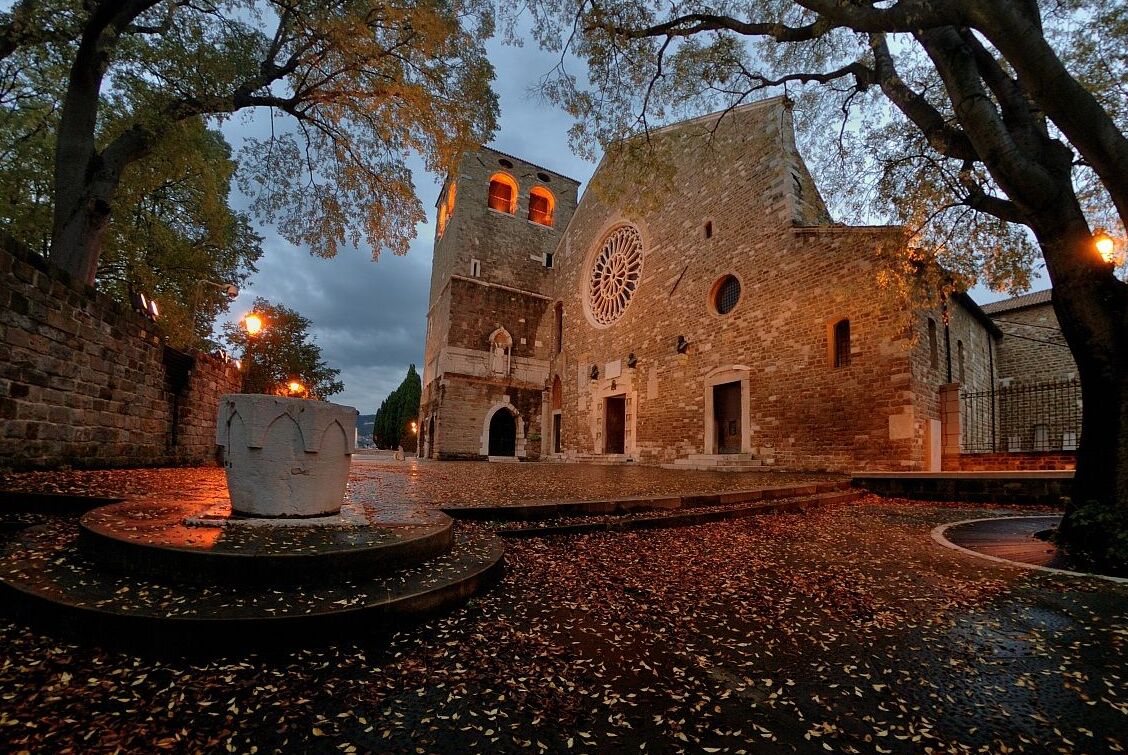

Perched atop San Giusto Hill, the Cathedral of San Giusto is not just a spiritual haven; it is a testament to the layered history and culture of Trieste. Dominating the skyline, this magnificent edifice invites visitors to explore a rich tapestry of history, art, and local life.
History and Origins The origins of the Cathedral trace back to the early Christian period, with roots in two churches: the Church of Santa Maria and the church dedicated to San Giusto, the city's patron saint. The merger of these two structures was orchestrated under Bishop Roberto Pedrazzani da Robecco between 1302 and 1320, marking a significant moment in Trieste's ecclesiastical history. This consolidation resulted in the grand five-aisled layout we admire today, although it required the demolition of one aisle.
Over the centuries, the Cathedral has witnessed and weathered numerous historical events. It has stood resilient through the trials of the Venetian Republic, the Austrian Empire, and the tumultuous changes of the 20th century. Its bell tower, originally soaring higher, was reduced in height after being struck by lightning in 1422.
Art and Architecture The architectural style of the Cathedral embodies a harmonious blend of Romanesque and Gothic elements. The façade, reminiscent of a hut, features a striking rose window with a unique double wheel. The captivating portal, which incorporates elements from a Roman funeral stele, invites one to explore its interior further.
Inside, visitors are greeted by the mesmerizing mosaic flooring that dates back to the 5th century, located prominently in front of the presbytery. The apse features modern mosaics that add a contemporary touch to the ancient structure. Perhaps most compelling are the frescoes from the 13th century that depict the life of San Giusto, which narrate the saint's story and underscore his importance to the local community.
Local Culture and Traditions The Cathedral of San Giusto is more than a religious building; it is a cultural cornerstone in Trieste. Festivals celebrating San Giusto take place annually, particularly on May 16, the saint's feast day. Events include processions, religious ceremonies, and an array of local festivities that draw both residents and visitors alike.
Moreover, the Cathedral has been a site of community gatherings, where locals come to celebrate important life events such as weddings and baptisms. This enduring connection to local tradition reinforces the Cathedral's role as a living part of Trieste's identity.
Gastronomy No visit to Trieste is complete without indulging in the local gastronomy, which reflects the city’s diverse cultural influences. Just a stone's throw from the Cathedral, you can savor ristoranti offering traditional dishes such as gnocchi, strudel, and prosciutto di San Daniele. Pair your meal with a glass of Terrano wine, a local red that perfectly complements the hearty flavors of Triestine cuisine.
Be sure to try caffè triestino, a unique coffee preparation that showcases the city’s rich coffee culture. The aroma of freshly brewed coffee wafts through the streets, inviting you to take a break and soak in the bustling atmosphere.
Lesser-Known Curiosities While the Cathedral is a popular attraction, some intriguing details often go unnoticed. For instance, the battistero, or baptistery, located adjacent to the Cathedral includes ancient baptismal fonts with intricate carvings that date back centuries. Moreover, the crypt beneath the Cathedral houses relics and artifacts that tell stories of the early Christians in Trieste.
A hidden gem within the Cathedral is the chapel of San Giusto, where you can find a striking statue of the saint, believed to have protective powers over the city. It’s said that touching the statue can bring good fortune, a belief that continues to attract visitors.
Practical Visitor Information The Cathedral of San Giusto is open year-round, but the best time to visit is during the spring and early autumn when the weather is mild. Early mornings or late afternoons offer a quieter experience, allowing you to appreciate the serene ambiance.
When visiting, pay attention to the details: the artistry of the mosaics, the craftsmanship of the frescoes, and the intricate designs of the altar, which was consecrated on November 27, 1385 by Bishop Enrico de Widenstein.
To enhance your visit, consider taking a guided tour that delves into the Cathedral’s history and art. This can provide context that enriches your understanding, transforming your experience from mere sightseeing to a profound connection with Trieste’s heritage.
As you plan your journey to explore the Cathedral of San Giusto, consider using the Secret World app to create a personalized AI itinerary that will guide you through the wonders of Trieste.


