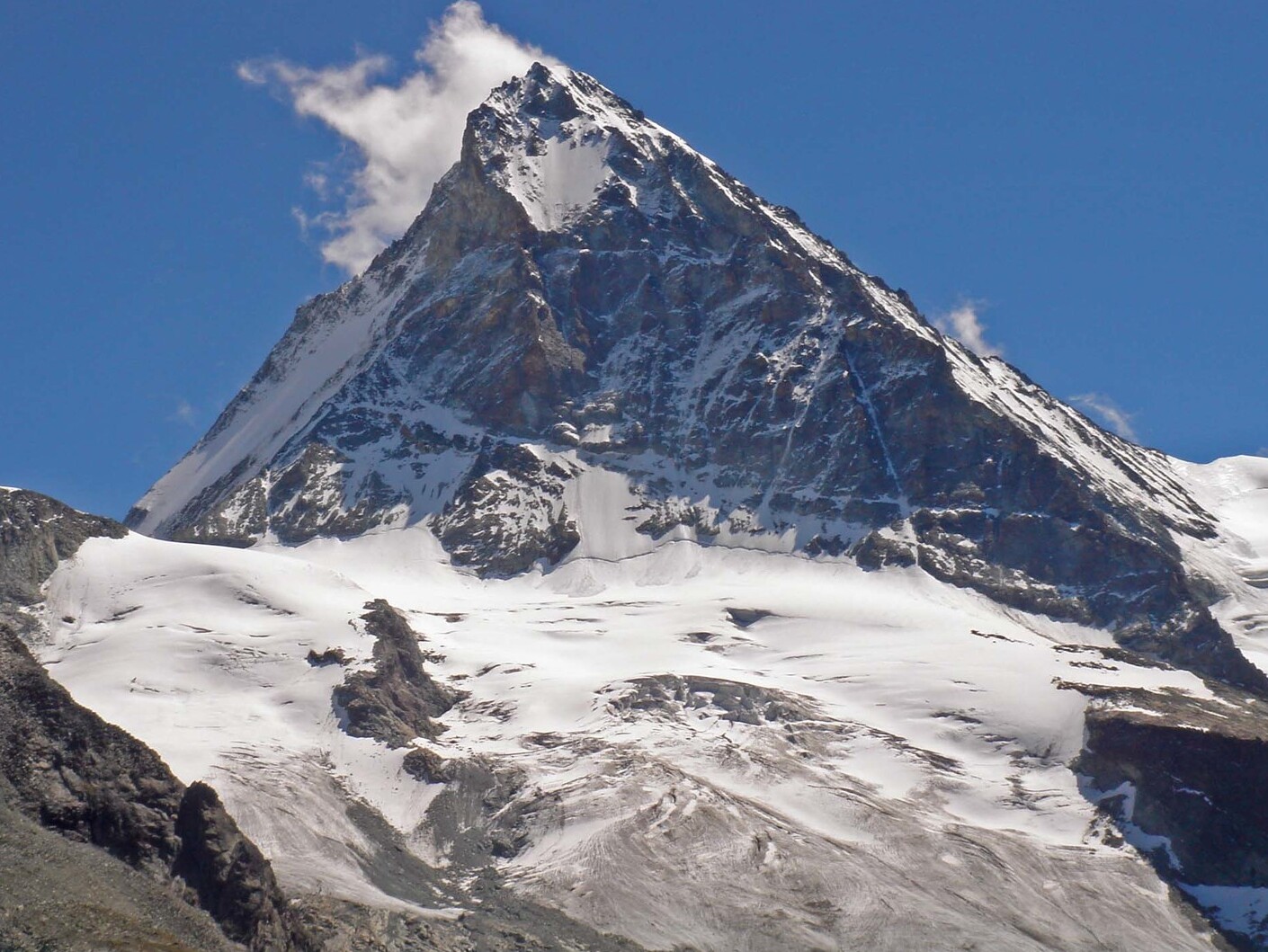

Rising majestically in the Pennine Alps, the Dent Blanche is a breathtaking spectacle that has captivated adventurers and nature enthusiasts alike. Towering at 4,357 meters (14,295 ft), this iconic peak stands as a sentinel over three valleys — the Val d'Hérens, Val d'Anniviers, and Mattertal — each of which boasts its own unique charm and picturesque villages: Evolène, Zinal, and Zermatt.
### History and Origins
The history of Dent Blanche is steeped in the rich tapestry of the Swiss Alps. Its name, which translates to "white tooth," is believed to have been inspired by its striking, snow-capped summit that glistens under the sun. The mountain was first summited on August 8, 1862, by a team led by the renowned English mountaineer Edward Whymper, alongside Swiss guides. This ascent marked a significant milestone in the exploration of the Alps, contributing to the growing allure of mountaineering as a sport in the 19th century.
As the mountain became more accessible, it drew the attention of climbers from around the globe. The Dent Blanche has since been a critical point of convergence for various climbing routes, which necessitate not only skill but also a deep respect for the unpredictable alpine environment. The peak's geological composition, primarily made up of granite, adds to its allure, providing climbers with both challenge and beauty.
### Art and Architecture
While the Dent Blanche itself is an awe-inspiring natural monument, the surrounding villages reflect a distinct architectural style that harmonizes with the alpine landscape. Traditional Valaisan architecture is characterized by wooden chalets, often adorned with intricate carvings and colorful window boxes. In Zermatt, the iconic Matterhorn serves as a dramatic backdrop, enhancing the artistic significance of the region.
Local artists often draw inspiration from the mountain’s grandeur. Paintings and photographs featuring Dent Blanche can be found in galleries throughout the area, showcasing the peak’s ethereal beauty in different seasons. The interplay of light and shadow on the mountain faces provides a dynamic subject that has fascinated artists for generations, making it an important motif in local art.
### Local Culture and Traditions
The culture of the Valais region is rich with traditions that celebrate both the natural landscape and the community's heritage. Festivals such as Fête de la Saint-Félix, celebrated in early December, highlight local customs, with parades featuring traditional costumes and folk music echoing through the valleys. The Alpine Festival in Zermatt, held annually in summer, brings together locals and visitors to enjoy traditional cuisine, music, and dance, fostering a sense of community and connection to the land.
The people of the region are known for their hospitality, often inviting travelers to experience their customs firsthand. The Valaisan dialect, a variant of the Swiss German language, adds a unique flavor to interactions, enhancing the cultural immersion for visitors.
### Gastronomy
The culinary offerings near Dent Blanche reflect the rich agricultural heritage of the region. Rösti, a Swiss potato dish, is a staple, often served alongside Raclette, a melted cheese dish that warms the heart on cold alpine days. Another regional specialty is the Valaisan apricot, known for its sweetness and used in various desserts and liqueurs.
Visitors can also indulge in a glass of Fendant, a white wine produced from the Chasselas grape, which pairs beautifully with local cheeses. Dining in Zermatt provides an opportunity to enjoy traditional dishes while soaking in the mountain views, making every meal a memorable experience.
### Lesser-Known Curiosities
While many are drawn to Dent Blanche for its climbing challenges, fewer know about the rich biodiversity that flourishes in its shadow. The surrounding areas are home to rare alpine flora and fauna, including the elusive Ibex and various endemic plant species that thrive in the harsh conditions.
Another intriguing aspect is the glaciers that cradle the mountain. These ancient rivers of ice are constantly shifting, and their magnificence can be experienced from various vantage points. The Schönbiel Glacier, for instance, offers an accessible route for hikers looking to explore the stunning glacial landscapes without venturing into more technical climbing routes.
### Practical Visitor Information
The best time to visit Dent Blanche is during the summer months, from June to September, when the weather is milder and the trails are accessible. For climbers, early summer offers stable conditions, while autumn can provide breathtaking views as the foliage changes.
When planning your visit, consider taking a guided tour to ensure safety and to gain insights from experienced locals. The scenic hikes around Zermatt not only offer stunning views of the mountain but also provide opportunities for photography and wildlife observation.
For those looking to immerse themselves fully in the experience, consider using the Secret World app to plan a personalized AI itinerary that will help you uncover the hidden gems of Zermatt.
