
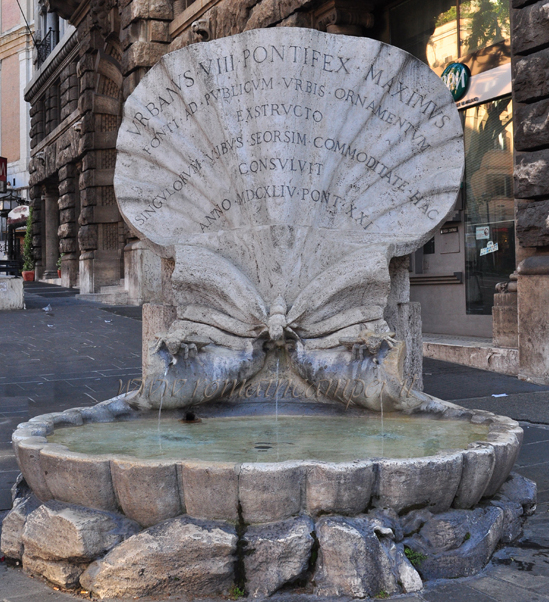

Nestled in the heart of Rome, just a stone's throw from the Triton Fountain, lies the enchanting Fountain of the Bees—a masterpiece crafted by the celebrated Gian Lorenzo Bernini in 1644. This striking public fountain, with its charming design and rich historical significance, is a testament to Bernini's artistic genius and the cultural tapestry of the city.
History and Origins The Fountain of the Bees stands as a symbol of the Papacy during a period when artistic patronage flourished under Pope Urban VIII, the pontiff who commissioned the work. This was a time of immense transformation in Rome, where the Baroque style began to dominate. The fountain was originally designed to adorn the area near the Triton Fountain, another of Bernini's creations, and was intended to enhance the aesthetic beauty of the city.
The fountain’s design features an open bivalve shell, a unique element that diverges from typical fountain designs of the era. The lower valva serves as a basin, while the upper valva, delicately formed to fit the corner of the adjacent building, showcases three bees—an emblem representing the Barberini family, to which Pope Urban VIII belonged. An inscription at the fountain commemorates the Pope's vital contribution to its construction, labeling it as a “public ornament of the city.”
Despite its initial splendor, the fountain faced challenges over the years. In 1865, it was dismantled due to traffic congestion and stored away in municipal warehouses. It wasn't until 1915 that it was reconstructed and repositioned at the corner of the square, allowing a new generation of visitors to appreciate its beauty.
Art and Architecture The Fountain of the Bees is a stunning example of Baroque architecture—characterized by its exuberance and dramatic flair. Bernini's work often embodies the notion of movement and emotion, and this fountain is no exception. The shell shape symbolizes nature’s beauty and the fluidity of water, while the bees represent the industriousness and virtue of the Barberini family.
The artistry is further highlighted by the intricate detailing on the bees, which seem to come alive on the base of the fountain. Bernini’s ability to meld functionality with artistry has made the fountain a significant piece in the context of Roman public art. Visitors are not only drawn to its visual appeal but also to the historical narrative woven into its very structure.
Local Culture and Traditions The area surrounding the Fountain of the Bees is steeped in local culture. Visitors often see families and street performers gathering here, adding life and vibrancy to the space. The fountain also serves as a backdrop for various local festivals and events, where the community comes together to celebrate Roman traditions.
One such celebration is the Feast of the Immaculate Conception on December 8th, where locals participate in processions and gatherings throughout the city. The fountain often becomes a focal point for such events, embodying the spirit of communal celebration.
Gastronomy No visit to the area would be complete without indulging in Roman cuisine. Just a short walk from the fountain, visitors can find delightful trattorias and cafes serving traditional dishes. Be sure to try Cacio e Pepe, a simple yet delicious pasta dish made with cheese and pepper, or Saltimbocca alla Romana, thin slices of veal wrapped in prosciutto and sage.
To wash it down, sample a glass of Frascati, a white wine produced in the nearby hills, or a classic Espresso from one of the local coffee bars. These culinary experiences are not only delicious but also a way to engage with the vibrant culture that surrounds the fountain.
Lesser-Known Curiosities While many tourists flock to the more famous sites in Rome, the Fountain of the Bees holds several hidden gems. For instance, few notice that the fountain was designed to be a corner piece, a practical solution to the urban landscape of its original location. Additionally, the bees on the fountain are not merely decorative; they represent the aspirations of the Barberini family, whose influence was felt throughout the city.
Another interesting fact is that the fountain's restoration in the early 20th century involved meticulous care to preserve its original artistry while adapting it to modern urban needs. It’s a true blend of past and present, reflecting the ongoing dialogue between history and contemporary life in Rome.
Practical Visitor Information The Fountain of the Bees is best visited in the early morning or late afternoon when the light casts a beautiful glow on its surface. This timing not only provides the best photographic opportunities but also allows visitors to enjoy a quieter experience away from the crowds.
When visiting, take time to sit nearby and soak in the ambiance. The surrounding area is also dotted with charming shops and cafés, perfect for a leisurely afternoon. Don’t forget to look for the inscription at the fountain’s base, which details its historical significance—a small yet enriching detail that many overlook.
In conclusion, the Fountain of the Bees is more than just a beautiful structure; it embodies Rome’s rich history, artistry, and community spirit. Whether you’re an art enthusiast, a history buff, or simply a traveler looking to explore, this fountain offers an unforgettable glimpse into the soul of Rome.
For a deeper exploration of the city and to tailor your journey, consider using the Secret World app to create a personalized itinerary.


