
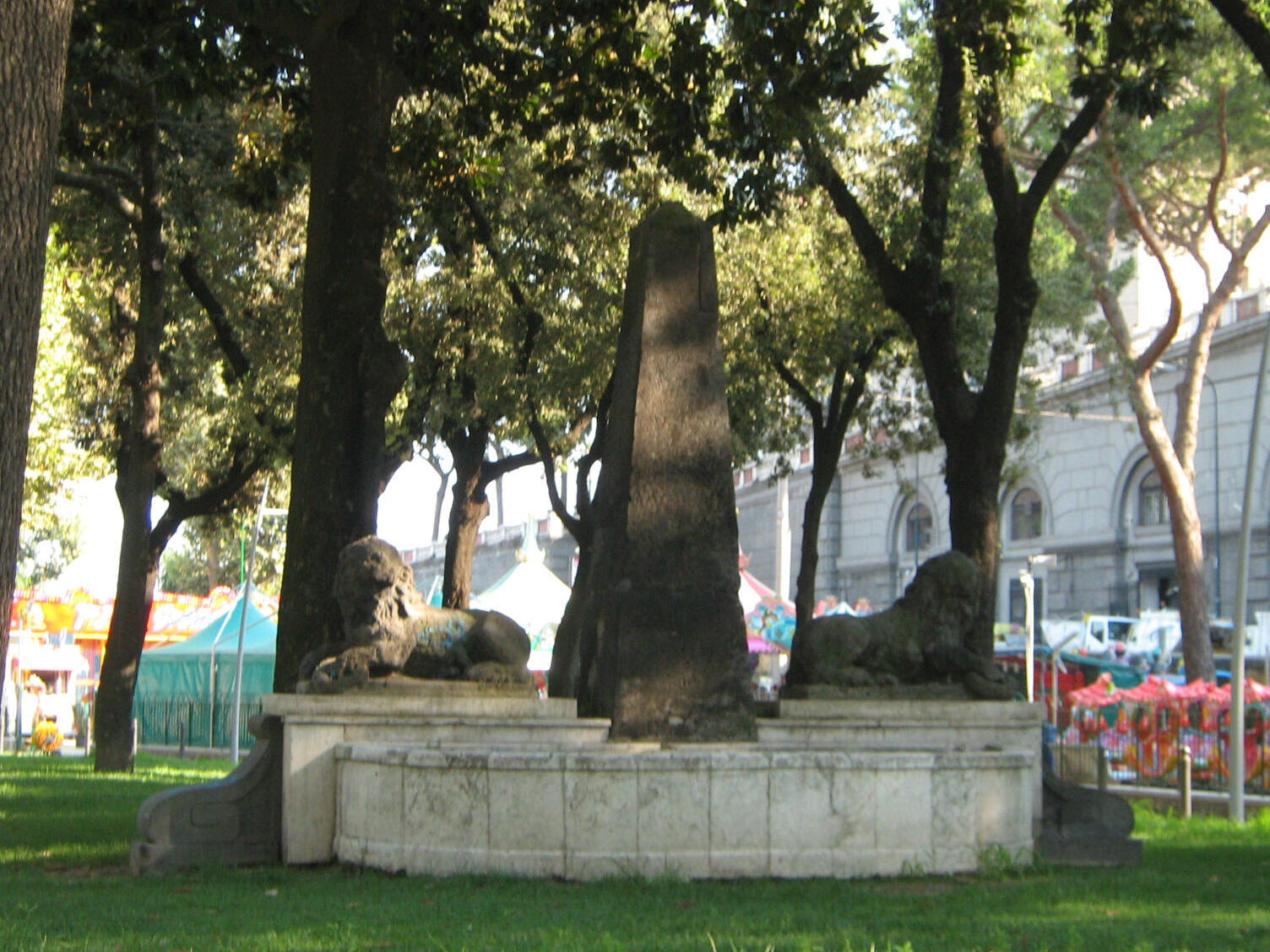

Nestled along Via Ammiraglio Ferdinando Acton, the Fountain of the Lions stands as a testament to the rich tapestry of Naples’ history and culture. Built in 1788 by Francesco Sicuro, this remarkable fountain was one of three that adorned Piazza Mercato, a bustling hub of activity at the time. Designed with both aesthetic appeal and practical functionality in mind, it served not only as a decorative feature but also as a much-needed watering point for the animals that transported goods throughout the city.

The design of the fountain reflects a distinctive Egyptian theme, which was popular during the late 18th century. The centerpiece features two majestic lions, symbolizing strength and guardianship, alongside an elegant obelisk that points skyward. This choice of motifs was not merely decorative; it echoed the fascination with Egyptian aesthetics that gripped Europe following Napoleon’s campaigns in Egypt.
Originally located in Piazza Mercato, the fountain witnessed the vibrant life of the square, which buzzed with merchants, traders, and locals. Over the years, however, the fountain was relocated twice. In the 19th century, it was moved to Poggioreale, and then to the Molosiglio gardens in 1938, coinciding with the development of the new coastal road (Via Acton) that transformed the area, which had been dominated by the Bourbon arsenal until the late 1800s.
Architecturally, the Fountain of the Lions is a striking example of Neoclassical design, characterized by its clean lines and symmetrical forms. Sicuro's craftsmanship is evident in the detailed carving of the lions, which exude a lifelike quality that commands attention. The obelisk, adorned with hieroglyphics, adds a layer of historical intrigue, inviting visitors to ponder its origins and purpose.
As for local customs, the area surrounding the fountain is steeped in vibrant Neapolitan culture. Festivals such as San Gennaro, celebrated in September, are marked by processions and gatherings that often take place near significant landmarks like the fountain. The sense of community is palpable, as locals come together to honor their patron saint, reflecting the deep-rooted traditions that define Neapolitan society.
Gastronomy in this part of Naples is a delightful journey into the heart of Italian cuisine. Just a stone's throw from the fountain, visitors can indulge in sfogliatelle, a traditional pastry filled with sweet ricotta, or sample the world-renowned Neapolitan pizza. Local eateries often serve dishes seasoned with fresh herbs and the famous San Marzano tomatoes, creating a culinary experience that is as rich as the city’s history.
Interestingly, the Fountain of the Lions is not just a relic of the past; it holds secrets that many visitors may overlook. For instance, the lions are said to have been inspired by the ancient Egyptian sculptures that adorned the Nile, symbolizing both power and protection. Moreover, the fountain’s relocation to the Molosiglio gardens was part of a broader urban renewal project that transformed the landscape of Naples, making it a key point of interest for urban historians.
For those planning a visit, the best time to explore the fountain is during the spring and early autumn months when the weather is pleasantly mild. The area around Via Acton offers stunning views of the coastline, making it ideal for a leisurely stroll. Be sure to take a moment to appreciate the intricate details of the fountain, and perhaps capture a photo with the lions as your backdrop.
To fully enjoy the experience, consider visiting during off-peak hours to avoid the crowds and soak in the ambiance of this historical site. The nearby gardens also provide a serene environment for reflection and relaxation after immersing yourself in the bustling life of Naples.
In conclusion, the Fountain of the Lions is more than just a decorative feature; it is a portal into Naples' past, a celebration of its vibrant culture, and a culinary delight waiting to be discovered. As you wander through this historic area, let the stories of the fountain weave into your own travel narrative. For a personalized itinerary that includes this captivating landmark, consider using the Secret World app.


