
🎄 Win a month in Italy for two — €10,000 · The Secret Italy Prize GO →
The gullies: A scenery of rare beauty — Montalbano Jonico
← Back
Mountain Resort 📍 Montalbano Jonico, Italy 572 views

The gullies: A scenery of rare beauty

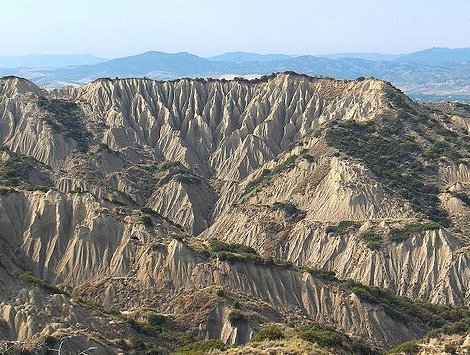
From the action of the rain on clayey soils, a scenario of rare atmosphere: that of the gullies, geological formations with unpredictable profiles, whose glow stands out against the blue sky. To be admired in the surroundings of Aliano, together with the memories of Carlo Levi, o...

Photo · Ranita J.

The gullies: A scenery of rare beauty — Montalbano Jonico, Italy.

Location
Montalbano Jonico
Type
Mountain Resort
Opening hours
Weather now
↗ Directions

About The gullies: A scenery of rare beauty

The gullies: A scenery of rare beauty - Montalbano Jonico | Secret World Trip Planner

From the action of the rain on clayey soils, a scenario of rare atmosphere: that of the gullies, geological formations with unpredictable profiles, whose glow stands out against the blue sky. To be admired in the surroundings of Aliano, together with the memories of Carlo Levi, or in the Calanchi di Montalbano Reserve. Then you can set off towards the clusters of white houses of Pisticci or the endless horizons of Rotondella, the Balcony of the Ionian Sea. Aliano's past is linked to one of his illustrious "guests", the Turin doctor and painter Carlo Levi. An important centre of exchange between the Greek, Etruscan and Oenotrian civilizations, as shown by the discovery of a necropolis (7th-6th century BC), whose finds are now kept in the Museum of the Siritide of Policoro, Aliano probably already existed at the time of Pyrrhus (280 BC), but the first official sources mentioning it date back to 1060. In the 8th century, basilican monks took refuge among the various caves dug into the sedimentary rocks of the San Lorenzo ditch, already inhabited in prehistoric times, while in medieval times Aliano was a feud of the Sanseverino, Carafa and Colonna families. The most recent history of Aliano, however, is linked to Carlo Levi. After a first stop in Grassano, he spent part of his exile in Basilicata in this splendid village, to which he was condemned in the years 1935-36, because of his anti-fascist activity. And it was here, after meeting the people, the precarious conditions in which they lived, their standard of living, that the Piedmontese artist set the book Christ stopped at Eboli (1945).

In the village are still intact all the places described in the novel and in the alleys are imprinted some symbolic phrases of the book, of those years, of that indissoluble bond with the population of Gagliano, as Levi calls the village, imitating the pronunciation of the local dialect, the intensity is still palpable. This feeling is alive more than ever if you reach the cemetery of Aliano where Levi asked to be buried at his death. And so it was.

✦ Secret World · suggested day

A perfect day in Montalbano Jonico

Start with The gullies: A scenery of rare beauty, then continue with nearby places selected by Secret World.

  1. 01
    Morning
    The gullies: A scenery of rare beauty
    📍 Montalbano Jonico
    Start here
  2. 02
    Afternoon
    📍 12.5 km away
  3. 03
    Evening
    📍 13.2 km away

Collect this place

Turn places you discover into stamps in your Secret Passport.

Open Secret Passport →

Keep exploring · Montalbano Jonico

Frequently Asked Questions

The gullies are geological formations created by rain erosion on clayey soils, featuring unpredictable profiles and a distinctive glow that stands out against the blue sky. You can admire them in the surroundings of Aliano or visit the Calanchi di Montalbano Reserve, which showcases these rare and atmospheric natural landscapes.
Carlo Levi, a Turin doctor and painter, was exiled to Aliano in 1935-36 due to his anti-fascist activities and used his time there to write the famous novel 'Christ Stopped at Eboli' (1945). The novel was inspired by his encounters with the local people and their difficult living conditions, and all the places he described in the book remain intact in the village today.
Aliano was an important exchange center between Greek, Etruscan, and Oenotrian civilizations, as evidenced by a necropolis from the 7th-6th century BC whose artifacts are now in the Museum of the Siritide in Policoro. The village likely existed during the time of Pyrrhus (280 BC), though official historical records first mention it in 1060.
You can explore the white house clusters of nearby Pisticci or visit Rotondella, known as the Balcony of the Ionian Sea, which offers endless horizons. Additionally, the San Lorenzo ditch features caves carved into sedimentary rocks that were inhabited since prehistoric times and later used by basilican monks in the 8th century.
Walk through the village alleys where symbolic phrases from 'Christ Stopped at Eboli' are inscribed, and visit the cemetery where the intensity of Levi's connection to the local people is particularly palpable. All the locations described in his novel remain intact, allowing you to retrace his footsteps and understand the profound bond he formed with the community during his exile.

Experiences nearby · Montalbano Jonico

Powered by Viator

See more on Viator.com

Secret World Hidden places, real stories — plan your trip
Get the app
