
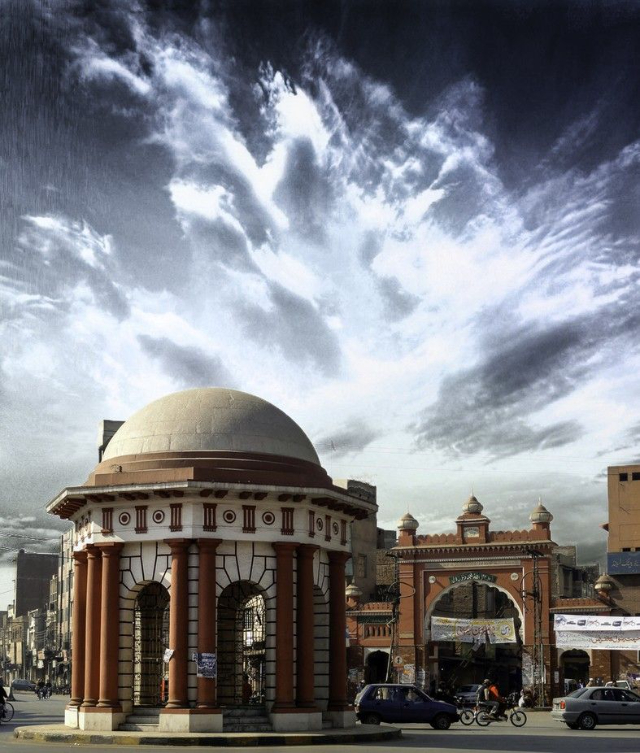

The Gumti Water Fountain is a historic monument in Faisalabad, Pakistan, dating back to the era of British Raj. Constructed in the early nineteenth century, this monument originally served as a vital gathering place for the local residents, where community members would convene for town meetings. Over the years, it has transitioned from a communal hub to a functional part of the city's infrastructure.
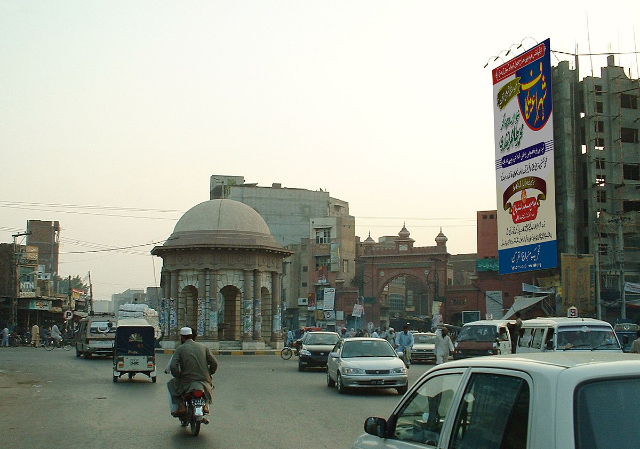
Today, the Gumti Water Fountain is ingeniously integrated into the cityscape as a traffic roundabout, yet it retains its historical significance and aesthetic appeal. At its heart, the water fountain still operates, serving as a charming reminder of the city's colonial past amidst the bustling urban environment.
Architecturally, the Gumti is notable for its sixteen pillars that provide structural support and add to its grandeur. The roof of the Gumti is beautifully curved, enhancing its visual appeal and making it a distinctive landmark. Additionally, the monument features twelve steps leading up to it, though these have somewhat diminished over time due to wear and general neglect by the authorities.
Despite the challenges it faces, the Gumti Water Fountain remains a beloved symbol of Faisalabad’s rich history. It stands as a testament to the city's heritage, continuing to catch the eye of passersby and serving as a picturesque historical site in the heart of modern Faisalabad.


