
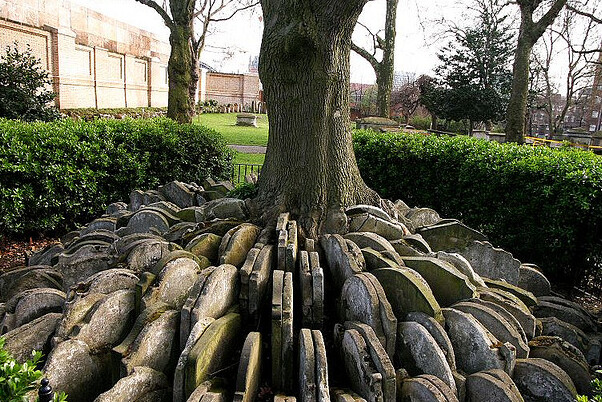

In the heart of St Pancras Old Churchyard, nestled in the bustling city of London, a curious monument known as the Hardy Tree stands as a testament to history, literature, and the passage of time. It is a place where nature and human history intertwine, creating a living artwork that draws visitors seeking both tranquility and tales of the past.
The Hardy Tree is not just any ash tree; it is surrounded by a series of gravestones stacked in a unique circular pattern. These gravestones were placed here by Thomas Hardy, the renowned 19th-century novelist and poet, before he achieved literary fame. In the 1860s, Hardy was working as a junior architect tasked with exhuming bodies from the churchyard to make way for the expansion of the Midland Railway. The gravestones were moved to their current resting place around the tree, creating an eerie yet beautiful spectacle that continues to captivate those who visit.
St Pancras Old Church itself is one of the oldest sites of Christian worship in England. Its origins can be traced back to the 4th century, making it an essential piece of London's ancient history. The current structure, although rebuilt in the Victorian era, retains elements that reflect its long-standing heritage, with Romanesque architectural influences and Gothic Revival touches that add to its historical charm. Inside, the church houses notable artworks, including stained glass windows that illuminate its storied past.
The area around St Pancras Old Church is steeped in cultural significance. The churchyard has long been a place of rest for many notable figures, including the parents of Mary Wollstonecraft, a trailblazer for women's rights, and Sir John Soane, a celebrated architect. The presence of the Hardy Tree adds a layer of literary history to this cultural tapestry, attracting both literature enthusiasts and history buffs alike.
While the churchyard itself is a serene escape from the urban hustle, the local culture is vibrant and diverse, reflecting the melting pot that is London. The nearby Camden Market is a hub of creativity and eclectic tastes, offering everything from vintage fashion to international cuisine. The area hosts a variety of festivals throughout the year, celebrating music, art, and global cultures, making it a lively destination for visitors seeking authenticity.
In terms of gastronomy, the vicinity of St Pancras Old Church provides a culinary journey through London's diverse food scene. From traditional English pubs serving classics like fish and chips and Sunday roasts to modern eateries offering international flavors, the options are plentiful. Nearby, you can sip on a pint of locally brewed ale or enjoy a sophisticated afternoon tea, immersing yourself in the flavors that define this global city.
What many visitors might overlook are the lesser-known curiosities that make the Hardy Tree even more intriguing. The story of its creation speaks to the intersection of literature and architecture, as Hardy's work in the churchyard predated his rise to fame as an author of works like "Tess of the d'Urbervilles" and "Far from the Madding Crowd." This connection to Hardy’s early life adds a layer of depth to the tree's story, offering a tangible link to the writer's formative years.
For those planning to visit, the best time to experience the Hardy Tree is during the spring and summer months when the churchyard is lush and vibrant. The quietude of the area offers a reflective space where one can ponder the passage of time amidst the juxtaposition of nature and history. It is advisable to wear comfortable shoes, as the terrain can be uneven, and to allow yourself ample time to explore the adjacent church and its surroundings.
The Hardy Tree is more than just a peculiar landmark; it is a symbol of London's rich tapestry of history, culture, and literature. Whether you're drawn by the allure of Hardy's legacy, the ancient roots of St Pancras Old Church, or the vibrant life of the surrounding area, a visit to this unique site promises a journey through layers of time and memory.


