
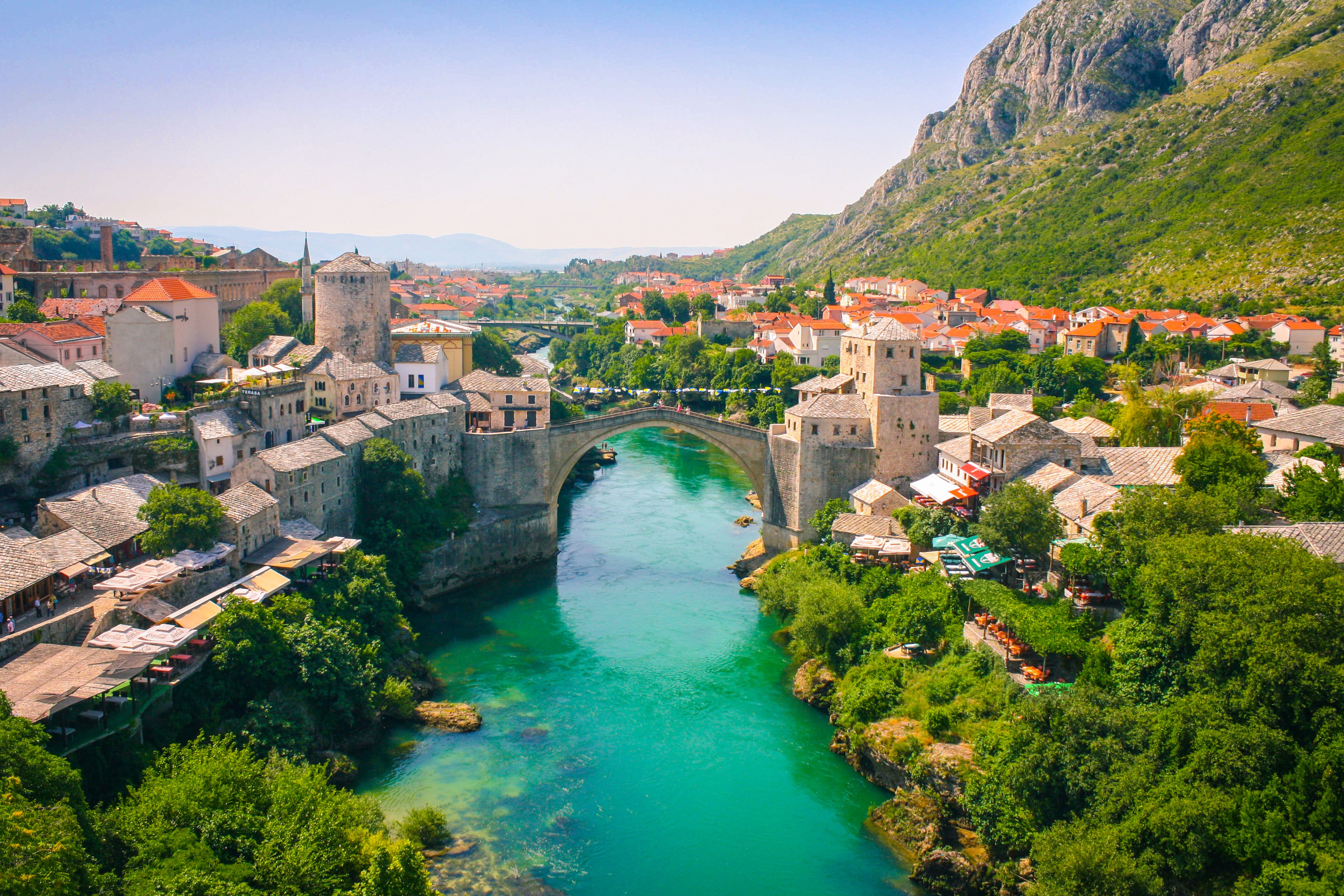

Nestled in the heart of Bosnia and Herzegovina, Mostar captivates visitors with its rich tapestry of history, culture, and breathtaking landscapes. This iconic town, straddling the banks of the Neretva River, is a living museum of the Ottoman Empire's legacy, bearing witness to centuries of change and resilience.

The origins of Mostar date back to the 15th century, emerging as a vital Ottoman frontier town. Its name is believed to be derived from the word "mostari," meaning bridge-keepers, a nod to the guardians of the town’s most celebrated landmark, the Stari Most or Old Bridge. Constructed in 1566 by the renowned architect Mimar Hayruddin, a student of the famed Sinan, the bridge was an architectural marvel of its time, symbolizing the town's strategic and cultural significance. Though tragically destroyed during the Bosnian War in 1993, the bridge was meticulously rebuilt and reopened in 2004, now standing as a poignant symbol of reconciliation and unity.
Mostar's architecture is a mosaic of its diverse historical influences. The Old Bazaar, Kujundžiluk, with its cobblestone streets and vibrant market stalls, offers a glimpse into the Ottoman past. The Koski Mehmed Pasha Mosque, dating back to 1618, provides panoramic views of the town and is an exquisite example of Ottoman architecture. Inside, visitors can admire intricate floral motifs and calligraphy that reflect the artistic mastery of the period. The Karadoz Bey Mosque, built in 1557, is another architectural gem, noted for its elegant proportions and detailed ornamentation.

The local culture of Mostar is a rich blend of influences, reflecting its position at the crossroads of East and West. Traditional music, known as sevdalinka, evokes deep emotion with its melancholic melodies and has been a vital part of the Bosnian cultural identity. Mostar hosts the annual Mostar Summer Fest, celebrating music, art, and theater, drawing performers and visitors from across the region and beyond. The town also comes alive during the International Bridge Diving Competition, where daring divers leap into the Neretva from the 24-meter-high Stari Most, a tradition that showcases local bravery and skill.
Gastronomy in Mostar is a delightful fusion of flavors that echo the town’s multicultural heritage. A must-try dish is ćevapi, small grilled sausages served with flatbread, onions, and a red pepper-based condiment known as ajvar. The hearty burek, a savory pastry filled with meat or cheese, reflects the Ottoman influence, while pita sa sirom, a cheese pie, offers a taste of local culinary creativity. For those with a sweet tooth, tufahija, a poached apple dessert stuffed with walnuts and sugar, is a traditional Bosnian treat that shouldn't be missed. Pair any meal with a glass of rakija, a potent fruit brandy that is a staple in the region.
Beyond its famed attractions, Mostar holds lesser-known curiosities waiting to be explored. The Muslibegović House, a preserved Ottoman residence, offers an intimate glimpse into 18th-century life, with its authentic furniture and artifacts. The town is also home to the unique Bišćević House, another Ottoman-era gem, where visitors can enjoy traditional Bosnian coffee in a serene courtyard overlooking the river. A surprising find for many tourists is the War Photo Exhibition, housed in a small gallery that provides a poignant recount of the town's turbulent history through the lens of war photographers.
For those planning a visit, the best time to experience Mostar is during the spring or early fall, when the weather is mild and pleasant. Summer can be quite hot, though the vibrant atmosphere and outdoor events during this time offer their own charm. When exploring, wear comfortable shoes for navigating the cobbled streets and be sure to take time to enjoy the views from various vantage points along the river. While Stari Most is a focal point, wandering through less-traveled alleys can lead to unexpected discoveries and encounters with friendly locals eager to share their stories.
In Mostar, every stone, street, and structure tells a story, inviting travelers to delve deep into its past while basking in its present-day beauty. This historic town is not just a destination but a journey through time, offering a profound reflection on history, culture, and the enduring spirit of its people.


