


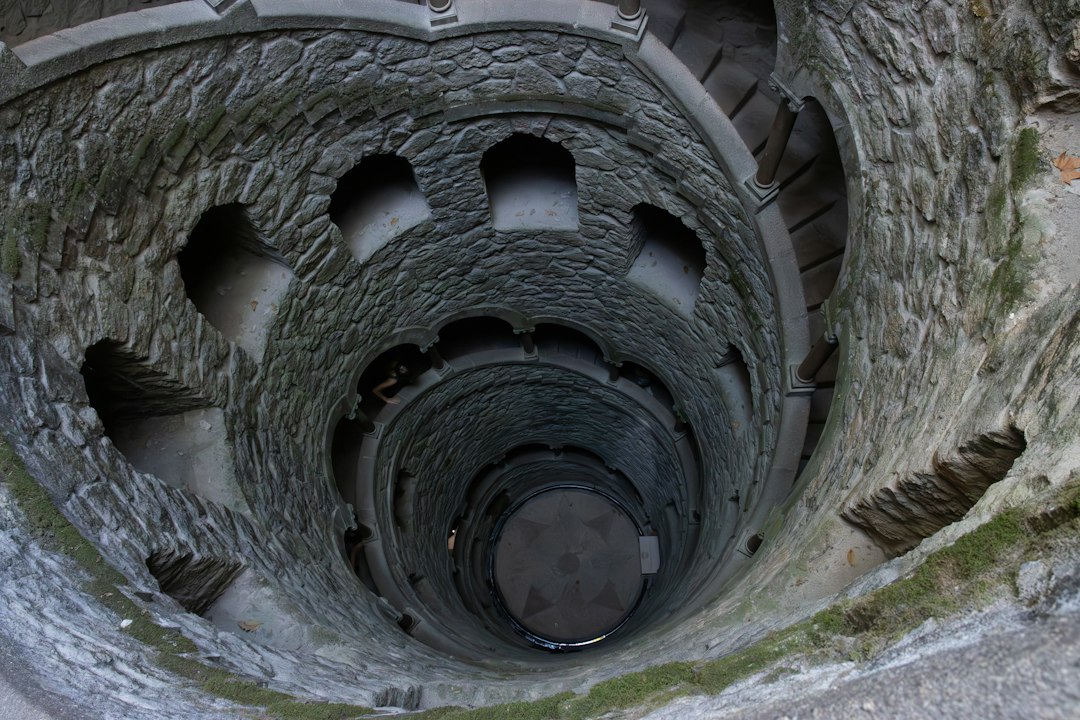
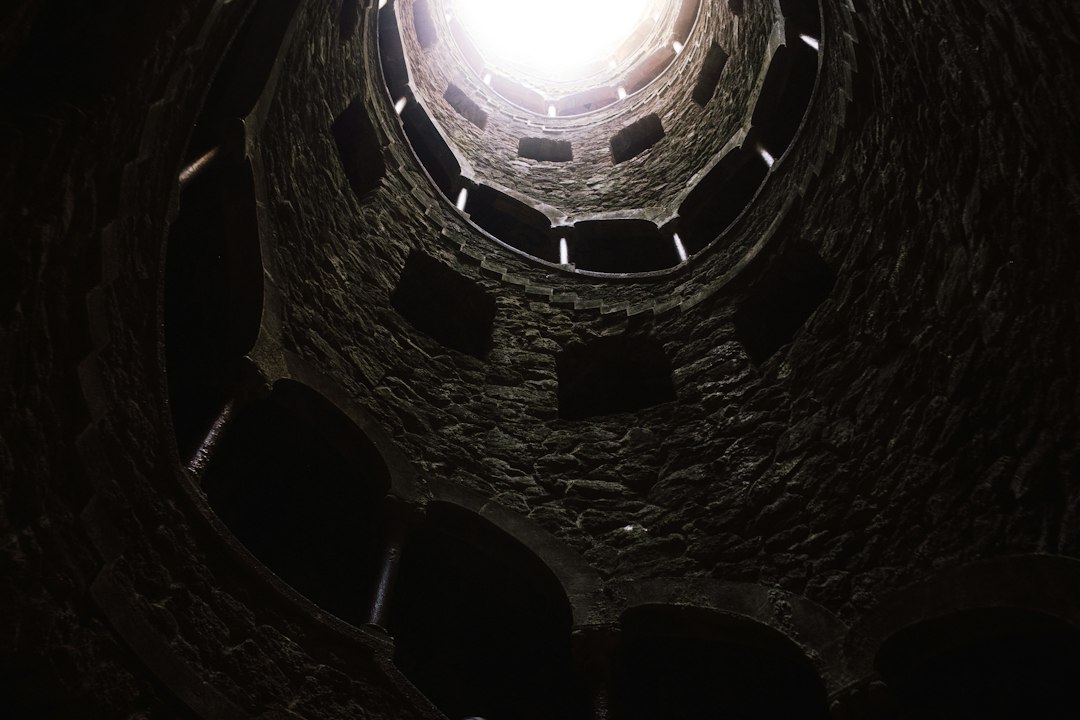
Spiraling down into the belly of the earth, surrounded by Masonic and Rosicrucian symbols carved in stone, while light filters from above through a perfectly circular oculus: this is the experience that awaits those who visit the Quinta da Regaleira in Sintra, Portugal. The famous Initiation Well — in Portuguese Poço Iniciático — is not a well in the common sense of the term, but an inverted tower that plunges about 27 meters underground, accessible via a nine-level spiral staircase that recalls the structure of Dante's Divine Comedy.
The property that hosts it was purchased in the early 1900s by the wealthy merchant and esotericism enthusiast António Augusto Carvalho Monteiro, known as "Monteiro of the Millions" for the fortune he amassed through the trade of coffee and diamonds in Brazil. He commissioned the Italian architect Luigi Manini — already a set designer for the Teatro alla Scala in Milan — to transform the entire estate into a stage of stone, mysticism, and nature. The works took place mainly between 1904 and 1910, giving rise to a collection of neo-Manueline architectures, artificial caves, lakes, and underground tunnels that still amaze visitors today.
A garden that is also a labyrinth
What makes Quinta da Regaleira unique is not only the Initiation Well, but the entire system of terraced gardens that surrounds it. The paths wind through lush vegetation — favored by the humid and mild microclimate of the Sintra hills — and lead the visitor through a sequence of revelations: a cave that suddenly opens onto a lake, a dark tunnel that emerges next to an artificial waterfall, a neo-Gothic chapel hidden among the trees. The garden is not designed to be contemplated from a fixed point, but to be experienced as an initiatory journey, where every turn hides something unexpected.
The underground tunnels that connect the well to other structures in the park are walkable and constitute one of the most fascinating elements of the visit. Inside, there are niches, symbols, and narrow passages that contribute to the almost theatrical atmosphere of the whole — not by chance, Manini was first and foremost a man of theater. Bringing a flashlight or ensuring that the phone is charged can prove useful in the darker sections.
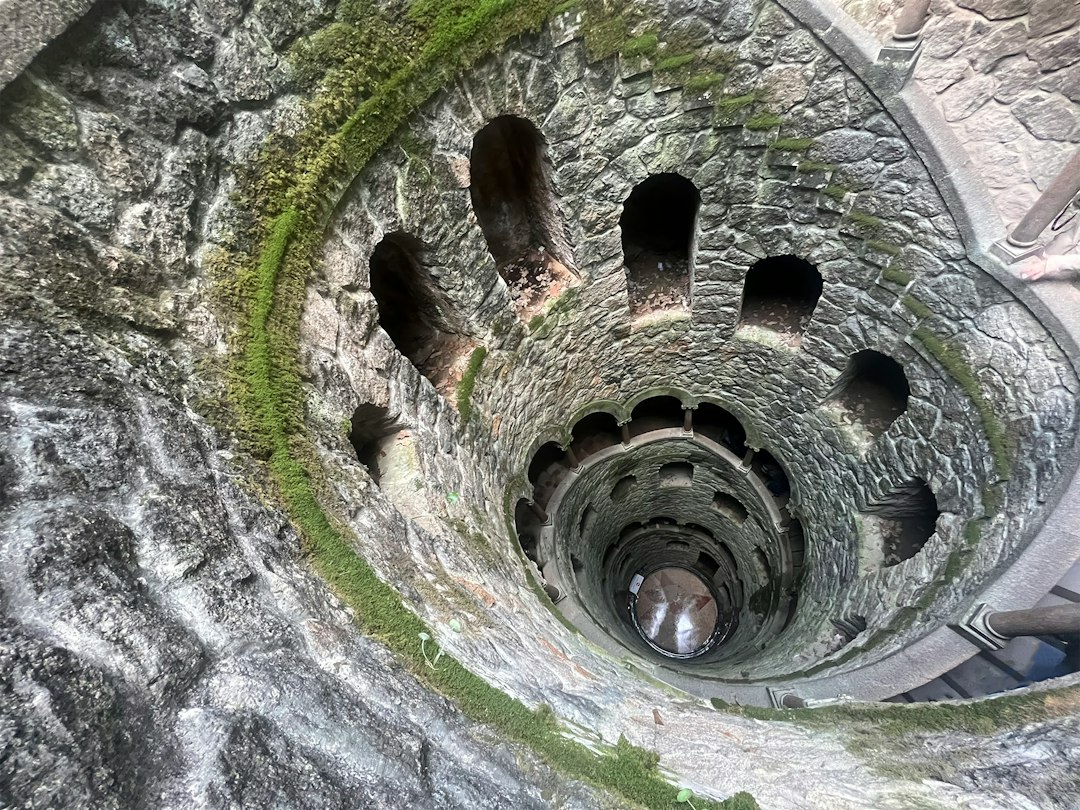
The Initiatory Well: what to observe up close
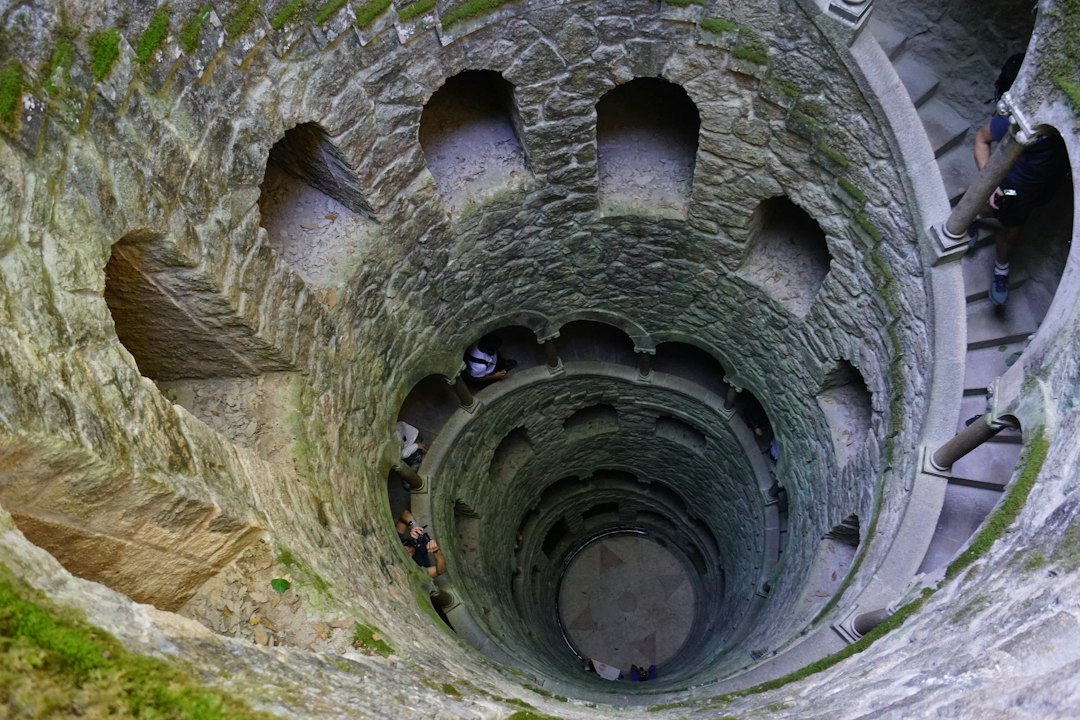
Looking down from the top of the well, the first thing that strikes is the geometric perfection of the spiral staircase, which descends orderly and symmetrical to the bottom, where a symbol of the cross of the Knights Templar is engraved on the floor. Each level of the tower is separated from the others by stone columns that create a continuous decorative pattern. The natural light that penetrates from the oculus at the top creates different visual effects depending on the time of day and the season, making each visit slightly different.
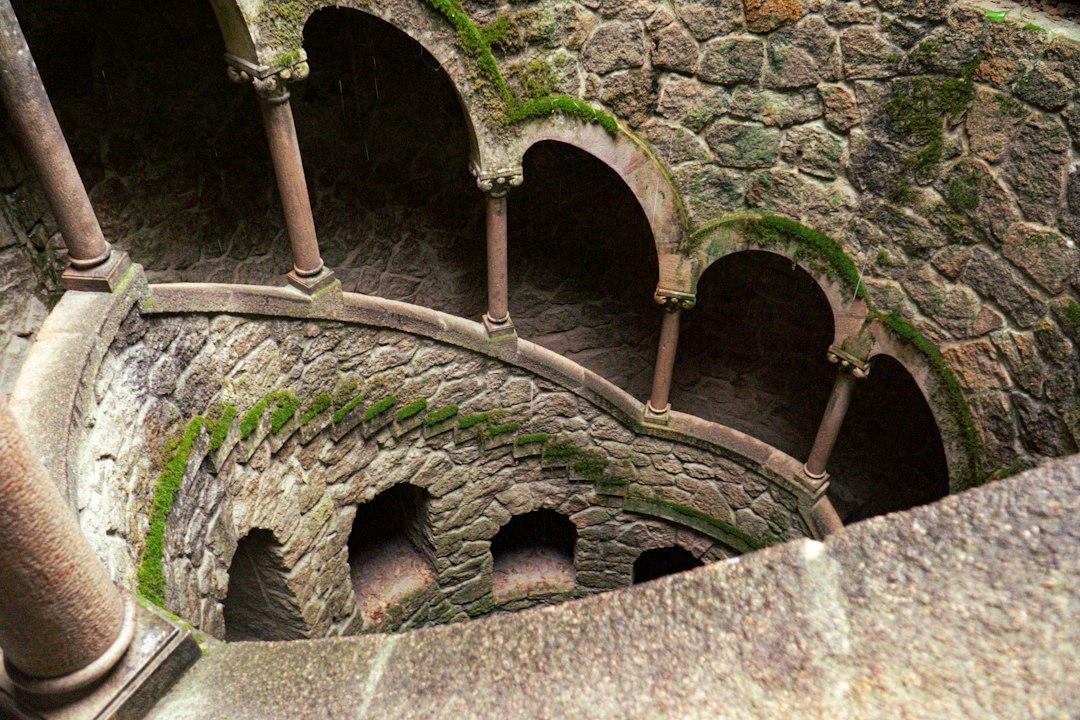
It is important to know that descending into the well requires caution: the steps are narrow and the artificial lighting is limited. People with mobility difficulties may find the descent challenging. Once at the bottom, there is direct access to the tunnels that lead to the caves and the rest of the park, making a circular route possible without having to retrace one's steps.
How to organize the visit
The Quinta da Regaleira is located just a few minutes' walk from the historic center of Sintra, easily reachable from the train station with a walk of about 15-20 minutes or by local tourist buses. The entrance ticket costs around 10 euros for adults, with discounts for children and students — it is advisable to check the updated rates on the official website before the visit. Booking online in advance is strongly recommended, especially in the summer months when the queues can be very long.
The best time to visit is early in the morning, right at opening time, when the typical fog of the Sintra hills still envelops the garden and there are few visitors. Allow at least two hours to calmly explore both the palace and the park: those who only see the well without walking through the tunnels and paths of the garden miss a large part of the overall experience. Wearing comfortable shoes with non-slip soles is essential, as the paths can be slippery after rain.
Sintra beyond the well
The visit to Quinta da Regaleira naturally fits into a day dedicated to Sintra, classified by UNESCO as a Cultural Landscape since 1995. The National Palace of Sintra in the center of the village, with its characteristic twin chimneys, and the Pena Palace perched on the hill offer further layers of interpretation of this extraordinary area. Sintra can be easily reached from Lisbon by train from the Rossio station in about 40 minutes, making it one of the most accessible day trips from the Portuguese capital.


