



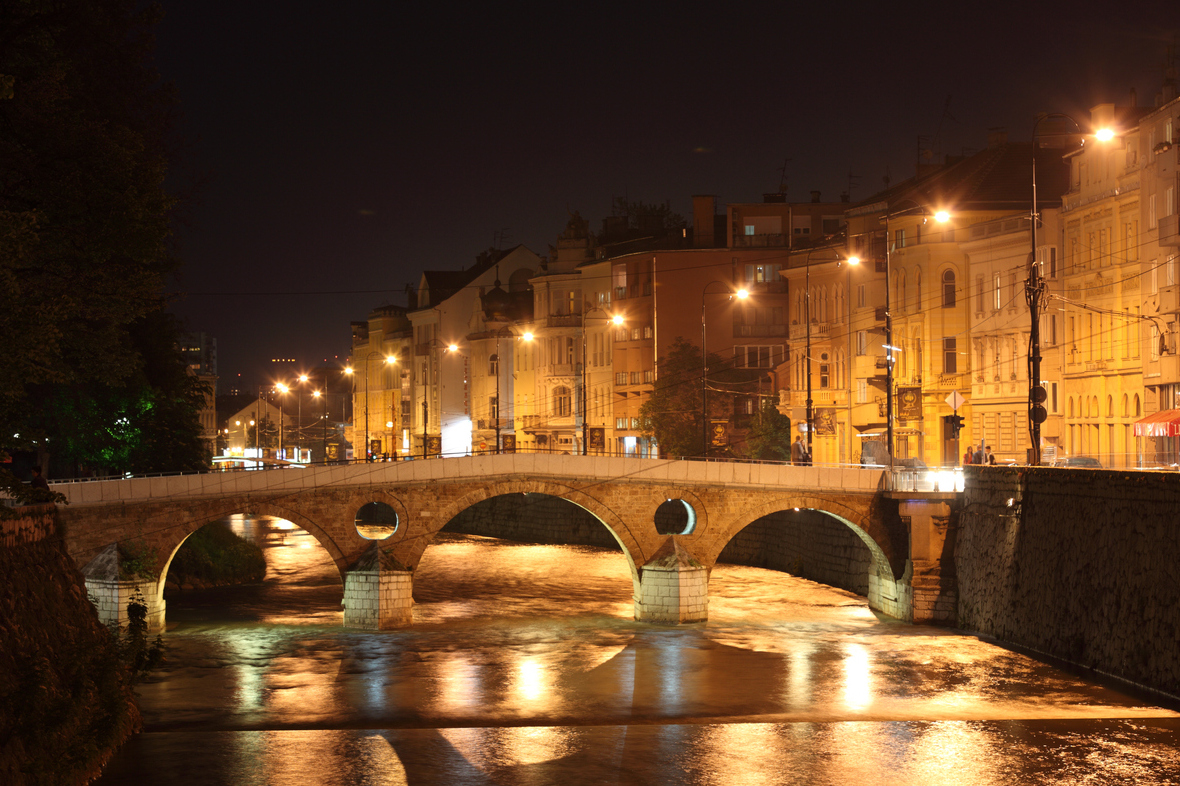
In the heart of Sarajevo, the Latin Bridge stands not only as a remarkable feat of engineering but also as a poignant symbol of a moment that forever altered the course of history. Spanning the Miljacka River, this historic Ottoman bridge whispers tales of love, tragedy, and the turbulent tides of change that swept through Europe in the early 20th century.
### History and Origins
The origins of the Latin Bridge date back to the 16th century, when it was first constructed, likely in wood, before being rebuilt in stone in 1565. Funded by the wealthy magnate Ali-Aini Bey, the bridge was designed by the renowned Ottoman architect Mimar Sinan, known for his mastery in creating functional yet beautiful structures. The bridge's name is derived from its role in connecting the two culturally distinct parts of Sarajevo: the Ottoman and the Latin quarters.
However, the bridge's most infamous chapter unfolded on June 28, 1914, when Archduke Franz Ferdinand of Austria and his wife, Sophie, were assassinated by Gavrilo Princip, a member of a nationalist group advocating for the unification of South Slavic peoples. This act of violence set off a chain reaction that culminated in the outbreak of World War I, marking the Latin Bridge as a site of profound historical significance.
### Art and Architecture
Architecturally, the Latin Bridge is a stunning example of Ottoman design, featuring four elegant arches and three robust pillars that showcase the craftsmanship of the era. The bridge, built from local stone, is characterized by its smooth, flowing lines that blend harmoniously with the natural landscape.
Though it is primarily utilitarian, the bridge is also adorned with subtle artistic elements, including intricately carved stonework that reflects the artistic trends of the time. Visitors can admire not only the bridge itself but also the breathtaking views it offers of the surrounding hills and the bustling city below, where the old and new Sarajevo coexist in vibrant contrast.
### Local Culture and Traditions
The Latin Bridge is more than just a historical monument; it is integrated into the daily life of Sarajevans. The bridge serves as a gathering spot, where locals often meet to chat, enjoy a leisurely stroll, or simply take in the scenery. Cultural festivals throughout the year, including those celebrating local music and art, frequently feature the bridge as a backdrop, further embedding it into the fabric of Sarajevo's cultural identity.
One such festival is the Sarajevo Film Festival, held annually in August, which attracts filmmakers and cinephiles from around the globe. The bridge often serves as a meeting point for festival-goers, illustrating how this historical site continues to play a vital role in Sarajevo's contemporary cultural scene.
### Gastronomy
No visit to the Latin Bridge is complete without indulging in the local gastronomy. The proximity of the bridge to bustling markets and cafés means that visitors can easily sample traditional Bosnian dishes. Ćevapi, small grilled sausages served with flatbread and onions, are a must-try. The nearby Baščaršija district is famous for its burek, a flaky pastry filled with meat or cheese, and Baklava, a sweet dessert that perfectly balances the region's flavors.
Local cafés, such as Café Avlija, offer the perfect spot to sip on a cup of Bosnian coffee, an integral part of the social fabric. Here, you can observe the local tradition of hospitality while enjoying the view of the bridge, making for an unforgettable culinary experience.
### Lesser-known Curiosities
While many visitors flock to the Latin Bridge for its historical significance, numerous lesser-known facts often go unnoticed. For instance, the bridge is said to have been the site of a local legend involving a young couple who met there under the stars, promising to reunite despite the challenges posed by their families. This tale has been passed down through generations, adding a layer of romanticism to the structure.
Another intriguing aspect is the plaque outside the nearby Sarajevo Museum, which marks the exact spot where the assassination took place. Many pass by without realizing the weight of history that resides in such a small area, a testament to the multilayered narrative that the Latin Bridge embodies.
### Practical Visitor Information
The best time to visit the Latin Bridge is during the spring and early autumn months when the weather is mild and the surrounding scenery is at its most picturesque. Early morning or late afternoon provides the best lighting for photographs, casting a warm glow over the bridge and its surroundings.
When visiting, take the time to explore the nearby streets and markets, where you can discover local artisans and shops. Don’t forget to look for the small, often-overlooked details—like the stone carvings on the bridge itself—that tell the story of its long history.
As you plan your journey to this historical gem, consider using the Secret World app to create a personalized AI itinerary that will enhance your experience in Sarajevo.
