
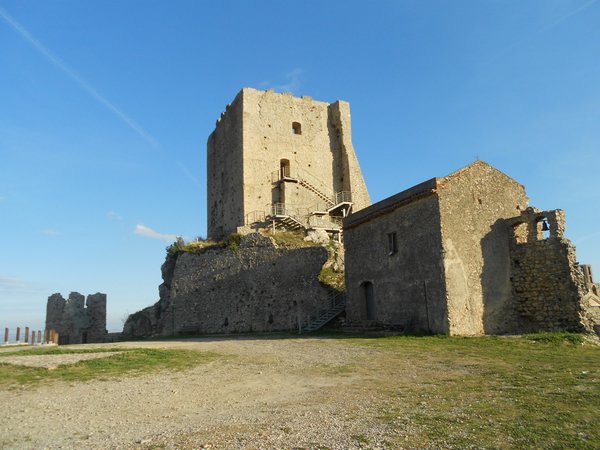

Perched on a striking promontory, the medieval castle of d'Aquino in Belcastro offers a remarkable glimpse into Italy's rich history. This castle, recently restored, features a formidable three-storey quadrilateral keep, originally a Norman tower, surrounded by the remnants of perimeter walls that date back to the 13th to 15th centuries. The ruins showcase a blend of quadrangular, cylindrical, and semicircular turrets, each telling a story of battles and resilience throughout the centuries.
The castle's history is deeply intertwined with that of St. Thomas Aquinas, one of the most significant philosophers and theologians of the Middle Ages. It is believed that the Chapel, built in 1334, stands on the very site of his birth chamber, and this connection adds a layer of spiritual significance to the already captivating site. Visitors can marvel at the artistry of the chapel's architecture, which reflects the Gothic style prevalent at the time, characterized by pointed arches and intricate stonework.
As you wander through the castle's courtyard, you will find the magella of the well, a stunning stone structure with hexagonal crowning, adorned with sculpted coats of arms from the 14th century. This well was originally part of the castle's water supply system and has now been elegantly relocated near the former cathedral, where it serves as a baptismal font, merging history with contemporary religious practices.
The rich culture of Belcastro does not end with its castle. The town celebrates its heritage through various festivals that highlight local customs and traditions. One of the most notable is the Feast of St. Thomas Aquinas in January, where the townsfolk honor their patron saint with vibrant processions, traditional music, and culinary delights that echo the flavors of the region.
Speaking of cuisine, Belcastro offers a delectable array of local foods that reflect its historical roots. The region is known for its 'nduja, a spicy, spreadable salami that has become a staple of Calabrian cuisine, alongside traditional pasta dishes such as 'maccaruni. Don't miss the opportunity to savor a glass of Greco di Bianco, a local white wine that pairs beautifully with the town's rich flavors.
For the curious traveler, Belcastro holds lesser-known treasures. One fascinating detail is that the castle's walls were once part of defensive structures that protected the town from invasions, and remnants of ancient graffiti can still be found etched into the stone, offering glimpses into the lives of those who walked these paths centuries ago. Additionally, the castle has been the subject of various artistic interpretations, inspiring local artists to capture its essence in paintings and sculptures displayed throughout the town.
When planning your visit, the best time to explore the medieval castle of d'Aquino is during the spring and early autumn months, when the weather is mild and allows for pleasant walks through the surrounding landscapes. Be sure to bring your camera; the views from the castle's vantage point overlooking the lush valleys and hills are breathtaking.
To make the most of your experience, take the time to interact with local artisans and shopkeepers who often share stories about their crafts and the town's history. Exploring Belcastro at a leisurely pace will allow you to uncover the layers of culture and tradition that make this town unique.
In conclusion, the medieval castle of d'Aquino is not just a relic of the past; it is a living testament to the cultural heritage of Belcastro. To uncover more hidden gems in this enchanting town, consider using the Secret World app for a personalized itinerary that guides you through its rich tapestry of history and culture.


