
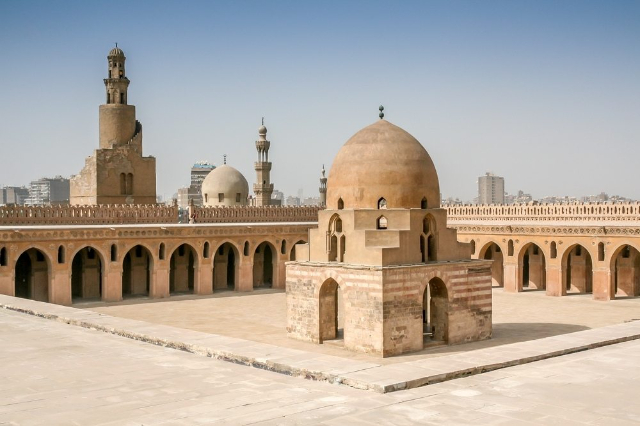

The Mosque of Ibn Tulun, located in Cairo, Egypt, is one of the oldest and best-preserved mosques in the country. Constructed in 876 AD by Ahmed Ibn Tulun, the Turkish governor of Egypt and Syria at the time, the mosque stands as a testament to the architectural and cultural influences of the period.
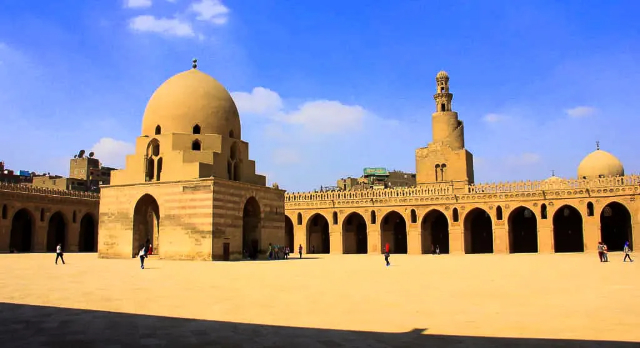
Ahmed Ibn Tulun, originally a soldier, was appointed to govern the outpost of Al Fustat, the old capital of Egypt before Cairo. Influenced by his homeland's architectural styles, he modeled the Mosque of Ibn Tulun after the ancient Mosque of Samarra in Iraq, which is known for its vast size and unique spiral minaret. The mosque in Cairo mirrors these distinctive features and incorporates a similar minaret, which is rare in Egyptian mosque architecture and serves as a striking visual marker of the mosque's cultural heritage.
In addition to its Samarra-inspired design, Ibn Tulun introduced several architectural innovations. Notably, the mosque's vast courtyard is surrounded by ziyadas—a large enclosed space that separates the sanctified area of the mosque from the surrounding city. This design element was innovative for its time and represented a departure from earlier mosque designs, which typically did not include such features.
The mosque's red-brick construction, accentuated by carved stucco and woodwork, adds to its majestic appearance. The arches and columns of the mosque are particularly notable for their intricate decorative patterns, which reflect the artistic styles of the era. The Mosque of Ibn Tulun also features an expansive prayer hall, capable of accommodating many worshippers, reflecting its importance as a major religious center during its time.
Today, the Mosque of Ibn Tulun is not only a place of worship but also a historical site that attracts scholars, tourists, and architecture enthusiasts from around the world. Its well-preserved state allows visitors to step back in time and experience the grandeur of 9th-century Islamic architecture, making it a key cultural and historical landmark in Egypt.


