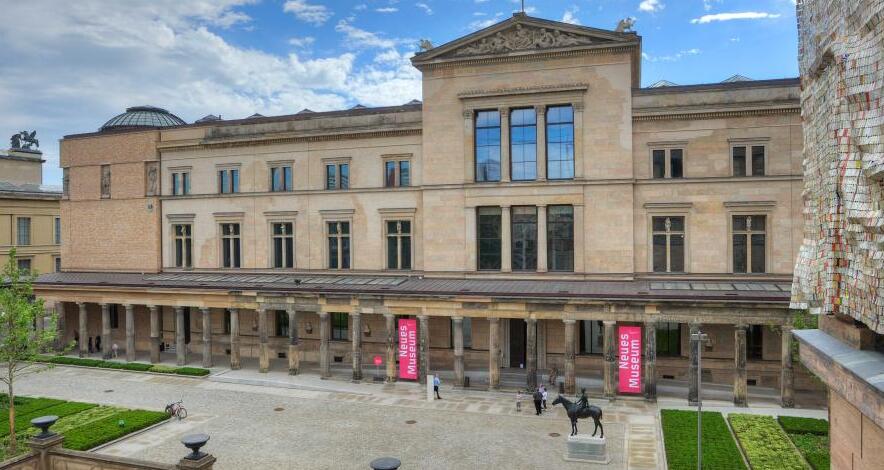


Nestled on the enchanting Museum Island in Berlin, the Neues Museum ('New Museum') stands as a testament to the resilience of culture and history amidst the ravages of time. This architectural gem, which first opened its doors in 1855, invites visitors into a world where ancient artifacts and neoclassical design converge, offering a glimpse into the rich tapestry of human civilization.
### History and Origins
The Neues Museum was conceived in an era that celebrated the grandeur of antiquity and the pursuit of knowledge. Designed by Friedrich August Stüler, a protégé of the esteemed architect Karl Friedrich Schinkel, the museum was built between 1843 and 1855. It was originally intended to house the expanding collections of the Berlin Museum, which aimed to celebrate the cultural achievements of humanity.
However, the museum's fate took a tragic turn with the onset of World War II. Closed in 1939, the structure suffered catastrophic damage during the bombing of Berlin. For decades, it remained in ruins, an emblem of the city's tumultuous history. The revitalization of the Neues Museum began in 2003, overseen by British architect David Chipperfield. His sensitive restoration efforts aimed to blend the old with the new, preserving the museum's historical essence while making it relevant for contemporary audiences.
### Art and Architecture
The architectural style of the Neues Museum is a prime example of neoclassical design, characterized by grand columns, intricate friezes, and an elegant symmetry that beckons admiration. The museum's façade features a striking portico adorned with six monumental columns, which lead into a spacious atrium that once echoed with the sounds of scholarly debate.
Inside, the museum houses several significant collections, including the Egyptian Museum and Papyrus Collection, as well as the Collection of Classical Antiquities and the Prehistory and Early History collections. Among its most renowned artifacts is the iconic bust of Nefertiti, a stunning representation of the Egyptian queen that has captivated audiences since its discovery in 1912. This exquisite piece not only highlights the craftsmanship of ancient artisans but also serves as a symbol of beauty and power in ancient Egypt.
### Local Culture and Traditions
The cultural significance of the Neues Museum extends beyond its walls, deeply entwined with the traditions of Berlin. The museum is part of the broader Museum Island, a UNESCO World Heritage site, which has become a focal point for art and history enthusiasts. Locals often participate in cultural events and festivals that celebrate Berlin's rich heritage, such as the Long Night of Museums, where galleries and museums open their doors late into the night, allowing visitors to immerse themselves in art and history.
Moreover, the vibrant atmosphere surrounding the museum is punctuated by street performances, open-air markets, and community gatherings, reflecting the city's dynamic spirit and its inhabitants’ commitment to preserving cultural narratives.
### Gastronomy
No visit to the Neues Museum is complete without indulging in the local culinary delights that Berlin has to offer. In the vicinity, you'll find a variety of eateries serving traditional German fare. Sample a hearty Currywurst, a beloved street food consisting of grilled sausage topped with a spicy curry ketchup, or savor the rich flavors of Sauerbraten, a pot roast marinated in a blend of vinegar and spices.
Pair your meal with a refreshing Berliner Weisse, a tart wheat beer often enjoyed with flavored syrups, or opt for a glass of Sekt, Germany’s sparkling wine, to toast your exploration of this cultural treasure.
### Lesser-Known Curiosities
While the standout artifacts capture the spotlight, the Neues Museum harbors several lesser-known curiosities that intrigue discerning visitors. For instance, the museum's Egyptian Museum features not only the famed Nefertiti bust but also a collection of over 20,000 artifacts, including mummies and intricate jewelry that tell stories of ancient Egyptian life.
In addition, the museum's restoration process was meticulous; many original fragments were carefully preserved and integrated into the new design, allowing the visitor to appreciate the authentic history of the building itself. These elements of history often go unnoticed but contribute significantly to the overall narrative of the museum.
### Practical Visitor Information
The best time to visit the Neues Museum is during the shoulder seasons of spring (April to June) and fall (September to October), when crowds are thinner, and the weather is pleasant. To maximize your experience, consider booking a guided tour to gain deeper insights into the exhibitions and architectural nuances.
Be sure to allocate sufficient time to explore the various collections, particularly the Egyptian artifacts and the striking interiors. Look out for the museum's beautifully restored Great Hall, where the interplay of light and shadow creates a captivating atmosphere.
To enhance your visit to Berlin, consider using the Secret World app to create a personalized itinerary that highlights the treasures of the city, including the unforgettable Neues Museum.