
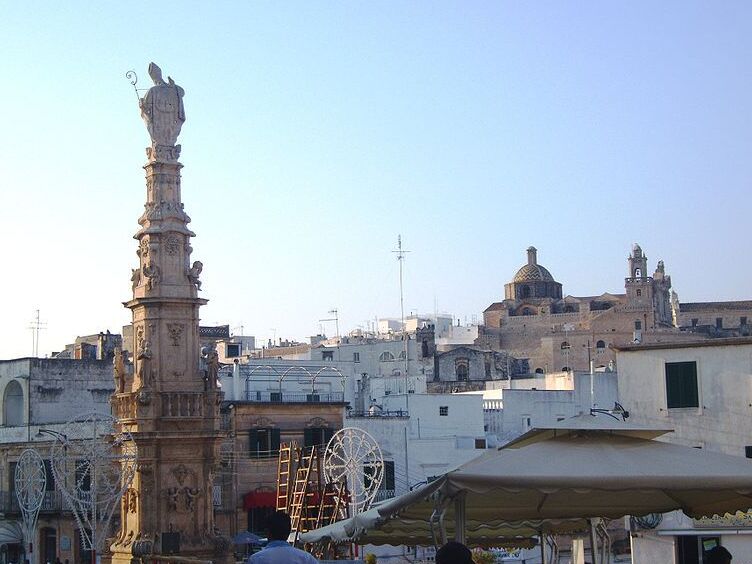

In the heart of Ostuni, a picturesque hilltop town in Puglia, stands the remarkable Obelisk of Ostuni, a towering testament to the city’s resilience and devotion. Dedicated to St. Oronzo, the city’s patron saint, this impressive structure commemorates the miraculous deliverance of its citizens from the plague of 1740, a testament to the intertwining of faith and history in this enchanting locale.
The origins of Ostuni date back to ancient times, with roots tracing back to the Messapians, a pre-Roman civilization known for their agricultural prowess and vibrant culture. The town flourished under Roman rule, becoming an important hub due to its strategic position along trade routes. As centuries passed, Ostuni faced its share of challenges, from invasions to natural disasters. Yet, it was the plague of 1740 that served as a pivotal moment in its history, prompting the community to rally around St. Oronzo. The obelisk, erected in 1771 and carved by local artist Giuseppe Greco, stands as a symbol of unity and gratitude, showcasing the power of shared faith in overcoming adversity.
Architecturally, the Obelisk of Ostuni is a stunning example of Baroque style, characterized by its intricate details and grandiosity. Rising to a height of 20.75 meters, the obelisk is crafted from local limestone, a material that imbues it with a sense of place. At its pinnacle, a statue of St. Oronzo, depicted in ornate bishop's vestments, extends his blessing over the square. Surrounding him are charming cherubs and the statues of saints Biagio, Agostino, Irene, and Giorgio Armeno, each adding to the visual narrative of the obelisk. The Latin inscriptions etched into the column reflect the sentiments of the populace, a heartfelt tribute to their saint and a reminder of their collective struggles and triumphs.
Local culture in Ostuni is deeply rooted in tradition, with the Obelisk of Ostuni as a focal point for various celebrations. The annual Feast of St. Oronzo, celebrated on August 26th, sees the townsfolk come together in vibrant processions, honoring their patron with music, dancing, and elaborate offerings. This festival not only reinforces the community's bonds but also showcases the rich tapestry of local customs, where ancient rituals blend seamlessly with modern expressions of faith and gratitude.
The gastronomy of Ostuni is another layer of its cultural identity, heavily influenced by the region’s agricultural heritage. The town is renowned for its extra virgin olive oil, often referred to as “liquid gold,” and is an essential ingredient in traditional dishes. Visitors can savor local specialties such as orecchiette con cime di rapa (ear-shaped pasta with turnip tops) and focaccia topped with fresh tomatoes and herbs. Don’t miss the chance to try pasticciotto, a delectable pastry filled with custard, which is a beloved treat among locals. Pair these dishes with a glass of Primitivo wine, a robust red that perfectly complements the flavors of Puglia.
Despite its popularity, there are lesser-known curiosities about the Obelisk of Ostuni that often elude the average tourist. For instance, many are unaware that the obelisk was originally intended to be a much more elaborate monument, but budget constraints led to a simpler design that still resonates with the community. Additionally, if you look closely, you will find hidden motifs and symbols on the balustrade that reflect the rich folklore of the region, offering a glimpse into the local beliefs and stories that have shaped the town over centuries.
For those planning a visit, the best time to explore Ostuni and its iconic obelisk is during the spring and early autumn months when the weather is mild, and the crowds are thinner. Be sure to wander through the winding streets of the Centro Storico, where whitewashed buildings adorned with vibrant bougainvillea create a stunning backdrop for your exploration. Take your time to absorb the atmosphere, and don’t hesitate to engage with local artisans and shopkeepers who often share their stories and traditions.
As you stand before the Obelisk of Ostuni, take a moment to reflect on the rich history and vibrant culture that surrounds you. This monument not only honors St. Oronzo but also serves as a reminder of the enduring spirit of the people of Ostuni.
For a personalized experience that uncovers the hidden gems of Ostuni, consider using the Secret World app to plan your itinerary.


