
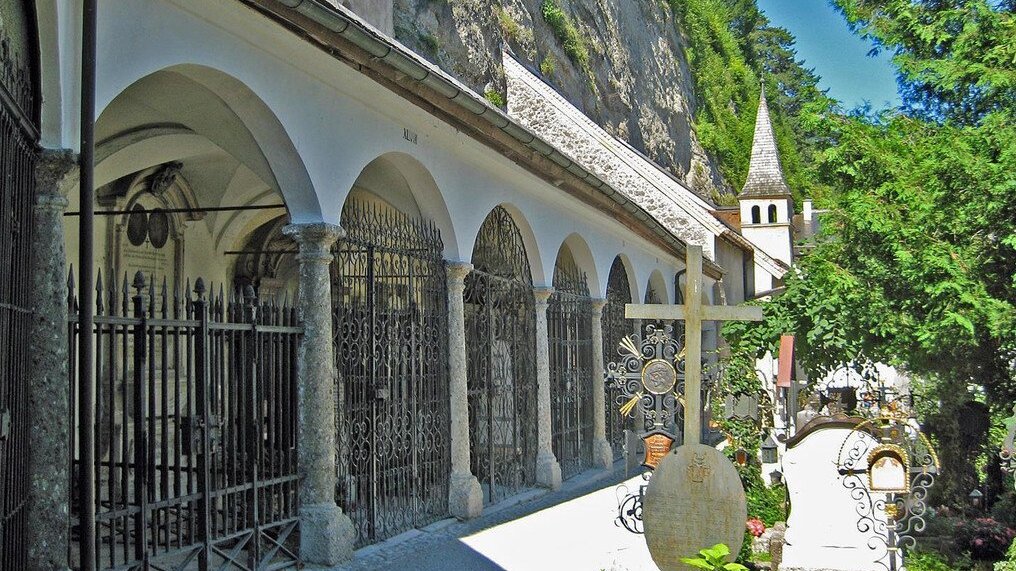

Nestled at the base of the Mönchsberg in Salzburg, the Old St. Peter’s Monastery stands as a testament to the city’s rich spiritual heritage. Founded in the 7th century, this Benedictine monastery has long served as the spiritual heart of Salzburg, weaving itself into the fabric of the city’s history and culture.
The origins of St. Peter’s monastery trace back to the year 696 AD, when it was established by St. Rupert, the patron saint of Salzburg. As one of the oldest monasteries in the German-speaking world, it has witnessed centuries of change and turmoil. The abbey flourished during the Middle Ages, becoming a center of learning and culture. Its monks contributed to the development of the city, influencing both religious and secular life. Notably, in the 17th century, the monastery faced challenges during the Protestant Reformation but managed to retain its Catholic identity and religious significance.
Architecturally, St. Peter’s monastery is a stunning example of Romanesque and Baroque styles, seamlessly blending functionality with beauty. The monastery church, with its striking green roof, features intricate frescoes that adorn its ceilings, showcasing the artistic flair of the Baroque period. A central highlight of the complex is the main courtyard, where a prominent fountain, topped by a statue of St. Peter, invites quiet contemplation. The adjoining catacombs, carved into the rock beneath the monastery, date back to early Christian times and evoke an air of mystery.
Art lovers will be captivated by the monastery's collection of sacred art, including several notable pieces by local artists. The altar paintings and ornate altarpieces reflect the deep spiritual devotion of the Benedictine monks. The frescoes within the church, depicting scenes from the life of Christ, are not just visually stunning but also serve as important historical records of religious narratives that have shaped the faith over the centuries.
Local customs surrounding St. Peter’s monastery are steeped in tradition. Each year, the monks celebrate various liturgical festivals, drawing locals and visitors alike. The Feast of St. Rupert, held in late September, is particularly significant, marking the founding of the monastery. During this time, the community comes together for processions, musical performances, and feasting, showcasing the rich cultural tapestry of Salzburg.
In terms of gastronomy, the area surrounding the monastery offers a taste of Salzburg’s local flavors. Visitors can indulge in traditional dishes such as Salzburger Nockerl, a sweet soufflé that is emblematic of the city, or Speckknödel, bread dumplings made with local speck (cured ham). Pair these delights with a glass of Stiegl, a local beer that has been brewed in Salzburg since 1492, for an authentic culinary experience.
For those seeking lesser-known curiosities, the cemetery adjacent to the monastery is a hidden gem. It is the final resting place of many notable figures, including the famous composer Wolfgang Amadeus Mozart’s family. The elaborate tombstones and serene ambiance make it a contemplative space, often overlooked by tourists. Additionally, the catacombs offer a fascinating glimpse into the past, with their early Christian burial sites and stunning views of the city.
When planning a visit, the best time to explore St. Peter’s monastery is during the spring and autumn months, when the weather is mild and the gardens are in full bloom. While only a part of the monastery is open to the public, visitors can still enjoy the cemetery and catacombs without prior arrangement. It’s advisable to take a guided tour to gain deeper insights into the rich history and architectural details that define this remarkable site.
As you wander through the serene gardens and cloisters, take a moment to absorb the spiritual atmosphere that permeates St. Peter’s monastery. The echoes of centuries past resonate in the very stones, offering a glimpse into the lives of those who have dedicated themselves to faith and community.
For a personalized journey through Salzburg’s treasures, consider using the Secret World app to plan your itinerary.


