
← Back

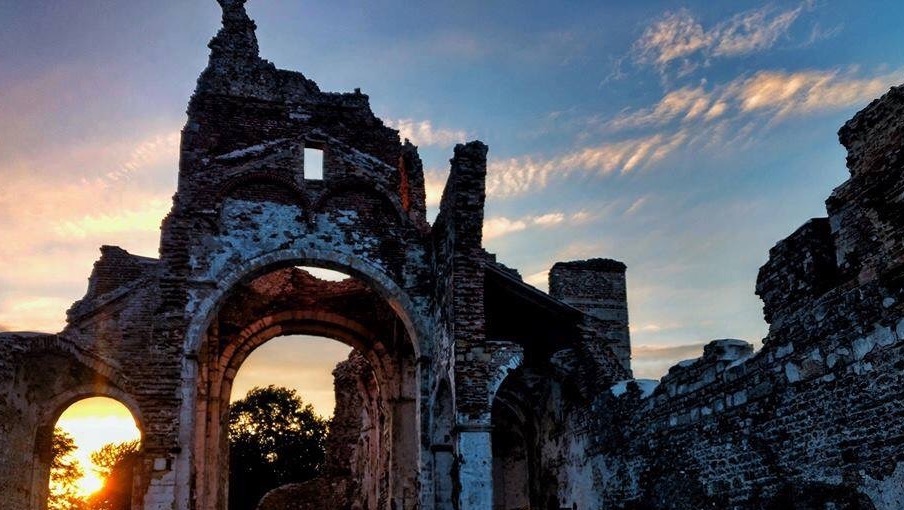
The remains of the Abbey of Saint Eustace

Via Collalto, 1, 31040 Nervesa della Battaglia TV, Italia ★★★★☆ 344 views
Mia Patel
Nervesa della Battaglia
🏆 AI Trip Planner 2026

Get the free app

Discover the best of Nervesa della Battaglia with Secret World — the AI trip planner with 1M+ destinations. Get personalized itineraries, hidden gems and local tips. Free on iOS & Android.

🧠 AI Itineraries 🎒 Trip Toolkit 🎮 KnowWhere Game 🎧 Audio Guides 📹 Videos
Download on the App Store Get it on Google Play
Scan to download Scan to download

About The remains of the Abbey of Saint Eustace

The remains of the Abbey of Saint Eustace - Nervesa della Battaglia | Secret World Trip Planner

The Abbey of Sant'Eustachio was an important Benedictine monastery, suppressed in the 19th century and now recently restored. It stands in Nervesa della Battaglia, in a strategic place due to its elevated position and the proximity of the Piave river, which offered numerous fording possibilities. It was founded before the year 1062 by Rambaldo III of Collalto and his mother Gisla in order to limit the power of the bishops of Treviso, who had taken away their control of the Marca Trevigiana, with an institution that depended directly on the pontiff, who did not like the expansion of the bishops of Treviso, supporters of the emperor. Despite the small number of monks present, the chapter could count on vast possessions and the protection of the Collalto family. In 1231, Pope Gregory IX acknowledged to Sant'Eustachio the control of thirty-five parish churches and chapels located in the whole territory of Treviso up to Mestre, becoming in fact more and more autonomous. During the 14th century the bishops of Treviso took advantage of the various crises that followed due to the Western Scima, the plague and the Hungarian invasions, to extend their influence over this chapter. In 1521 Pope Leo X, seeing the slow and inexorable decline of the chapter, also due to the malpractice of its friars, suppressed the Abbey, transforming it into a commendatory provostry indirectly subject to the control of the Collalto family (18 out of 21 provosts were Collalto). The various privileges and possessions also remained and, consequently, the contrasts with the bishop. Between the sixteenth and seventeenth centuries, this place became an important cultural center capable of attracting illustrious figures, among whom Monsignor Della Casa, who composed the famous Galateo here, should certainly be mentioned. Between 1744 and 1819, the complex was led by Provost Vinciguerra VII di Collalto, a cultured and capable man who transformed it into an important farm run by experts and scholars. It was thanks to him that the provostship survived the Napoleonic suppressions of the early 19th century, which instead affected the nearby Carthusian monastery of San Girolamo. Later, however, the ecclesiastical authorities judged this institution useless and obsolete and in 1865 it was definitively suppressed. After the Rotta di Caporetto, the building found itself near the front of the Piave river and suffered heavy damages.

🗺 AI Trip Planner

Plan your visit to Nervesa della Battaglia

Suggested itinerary near The remains of the Abbey of Saint Eustace

MAJ+
500.000+ travelers worldwide
  1. 🌅
    Morning
    The remains of the Abbey of Saint Eustace
    📍 Nervesa della Battaglia
  2. ☀️
    Afternoon
    Susegana
    📍 5.3 km · Nervesa della Battaglia
  3. 🌆
    Evening
    Dersut Coffee Museum
    📍 11.2 km · Nervesa della Battaglia

Buy Unique Travel Experiences

Powered by Viator

See more on Viator.com

Explore nearby · Nervesa della Battaglia

Frequently Asked Questions

The Abbey was founded before 1062 by Rambaldo III of Collalto and his mother Gisla to limit the power of the bishops of Treviso and establish an institution that answered directly to the Pope rather than the emperor-supporting bishops. This strategic religious move helped the Collalto family maintain influence in the Marca Trevigiana region.
The Abbey stands in a strategically elevated position near the Piave river, which offered numerous fording possibilities, making it an important defensive and commercial location. This advantageous geography contributed to the monastery's historical significance and its ability to control vast territories.
After being suppressed by Pope Leo X in 1521 and transformed into a commendatory provostry, the Abbey became an important cultural center that attracted illustrious figures, including Monsignor Della Casa who composed the famous work 'Galateo' there. Despite its change in status, it remained influential and culturally significant.
By 1231, Pope Gregory IX recognized Sant'Eustachio's control over thirty-five parish churches and chapels spread throughout the entire territory of Treviso extending to Mestre. This vast ecclesiastical network made the Abbey one of the most powerful religious institutions in the region.
Provost Vinciguerra VII di Collalto, a cultured and capable administrator, transformed the Abbey complex into an important farm run by experts and scholars, modernizing its operations and making it an agricultural center of innovation. His leadership marked a significant period of intellectual and economic development for the monastery.
