



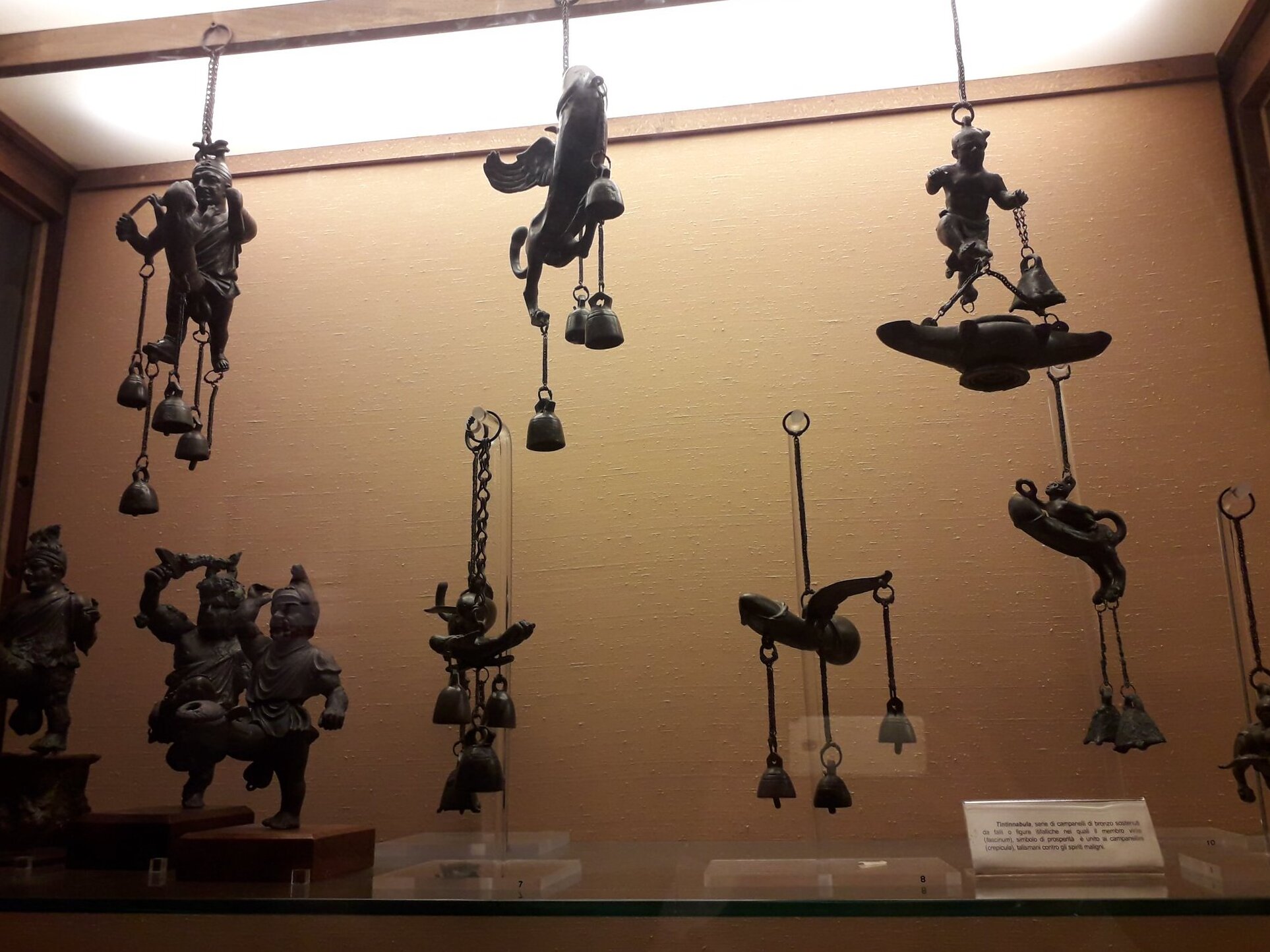
Nestled in the vibrant city of Napoli, the Secret Cabinet is a hidden gem that offers a glimpse into the quirky and fascinating aspects of ancient Roman culture. This unique collection, part of the Museo Archeologico Nazionale di Napoli, showcases the tintinnabula—exquisite bronze rattles that served both decorative and protective purposes in antiquity.
The history of the tintinnabula dates back to ancient Rome, where they were not merely objects of art but also talismans believed to ward off evil spirits. These intricate structures, often displayed on the doors of homes and shops, featured several bells that chimed melodiously with the wind. Their design typically included phallic symbols, which were thought to bring good luck and fertility. The whimsical nature of these artifacts was a reflection of the Roman spirit, where humor and superstition intertwined seamlessly.
The architectural style of the Secret Cabinet itself complements the treasures it houses. The museum is renowned for its splendid collection of Greco-Roman artifacts, showcasing elaborate mosaics, sculptures, and frescoes that tell stories of gods, heroes, and daily life in ancient times. The tintinnabula, with their unique designs—some adorned with playful figures like knights or fantastical creatures—are masterpieces of craftsmanship that embody the artistic significance of the era. The most famous of these, featuring a mouse and a turtle, stands as a testament to the creativity and imagination of ancient artisans.
In addition to their artistic value, the tintinnabula hold a significant place in local culture. In Napoli, the blending of tradition and modernity is evident during festivals, where ancient customs are celebrated with fervor. One such event is Festa di San Gennaro, held every September, where locals pray for the intercession of the patron saint for protection and prosperity. The tintinnabula, with their protective symbolism, resonate deeply during such occasions, as they embody the spirit of warding off misfortune.
Gastronomy in Napoli is as vibrant as its history. The city is the birthplace of pizza, and enjoying a slice of the original Margherita while contemplating the artwork of the Secret Cabinet is a must. Pairing this iconic dish with a glass of Limoncello, a lemon liqueur that captures the essence of the Amalfi Coast, enhances the experience. Local markets overflow with fresh produce, and traditional pastries like sfogliatella and babà offer sweet indulgences that reflect the city's rich culinary heritage.
For those curious about lesser-known curiosities, the tintinnabula's phallic representations were not merely for shock value. They symbolize a complex interplay of sexuality and fertility, which was central to Roman belief systems. These objects were often accompanied by lamps, creating an enchanting ambiance that further demonstrated their dual purpose as both art and charm. Additionally, the practice of hanging them at entrances was widespread, as it was believed that the sound they made would scare away malevolent spirits.
When planning a visit to the Secret Cabinet, timing can enhance your experience. The best time to explore Napoli is during the spring months from April to June, when the weather is mild, and the city buzzes with life. However, avoid the peak tourist season in August, as the heat can be oppressive and crowds overwhelming. For an unforgettable experience, consider visiting during local festivals, when the streets come alive with music, dance, and culinary delights.
As you explore the Secret Cabinet and the enchanting tintinnabula, take time to appreciate the intricate details and the stories they tell. Look out for the variety of phallic representations, and consider their historical context—art that once served a vital purpose in everyday life.
To fully immerse yourself in the wonders of Napoli, consider using the Secret World app to create a personalized AI itinerary tailored to your interests.
