
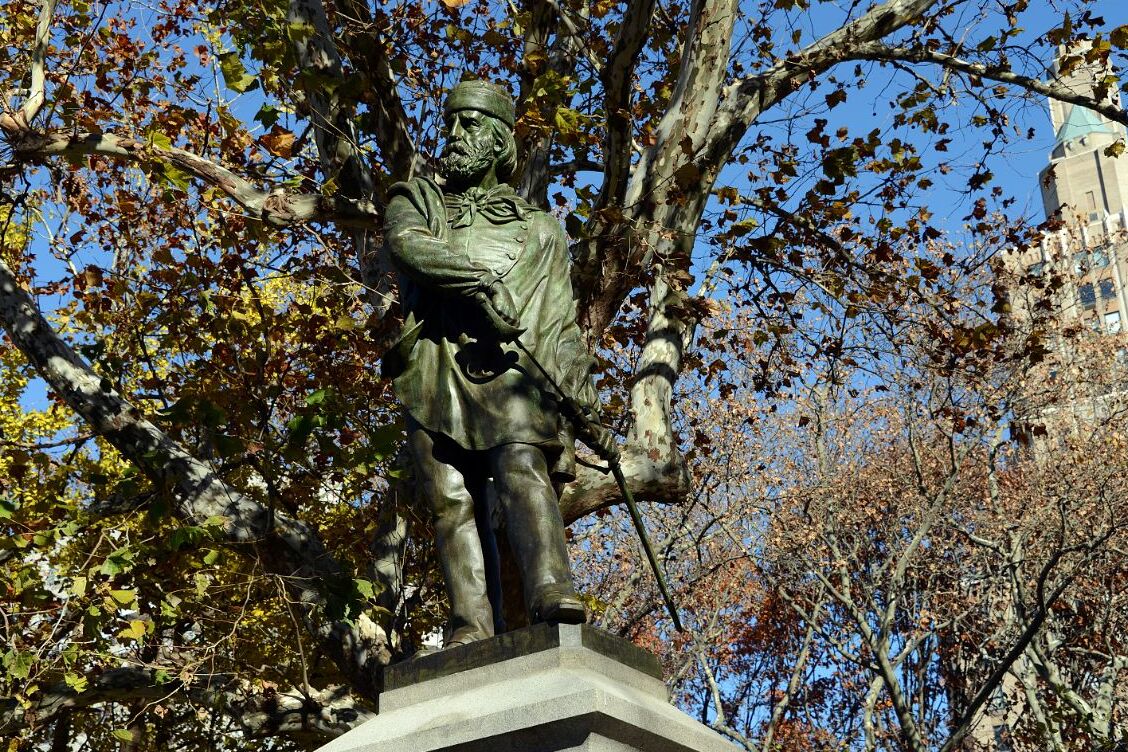

In the heart of Washington Square Park, amidst the bustling energy of New York City, stands the Statue of Garibaldi, a testament to the rich Italian heritage that has woven itself into the fabric of American culture. Unveiled in 1888, just a few years after the death of the legendary Italian general and nationalist, Giuseppe Garibaldi, this statue is not just a mere piece of art; it is a symbol of pride for many in the Italian-American community.
History and Origins
The origins of the statue trace back to the late 19th century when the United States was witnessing a significant influx of Italian immigrants. These newcomers brought with them their culture, traditions, and a sense of identity, often celebrating figures like Garibaldi, who played a crucial role in the unification of Italy during the 19th century. The statue was commissioned by the Italian-American community in New York, who sought to honor Garibaldi's contributions to the cause of freedom and democracy.
The statue was sculpted by Giovanni Turini, an Italian artist who also created the statue of Giuseppe Mazzini, another prominent figure in the Italian unification movement, located in Central Park. While Turini’s work may not be regarded as a masterpiece in the grand scheme of art history, it carries significant importance as a cultural marker for the Italian diaspora.
Art and Architecture
The Statue of Garibaldi is crafted from bronze, standing tall at 8 feet and mounted on a granite pedestal. The statue depicts Garibaldi in a confident pose, dressed in military attire, with one hand resting on a sword and the other gesturing forward, symbolizing his leadership and vision for a unified Italy. The architectural style is representative of the 19th-century realism that sought to portray figures in a lifelike manner, emphasizing the emotional gravitas of the subject.
Surrounding the statue are intricate bas-reliefs that depict scenes from Garibaldi's life, showcasing his campaigns and the struggles for Italian independence. While some may pass by without a second glance, those who pause to appreciate the details will find a rich tapestry of history embedded in the artwork.
Local Culture and Traditions
Washington Square Park is a vibrant hub of local culture, serving as a gathering place for artists, musicians, and performers. The park is known for its lively atmosphere, where you might encounter impromptu jazz concerts, chess games, and various cultural festivals. Among these, the Garibaldi Festival, celebrated by the Italian-American community, pays homage to the general's legacy with music, food, and cultural performances, emphasizing the importance of heritage and collective memory.
The park's proximity to Greenwich Village also makes it a focal point for artistic expression and counter-culture movements, intertwining with the narrative of Garibaldi, who was also a revolutionary figure advocating for social justice.
Gastronomy
No exploration of Washington Square Park is complete without indulging in the culinary delights that surround it. The neighborhood boasts a plethora of Italian eateries where one can savor authentic dishes. Pizza al taglio, Roman-style pizza sold by the slice, and gelato are quintessential treats that reflect the Italian influence in the area.
Nearby, restaurants like Lombardi’s Pizza, touted as America’s first pizzeria, serve up iconic slices that many locals and visitors swear by. Pair your meal with a glass of Italian wine or a classic espresso, both of which are staples in the Italian dining experience.
Lesser-Known Curiosities
While many may overlook the statue, there are fascinating stories that surround it. For instance, Garibaldi was not only a military leader but also a global figure who inspired movements for democracy and nationalism beyond Italy's borders. His connection to the American Civil War, where he offered his services to Union forces, further cements his place in American history.
Additionally, few know that the statue was originally intended to be placed in Central Park but was eventually located in Washington Square Park due to the efforts of local Italian-Americans who sought to make it a community landmark.
Practical Visitor Information
The best time to visit the Statue of Garibaldi is during the warmer months, from late spring to early fall, when Washington Square Park comes alive with greenery and social activities. Early mornings or late afternoons provide a serene atmosphere to appreciate the statue’s details without the crowds.
When visiting, take a moment to explore the surrounding park, where the iconic Washington Square Arch stands, capturing the essence of the neighborhood. Look for the various musicians and performers, as they often provide a delightful backdrop to your visit.
As you immerse yourself in the history and culture of this vibrant area, consider how Garibaldi's legacy continues to inspire modern movements for freedom and unity.
To make the most of your visit to New York, using the Secret World app can help you craft a personalized itinerary that captures the essence of this dynamic city.


