
← Back

The Statue of the Nile in the Vatican

Viale Vaticano, 00165 Roma RM ★★★★☆ 847 views
Klara Simons
Roma
🏆 AI Trip Planner 2026

Get the free app

Discover the best of Roma with Secret World — the AI trip planner with 1M+ destinations. Get personalized itineraries, hidden gems and local tips. Free on iOS & Android.

🧠 AI Itineraries 🎒 Trip Toolkit 🎮 KnowWhere Game 🎧 Audio Guides 📹 Videos
Download on the App Store Get it on Google Play
Scan to download Scan to download

About The Statue of the Nile in the Vatican

The Statue of the Nile in the Vatican - Roma | Secret World Trip Planner

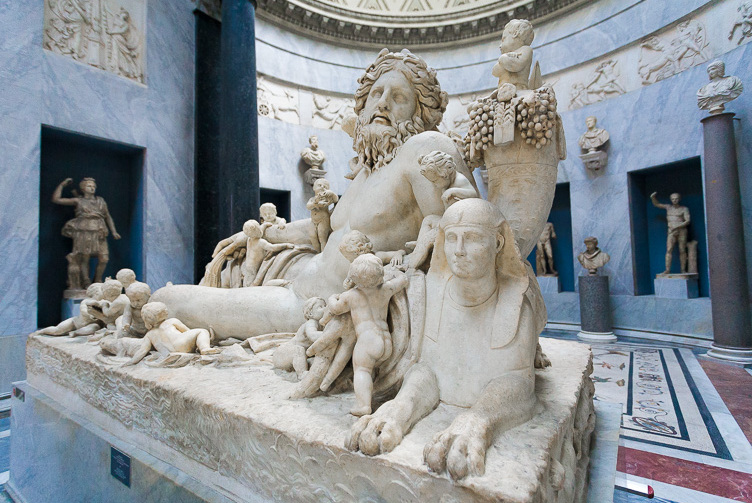
The Vatican Statue of the Nile is located in the exedra of the Braccio Nuovo of the Vatican Museums.According to Bernardo Gamucci - author of the fundamental text Libri quattro dell'antichità della città di Roma, raccolte sotto brevità da diversi antichi et moderni scrittori, printed in Venice in 1565 - the colossal statue of the Nile was found in 1513 near the Church of Santo Stefano del Cacco in Campo Marzio.The sculpture, datable to the 1st-2nd century, is a Roman replica of an Alexandrian sculptural original, made of black basalt and, according to Pliny the Elder, placed by Vespasian in the Temple of Peace in Rome.The Nile, represented as a beneficent deity, a primary source of life capable of ensuring, with its regular and periodic floods of water, fertile soil for the crops, has the appearance of an old man lying on his side. With his left arm he holds a cornucopia full of fruit, the symbol par excellence of abundance and fertility, while with his right hand he holds a few ears of corn alluding to the harvest. Around him move 16 putti that personify, already according to Philostratus, 16 Pécheis or cubits of ideal growth of its waters during the season of floods. They are depicted as small Genii, perhaps each of the same height as a cubit of about 50 centimetres. And as spirits who preside over the destiny of men, protecting their territory, they interact with the river and play with a crocodile and an ichneumon or mongoose, defined by Leonardo da Vinci as "mortal enemy to asp". The Nile is leaning against the sphinx, the monster with a lion's body and human head, which evokes Egypt, the land over which it holds power with its waters. In fact, it is the presence of the river that makes the desert habitable, creating a fertile strip of land along its banks: just over six kilometres on each side at its widest point, less than a kilometre at its narrowest, as far as the large area of the delta.And it is precisely on the base of the statue that the story of the Nile is told: on the left - and in correspondence with the entire personification of the river - one sees its waters flowing, rising higher and higher, just as the Cubits above them rise and rise, to finally withdraw and let the harvest of the "granary of the world", visible on the right, grow. The waters of the Nile, considered sacred and for this reason collected in amphorae and carried in procession with the gods, are the true protagonists of this allegory in which the majestic bearded man, with his head crowned with leaves and fruits of Egypt, is only a pretext to remind men that the source of life is nature itself with its cycles.

🗺 AI Trip Planner

Plan your visit to Roma

Suggested itinerary near The Statue of the Nile in the Vatican

MAJ+
500.000+ travelers worldwide
  1. 🌅
    Morning
    The Statue of the Nile in the Vatican
    📍 Roma
  2. ☀️
    Afternoon
    Rome: Raphael’s fresco The School of Athen
    📍 0 km · Roma
  3. 🌆
    Evening
    Vaticano | Bramante Staircase
    📍 0 km · Roma

Buy Unique Travel Experiences

Powered by Viator

See more on Viator.com

Explore nearby · Roma

Frequently Asked Questions

The Statue of the Nile is housed in the exedra of the Braccio Nuovo section of the Vatican Museums. This prestigious location within the museums makes it easily accessible to visitors exploring the Vatican's extensive art and sculpture collections.
The colossal statue dates to the 1st-2nd century and is a Roman replica of an Alexandrian original carved from black basalt. According to historical records by Pliny the Elder, it was originally placed by Emperor Vespasian in the Temple of Peace in Rome and was discovered in 1513 near the Church of Santo Stefano del Cacco in Campo Marzio.
The 16 small cherub-like figures, or putti, personify the 16 cubits of ideal water growth during the Nile's annual flood season, each approximately 50 centimeters in height. According to ancient philosopher Philostratus, these spirits represent the divine forces that protect territories and interact with the river through playful scenes with a crocodile and ichneumon (mongoose).
The Nile is represented as a beneficent old man reclining on his side, holding a cornucopia full of fruit in his left arm symbolizing abundance and fertility, while his right hand grasps ears of corn representing the harvest. The statue leans against a sphinx with a lion's body and human head, evoking Egypt and the river's life-giving power over the desert landscape.
The sphinx is integral to the statue's symbolism, as it directly evokes Egypt and represents the Nile's dominion over the land. The presence of the sphinx emphasizes how the river transforms the desert into fertile territory, creating habitable strips along its banks that sustain the entire civilization.
